Side-by-side or overlay PDF diff driven by one engine that reads each file into a structured model — text, vector geometry, images, form fields, annotations — and compares the models. Moves show as moves, edits show only where they happened, and any PDF type works without picking a mode.
Open a STEP / STP part and it measures itself — volume, thinnest wall, draft and undercut checks on load, plus hole detection with a BOM. Measure, section, export STL. Rust + WASM B-rep kernel, runs in your browser.
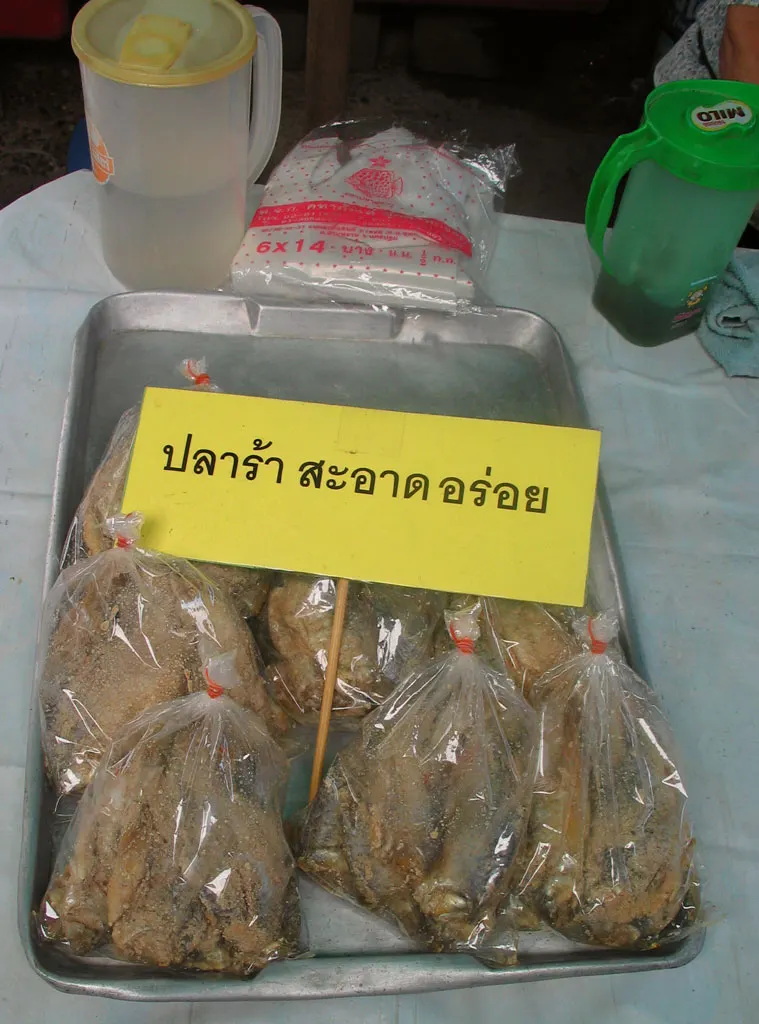
Freshwater fish are gutted, salted and packed in earthenware jars, then mixed with roasted rice or rice bran and left for six months or more. Salt and lactic bacteria turn the fish into a pungent, salty, slightly sour paste that seasons much of north-eastern Thai food.
Fully documentedFish and seafood6 months – 15 months
Amounts from a sourceRatios from the JIRCAS Thai fermented-foods database. It says there is no standard and each producer sets the salt level.
Freshwater fish, gutted, washed and drained
Lean, unsorted fish; small fish are common in the north-east[jircas-plaraa]
Salt1 part to 3–5 parts fish
About 1 to 4 for large fish and 1 to 5 for small fish; each maker has their own level[jircas-plaraa]
Roasted rice, glutinous rice or paddy, coarsely ground; or rice bran, roasted or not1 part to 10 parts fish (roasted grain) or 1 to 5 (bran)
Gives flavour and colour and feeds the bacteria[jircas-plaraa]
Starter
spontaneous
Total time across the recorded steps: 6 months – 15 months
Start
Drag the bar or press Play
What changes:The fish are gutted and washed, and the water drains away
Step 1 of 6
Gut, wash and drain the fish
Time
Not documented
Temperature
Not documented
Salt
None given
Acidity
Not documented
Which microbes the steps name, step by step
T. muriaticus
L. acidipiscis
Lactobacillus rennini
Tetragenococcus
Lactobacilli
Output: cleaned fish.
Flavour
Not documented
Texture
Not documented
Colour
Not documented
Microbes at work in this step
Not documented for this step.
Method
Measured measured in a studySet fixed by a specification or tested recipeReported one source reports itTypical a general value, not sourced for this fermentUnconfirmed not yet checked against a source
At a glance
Freshwater fish are gutted, salted and packed in earthenware jars, then mixed with roasted rice or rice bran and left for six months or more. Salt and lactic bacteria turn the fish into a pungent, salty, slightly sour paste that seasons much of north-eastern Thai food. Made in 6 steps over 6 months – 15 months. The longest step, mix with rice and ferment, takes 6–12 months (JIRCAS 1995). Salt is 16.7–25 % (JIRCAS 1995). Tetragenococcus muriaticus and T. halophilus and Lactobacillus acidipiscis, L. rennini and L. futsaii do most of the fermenting.
Pla ra is a long, high-salt ferment with roasted rice or bran. Plaa-som and som-fak use much less salt and more cooked rice, and are ready in days. Lao padaek is the same food made saltier (15–20 %), and the Lao products Marui et al. tested were less sour (pH 5.7–6.1).
Pla ra nuaSmall to medium fish with salt and rice bran at 4:1:1 for about four to six months; a gentler smell than pla ra hom (Thailand Foundation).
Pla ra homLarge fish such as snakehead, more salt, and six to ten months of fermentation (Thailand Foundation).
Northern Thai pla raLower salt (8.3–8.6 %), pH 4.5–4.8 and 2.4–3.1 g/100 g lactic acid; lactobacilli dominate.
Central Thai pla raSaltier (11.3–12.3 %) and less sour (pH 5.6–5.7); Tetragenococcus dominates.
Safety
Salt is the main control on histamine. In padaek, the Lao sister product, experimental batches started at 6.5 or 10 % salt built up histamine within 2 weeks at 30 °C and passed 1,000 ppm in 6 months, while no histamine was detected in batches at 18 % salt (Marui et al. 2021). The FDA notes that histamine can form during salting and fermenting until a fish product is shelf-stable, and that heating does not remove it once formed. Its current criteria, 35 ppm as a sign of decomposition and 200 ppm as the level where illness is possible, are framed around fish such as tuna and mahi-mahi, and the FDA does not say they apply to freshwater pastes like this one. Long-fermented pla ra rarely holds live liver-fluke larvae, but raw and briefly fermented cyprinid fish do, so pla ra is safest cooked. WHO names fermented and salted fish among foods that have carried botulinum toxin and says C. botulinum will not grow below pH 4.6. Pla ra samples in two studies ran from pH 4.5 to 7.15, so acid cannot be relied on, and no source we read tested pla ra for the toxin.
Hazards the sources name: Liver fluke Opisthorchis viverrini (in raw or briefly fermented cyprinid fish).
Marui et al. (2015) write that fermenting preserved seasonally available freshwater fish and gave value to small fish that are worth little fresh. The Thailand Foundation says that both the practice of fermenting fish and evidence that Thai people commonly ate pla ra are already present in the Ayutthaya kingdom era (1351–1767), and that the French diplomat Simon de la Loubère, who came to Siam in 1687, wrote about fish fermented in earthen jars.