Side-by-side or overlay PDF diff driven by one engine that reads each file into a structured model — text, vector geometry, images, form fields, annotations — and compares the models. Moves show as moves, edits show only where they happened, and any PDF type works without picking a mode.
Open a STEP / STP part and it measures itself — volume, thinnest wall, draft and undercut checks on load, plus hole detection with a BOM. Measure, section, export STL. Rust + WASM B-rep kernel, runs in your browser.
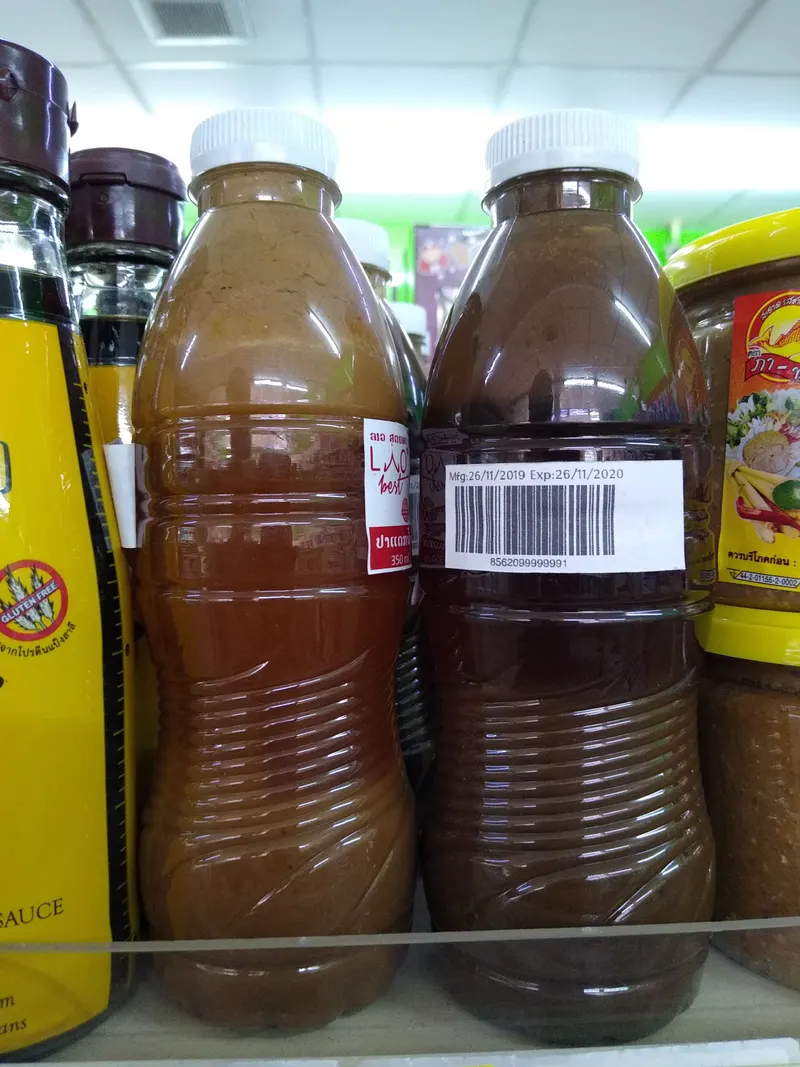
Padaek is the Lao salt-fermented fish paste used to season everyday dishes. Cleaned freshwater fish are mixed with salt and rice bran, about three parts fish to one of each, and left at ambient temperature for months. Salt-loving lactic bacteria ferment it, and the salt level decides whether histamine builds up.
Fully documentedFish and seafood2 months – 12 months
Amounts from a sourceThe traditional household ratio of fish, salt and rice bran, 3:1:1 by weight, as given by JIRCAS for rural Lao producers. There is no fixed batch size.
Total time across the recorded steps: 2 months – 12 months
Start
Drag the bar or press Play
What changes:Starting material: freshwater fish, de-scaled, gutted and washed
Step 1 of 4
Clean the fish
Time
Not documented
Temperature
Not documented
Salt
None given
Acidity
Not documented
Which microbes the steps name, step by step
T. halophilus
Lactic acid bacteria
Flavour
Not documented
Texture
Not documented
Colour
Not documented
Microbes at work in this step
Not documented for this step.
Method
Measured measured in a studySet fixed by a specification or tested recipeReported one source reports itTypical a general value, not sourced for this fermentUnconfirmed not yet checked against a source
At a glance
Padaek is the Lao salt-fermented fish paste used to season everyday dishes. Cleaned freshwater fish are mixed with salt and rice bran, about three parts fish to one of each, and left at ambient temperature for months. Salt-loving lactic bacteria ferment it, and the salt level decides whether histamine builds up. Made in 4 steps over 2 months – 12 months. The longest step, ferment at ambient temperature, takes 2–12 months (Marui J 2021) and runs at 30 °C (Marui J 2021). Salt is 20 % (JIRCAS Research Highlights 2020 (C04)). Tetragenococcus halophilus and T. muriaticus does most of the fermenting.
Padaek is the Lao name for the same family of paste as Thai pla-ra. Lao products sit at the salty end (15–20 % salt) and are fermented by tetragenococci, while low-salt northern Thai pla-ra is soured by lactobacilli and is far more acidic.
Salt controls histamine. In experimental padaek held at 30 °C, 10 % and 6.5 % starting salt let histamine build up within 2 weeks and pass 1,000 ppm within 6 months, while 18 % salt kept it undetectable for 6 months. Levels of 500 to 1,000 ppm are considered potentially hazardous, so keep the salt near the 3:1:1 recipe. Cooking does not remove histamine once it has formed. The fish starts raw, and liver fluke, a parasite linked to bile-duct cancer, is common in Laos. A review says live larvae are rare in fully preserved pla ra, the Thai form of this paste, which it describes as highly salted and stored at least 2–3 months. It ranks fish preserved under 7 days as a likelier source. Rare does not mean none, so do not eat a younger or low-salt batch raw.
Hazards the sources name: Histamine-forming bacteria at low salt (histamine above 1,000 ppm within 6 months at 10 % and 6.5 % starting salt).
A 2020 article on padaek among the Isan people of north-east Thailand says the fish that run up the tributaries and flooded land of the Chi river basin in May and June, mainly minnows (sio) and soi, spoil quickly because the rainy season has little sun. Households kept them as padaek, packed with salt into narrow-mouthed stone jars that had to be filled by stuffing the fish in by hand. The article gives that stuffing (the Isan verb daek) as the origin of the name, says the method passed from parents to children, and says padaek was once made only for the household and is now also made for sale.