Side-by-side or overlay PDF diff driven by one engine that reads each file into a structured model — text, vector geometry, images, form fields, annotations — and compares the models. Moves show as moves, edits show only where they happened, and any PDF type works without picking a mode.
Open a STEP / STP part and it measures itself — volume, thinnest wall, draft and undercut checks on load, plus hole detection with a BOM. Measure, section, export STL. Rust + WASM B-rep kernel, runs in your browser.
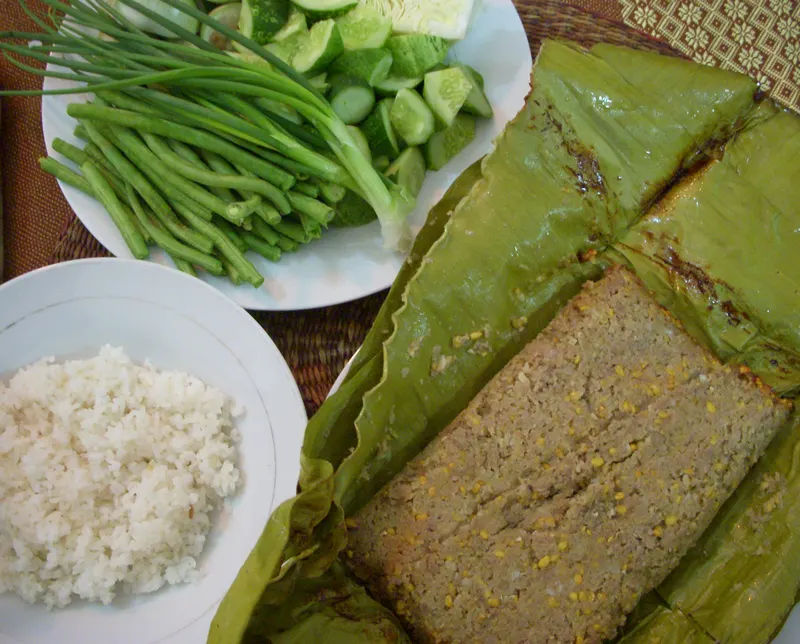
Prahok is Cambodia's salted, fermented freshwater-fish paste. Cleaned fish are soaked, pressed under stone plates, mixed with a lot of salt and left in closed containers for about six months. Salt-loving bacteria ripen it into a paste that is cooked before eating.
Fully documentedFish and seafood6 months – 8 months
Amounts from a sourceThe laboratory preparation of Thanh et al. 2025, which followed the traditional steps of filleting, soaking, pressing, salting and fermenting.
Freshwater fish
Cleaned and cut into small pieces without head, bones or scales[thanh2025]
Total time across the recorded steps: 6 months – 8 months
Start
Drag the bar or press Play
What changes:Starting material: freshwater fish, cleaned and cut without head, bones or scales
Step 1 of 5
Clean and cut the fish
Time
Not documented
Temperature
Not documented
Salt
None given
Acidity
Not documented
Flavour
Not documented
Texture
Not documented
Colour
Not documented
Microbes at work in this step
Not documented for this step.
Method
Measured measured in a studySet fixed by a specification or tested recipeReported one source reports itTypical a general value, not sourced for this fermentUnconfirmed not yet checked against a source
At a glance
Prahok is Cambodia's salted, fermented freshwater-fish paste. Cleaned fish are soaked, pressed under stone plates, mixed with a lot of salt and left in closed containers for about six months. Salt-loving bacteria ripen it into a paste that is cooked before eating. Made in 5 steps over 6 months – 8 months. The longest step, salt and ferment in closed containers, takes 6–8 months (Thanh C 2025) and runs at 25–32 °C (Thanh C 2025). Salt is 30 % (Thanh C 2025). Lentibacillus does most of the fermenting.
In the study recipe the fish is soaked for 20 h and pressed under stone plates for 6 h before it is salted with 30 % NaCl. Rather than lactic bacteria, the salt-loving Lentibacillus dominates at the end.
Fat oxidises as it ages: the peroxide value passed the Codex reference of 10 meq O2/kg from month 4 and kept rising. Histamine stayed below quantification in the lab paste but was 51.7 and 113.5 mg/kg in two market samples. A wider survey found 35–408 ppm in 12 market samples, and one was above 400 ppm, a limit the authors take from EU rules for fishery products matured in brine (Ly et al. 2020). The US FDA says that once histamine has formed, heat cannot remove it. The study authors advise limiting fermentation to about 3 months and always cooking prahok rather than eating it fresh, since it may carry pathogens or parasites (Thanh et al. 2025). A Mekong review names raw or inadequately cooked pra hok among the ways people catch the liver fluke Opisthorchis viverrini (Sithithaworn et al. 2012). E. coli was found in about a third of market samples (Chrun et al. 2023).
Hazards the sources name: Aeromonas (abundant right after salting); Clostridium (present throughout the ferment); Escherichia coli in 9 of 26 market prahok samples (35 %); Opisthorchis viverrini (liver fluke), named for raw or inadequately cooked pra hok in a Mekong review.
Narzary et al. (2021) report that Cambodia's government introduced industry standards for prahok production in 2016, covering traits such as colour and smell. They say the standards followed the realisation that prahok was so popular among Cambodians at home and abroad that its health and safety needed monitoring.