Side-by-side or overlay PDF diff driven by one engine that reads each file into a structured model — text, vector geometry, images, form fields, annotations — and compares the models. Moves show as moves, edits show only where they happened, and any PDF type works without picking a mode.
Open a STEP / STP part and it measures itself — volume, thinnest wall, draft and undercut checks on load, plus hole detection with a BOM. Measure, section, export STL. Rust + WASM B-rep kernel, runs in your browser.
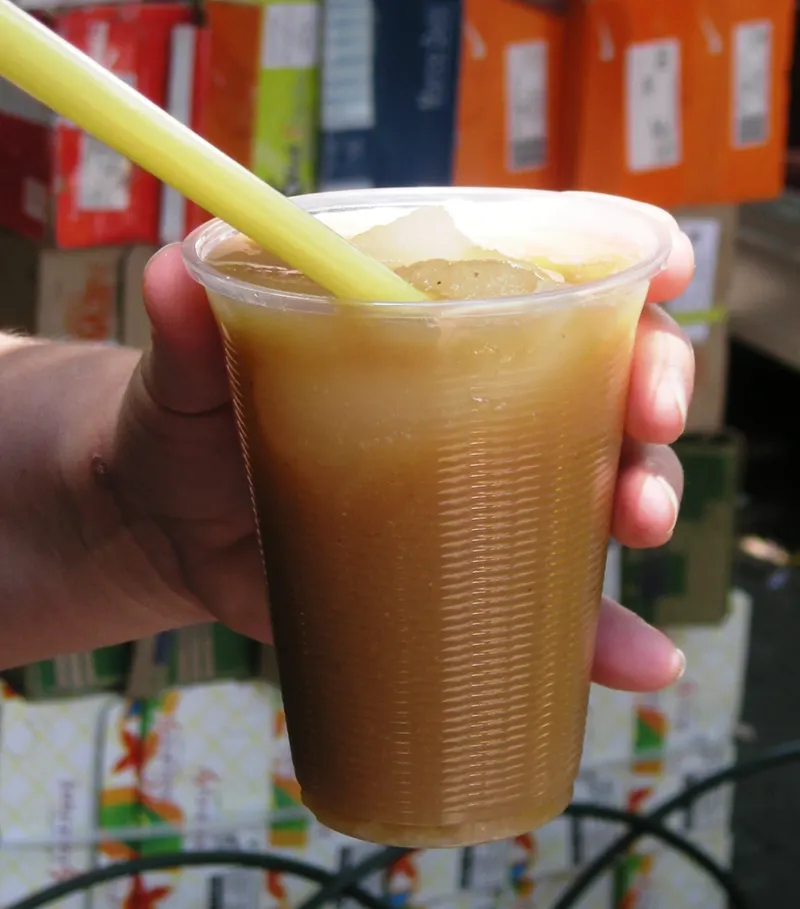
Nixtamalised maize dough is mixed with water and piloncillo into a drink, then left 12 to 24 hours with some old tejuino to sour. Additives such as salt and lemon juice are incorporated, and the drink is sour and low in alcohol.
Kept back from an earlier batch as the starter[rubio2021]
Salt and lemon juice
Named as additives in the study; it does not say when they are added[rubio2021]
Starter
old tejuino (tejuino viejo)
Total time across the recorded steps: 12 h – 25 h
Start
Drag the bar or press Play
What changes:Masa is stirred with water into a mixture
Step 1 of 5
Mix the masa with water
Time
Not documented
Temperature
Not documented
Salt
None given
Acidity
Not documented
Which microbes the steps name, step by step
Yeasts
Lactic acid bacteria
Output: masa and water mixture.
Flavour
Not documented
Texture
Not documented
Colour
Not documented
Microbes at work in this step
Not documented for this step.
Method
Measured measured in a studySet fixed by a specification or tested recipeReported one source reports itTypical a general value, not sourced for this fermentUnconfirmed not yet checked against a source
At a glance
Nixtamalised maize dough is mixed with water and piloncillo into a drink, then left 12 to 24 hours with some old tejuino to sour. Additives such as salt and lemon juice are incorporated, and the drink is sour and low in alcohol. Made in 5 steps over 12 h – 25 h. The longest step, add old tejuino and ferment, takes 12–24 h (Rubio-Castillo Á.E 2021). Pichia yeasts and Lactiplantibacillus plantarum in commercial (street) tejuino and Saccharomyces cerevisiae and Limosilactobacillus fermentum in artisanal tejuino do most of the fermenting.
Street tejuino starts from nixtamal masa sweetened with piloncillo and sours in a day, seeded by old tejuino. Indigenous tesgüino and artisanal tejuino start from germinated maize and ferment for days; mestizo tesgüino is lower in alcohol than the Indigenous drink.
Artisanal tejuino (germinated maize)Maize is germinated in the dark and sun-dried 2–3 days, mixed with water and cooked; the sediment ferments 24 h, then the whole is filtered and fermented about 7 days, to pH 2.91–3.52.
Tesgüino (Tarahumara and others)Germinated maize or maize-stalk juice, sometimes with plant barks; see the tesgüino entry.
Safety
Total coliforms were absent from all eight tejuino samples tested (four artisanal, four commercial), and the samples were sour, at pH 2.91–3.96. The study counted coliforms, aerobic bacteria, yeasts and moulds and reports no test for named pathogens. It isolated Staphylococcus warneri from commercial tejuino, called Staphylococcus undesirable and related it to food handling.
Hazards the sources name: Staphylococcus warneri, isolated from commercial tejuino; the authors call Staphylococcus undesirable and relate it to food handling.
The names tesgüino and tejuino come from the Nahuatl tecuin, "heartbeat". The mestizo drink of northern and western Mexico is lower in alcohol than Indigenous tesgüino and is drunk mainly as a refreshment in hot weather.