Side-by-side or overlay PDF diff driven by one engine that reads each file into a structured model — text, vector geometry, images, form fields, annotations — and compares the models. Moves show as moves, edits show only where they happened, and any PDF type works without picking a mode.
Open a STEP / STP part and it measures itself — volume, thinnest wall, draft and undercut checks on load, plus hole detection with a BOM. Measure, section, export STL. Rust + WASM B-rep kernel, runs in your browser.
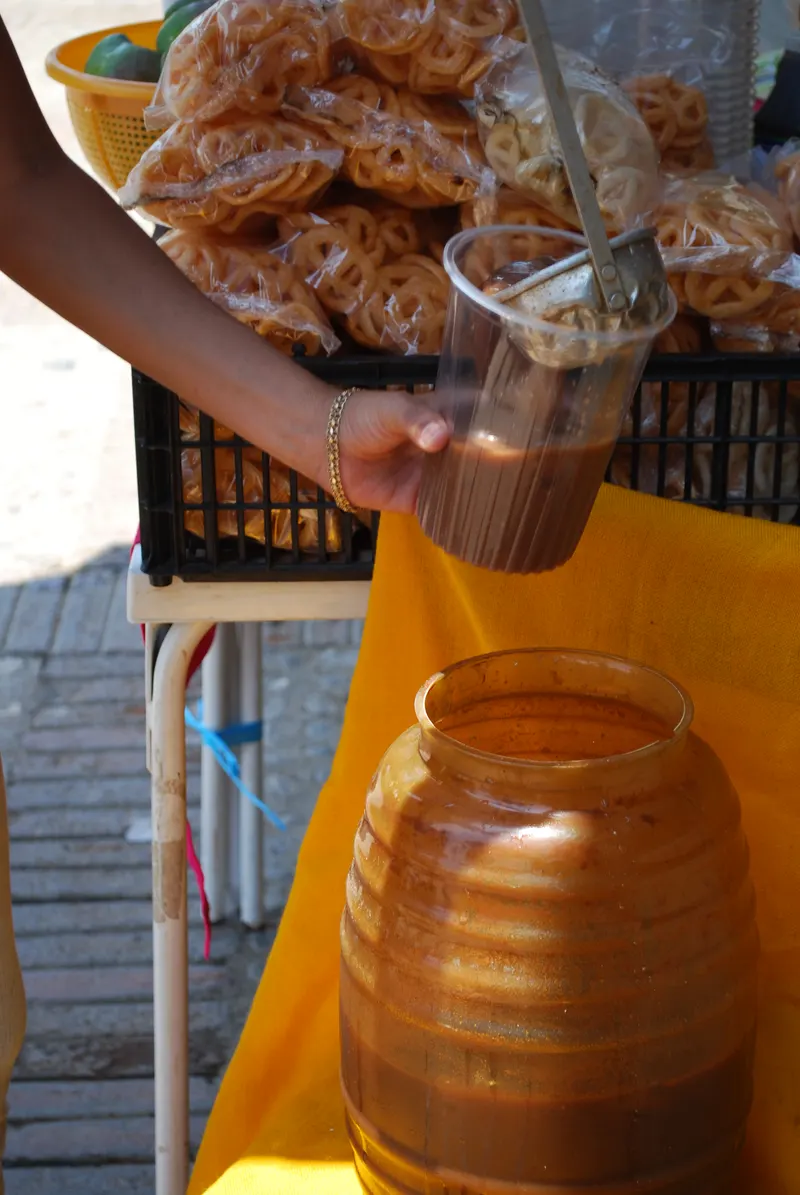
Pozol is a fermented maize dough from south-east Mexico. White maize is boiled in lime water, rinsed, ground coarsely and shaped into balls that are wrapped in banana leaves and left for one to fourteen days or more. The sour dough is stirred into water and drunk uncooked.
Total time across the recorded steps: 25 h – 14 days
Start
Drag the bar or press Play
What changes:Maize boils in lime water until the hulls loosen
Step 1 of 5
Boil the maize in lime water (nixtamalise)
Time
1 h
Reported
Temperature
Not documented
Salt
None given
Acidity
pH 5.7 → 7.5
Reported
Which microbes the steps name, step by step
Lactic acid bacteria
Yeasts
Moulds
Output: nixtamal.
Flavour
Not documented
Texture
Not documented
Colour
Not documented
Microbes at work in this step
the FAO bulletin says the heat destroys most microbes on the kernels and new ones enter at grinding; the lime loosens the hull
Method
Measured measured in a studySet fixed by a specification or tested recipeReported one source reports itTypical a general value, not sourced for this fermentUnconfirmed not yet checked against a source
At a glance
Pozol is a fermented maize dough from south-east Mexico. White maize is boiled in lime water, rinsed, ground coarsely and shaped into balls that are wrapped in banana leaves and left for one to fourteen days or more. The sour dough is stirred into water and drunk uncooked. Made in 5 steps over 25 h – 14 days. The longest step, wrap in banana leaves and ferment, takes 24 h – 14 days (Haard N.F. et al. 1999) and runs at 28 °C (Haard N.F. et al. 1999). Streptococcus and Heterofermentative lactic acid bacteria close to Lactobacillus fermentum in the first 2 days, then homofermentative relatives of L. plantarum, L. casei and L. delbrueckii do most of the fermenting.
Pozol starts from nixtamalised maize, boiled in lime water, and ferments as solid dough balls wrapped in banana leaves. The dough is then stirred into water and drunk raw, never cooked again.
Pozol is drunk uncooked. Some aflatoxin from mouldy maize survives liming and persists through fermentation. In one survey of unfermented market pozol, 19 of 111 samples held aflatoxin B2 with traces of B1, far more often in pozol with cacao (41.5 %) than in white-maize pozol (5.4 %). Only 1 of the 19 was above 20 ppb, and yellow-maize pozol held none. In lab acid tests, E. coli strains isolated from pozol survived acid better once adapted to it. Of 73 strains, 70 belonged to a pathogenic class, had virulence factors or survived below pH 4.8. Other fermented maize foods, and coconut ferments, have caused fatal bongkrekic acid poisoning [han2023, anwar2017]. We found no report of it from pozol, but this bacterial toxin is heat-stable, and food that holds it can look, smell and taste normal.
Hazards the sources name: Enterobacteriaceae (10^2–10^3 per g at the start, 5 × 10^5 per g after 30 h); Escherichia coli strains isolated from pozol; 70 of 73 belonged to a pathogenic class, had virulence factors or survived below pH 4.8 in lab tests; Aflatoxins from Aspergillus flavus in the maize (most destroyed by lime and heat; the rest persists).
Pozol was used as food and in ceremonies by the Maya for centuries before the Spanish conquest, and Maya farmers still offer it at stages of the maize crop.