Side-by-side or overlay PDF diff driven by one engine that reads each file into a structured model — text, vector geometry, images, form fields, annotations — and compares the models. Moves show as moves, edits show only where they happened, and any PDF type works without picking a mode.
Open a STEP / STP part and it measures itself — volume, thinnest wall, draft and undercut checks on load, plus hole detection with a BOM. Measure, section, export STL. Rust + WASM B-rep kernel, runs in your browser.
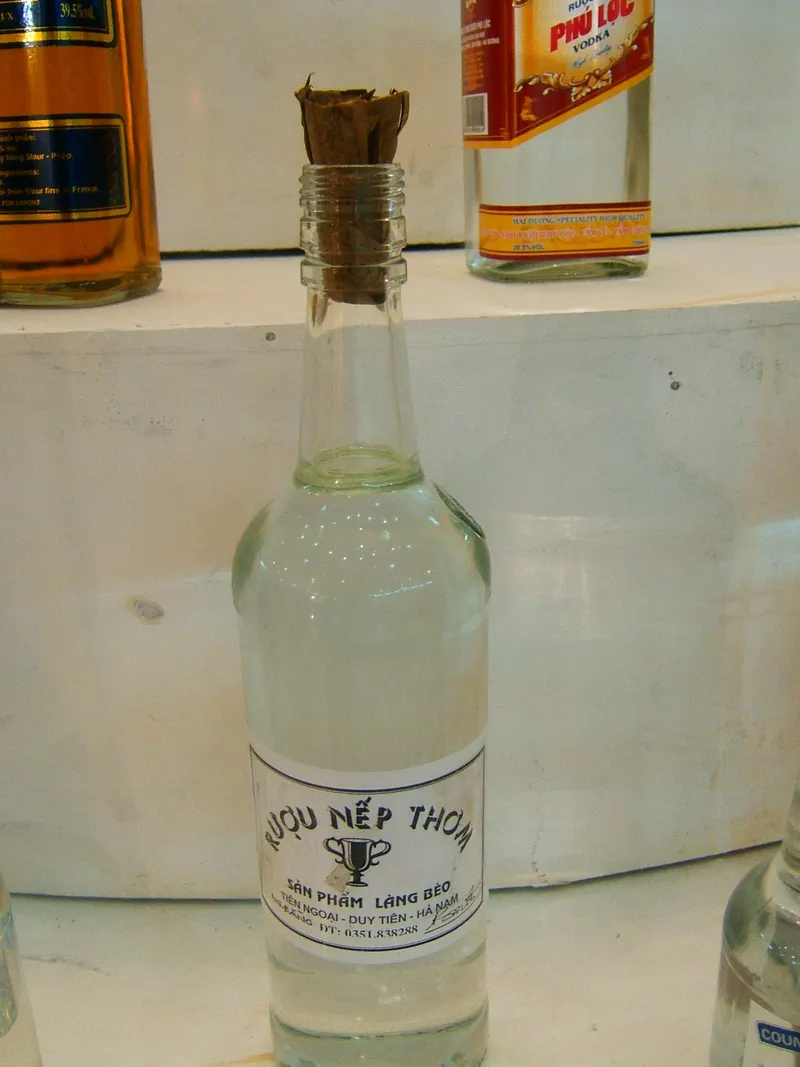
Cooked glutinous rice mixed with a crumbled yeast cake (bánh men) ferments in a few days into rượu nếp, a sweet, mildly alcoholic rice eaten with its juice; in the south, as cơm rượu, it is made into balls of white glutinous rice in a mildly alcoholic rice wine. Left longer, the rice mash is distilled in a simple still into rượu đế, the clear rice spirit of the countryside.
No fixed amounts recordedThe sources give no recipe weights. A Cần Thơ study describes cơm rượu as cooked glutinous rice cooled and incubated with the yeast cake for 2–3 days. For rượu đế, a survey of three upland districts of Bình Trị Thiên describes rice cooked with about its own volume of water and mixed with crushed yeast cake, with no fixed weights.
Glutinous rice
Cooked and cooled; for the spirit, rice is washed two or three times and cooked with about its own volume of water[thanh2024][hue2024]
Bánh men (yeast cake), ground fine
Sprinkled over the cooled rice and mixed in by hand or chopsticks; no fixed weight is given in the sources used[thanh2024][hue2024]
Banana leaf
Wikipedia says rượu nếp is steamed in a banana leaf[WP:Rượu nếp]
Starter
koji/qu/mold-starter (bánh men, a rice yeast cake of moulds and yeasts)
Total time across the recorded steps: 10 days – 15 days
Start
Drag the bar or press Play
What changes:Glutinous rice is cooked until soft
Step 1 of 5
Wash and cook the glutinous rice
Time
Not documented
Temperature
Not documented
Salt
None given
Acidity
Not documented
Which microbes the steps name, step by step
Yeasts
Moulds
Saccharomyces
For the spirit, the rice is washed two or three times and cooked with about its own volume of water. Output: cooked glutinous rice.
Flavour
Not documented
Texture
Not documented
Colour
Not documented
Microbes at work in this step
Not documented for this step.
Method
Measured measured in a studySet fixed by a specification or tested recipeReported one source reports itTypical a general value, not sourced for this fermentUnconfirmed not yet checked against a source
At a glance
Cooked glutinous rice mixed with a crumbled yeast cake (bánh men) ferments in a few days into rượu nếp, a sweet, mildly alcoholic rice eaten with its juice; in the south, as cơm rượu, it is made into balls of white glutinous rice in a mildly alcoholic rice wine. Left longer, the rice mash is distilled in a simple still into rượu đế, the clear rice spirit of the countryside. Made in 5 steps over 10 days – 15 days. The longest step, ferment longer for spirit (rượu đế), takes 8–12 days (Nguyễn Văn Huế 2024) and runs at 25–35 °C (Nguyễn Văn Huế 2024). Yeasts and moulds, 3.1 × 10⁶ to 2.0 × 10⁷ CFU/g in cơm rượu; 15 yeast and 5 mould strains were isolated from the starter and the cơm rượu and Saccharomyces yeasts isolated from bánh men; in a laboratory trial, selected strains made 8.6 % (w/v) ethanol from saccharified glutinous rice liquid in 5 days at 30 °C do most of the fermenting.
Unlike rượu cần, which is drunk from the jar through tubes and never distilled, rượu nếp is eaten as sweet fermented rice after a few days, and rượu đế is the same kind of mash distilled into spirit. Both start from cooked rice and a bánh men starter rather than a leaf starter.
The yeast cake shapes how much methanol, aldehydes and furfural form during fermentation. Household distillation varies batch to batch with the weather, the cook and crude stills, and some household spirit is of low quality. Do not assume any of it is free of methanol. Trial batches of leaf-starter spirit in the Huế book all held some (44.4 mg per litre of pure alcohol in one 40 kg batch), with far more from households' own yeast cakes than from a newly developed one. In a 2019 pilot in 20 Phú Thọ households, 17 rice-spirit samples held methanol, up to 37 mg/L; the authors judged that too little to cause toxicity in their study, which they said supports methanol added after production as the main source of mass poisonings. WHO also says outbreaks often occur when illegally produced drinks are adulterated with it. Methanol cannot be tasted in a drink, and poisoning can blind or kill. Avoid unlabelled spirit from a seller you do not know. A home still gives no way to test what it makes.
Hazards the sources name: Bacillus, 1.00–1.98 log CFU/g in the same samples, possibly contaminants; total coliforms and E. coli were below 3 MPN/g; Methanol, 44.4 mg per litre of pure alcohol in one trial batch of leaf-starter rice spirit (rượu men lá, a related spirit).