Side-by-side or overlay PDF diff driven by one engine that reads each file into a structured model — text, vector geometry, images, form fields, annotations — and compares the models. Moves show as moves, edits show only where they happened, and any PDF type works without picking a mode.
Open a STEP / STP part and it measures itself — volume, thinnest wall, draft and undercut checks on load, plus hole detection with a BOM. Measure, section, export STL. Rust + WASM B-rep kernel, runs in your browser.
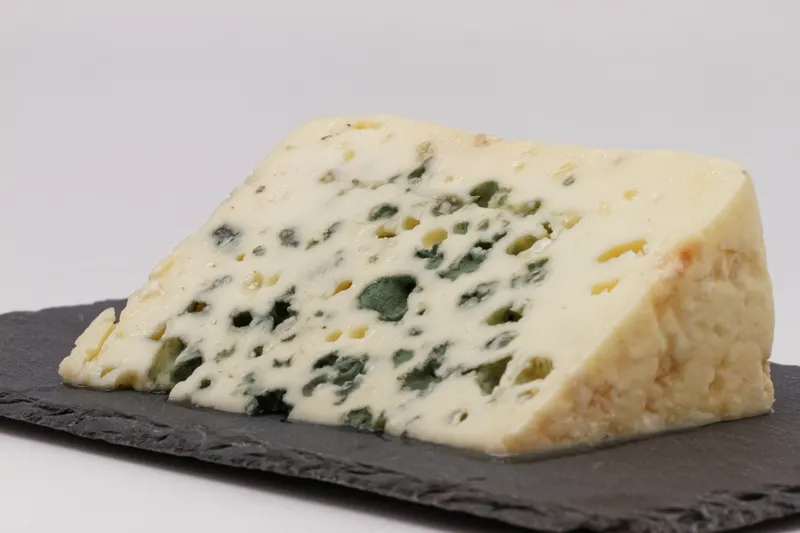
Raw, whole ewe milk is set with rennet at 28–34 °C and seeded with Penicillium roqueforti grown from strains isolated in the Roquefort caves. The curd drains without pressing, is dry-salted and pierced, then sits bare for at least two weeks in the Combalou caves before it is wrapped and matured to at least 90 days.
Allowed, including an optional surface flora[cdc-roq2026]
Starter
Penicillium roqueforti from cave strains, plus allowed bacterial, yeast and mould cultures
Total time across the recorded steps: 3.5 months
Start
Drag the bar or press Play
What changes:Starting material: raw, whole ewe milk from two milkings a day
Step 1 of 7
Collect raw ewe milk
Time
up to 24 h
Set
Temperature
up to 10 °C
Set
Salt
None given
Acidity
Not documented
Which microbes the steps name, step by step
Penicillium roqueforti
Moulds
Output: whole raw ewe milk.
Flavour
Not documented
Texture
Not documented
Colour
white
Microbes at work in this step
the milk is only filtered; no other physical treatment is allowed
Method
Measured measured in a studySet fixed by a specification or tested recipeReported one source reports itTypical a general value, not sourced for this fermentUnconfirmed not yet checked against a source
At a glance
Raw, whole ewe milk is set with rennet at 28–34 °C and seeded with Penicillium roqueforti grown from strains isolated in the Roquefort caves. The curd drains without pressing, is dry-salted and pierced, then sits bare for at least two weeks in the Combalou caves before it is wrapped and matured to at least 90 days. Made in 7 steps over 3.5 months. The longest step, wrap and mature slowly, takes at least 3 months (Ministère de l'agriculture 2026) and runs at at least -5 °C (Ministère de l'agriculture 2026). Penicillium roqueforti (blue veins), from strains isolated in the Roquefort caves does most of the fermenting.
Roquefort must ripen in the Combalou caves, where air from rock faults keeps them cool and damp. Its mould comes from cave strains, and it is wrapped only after at least two weeks bare in the caves. Stilton uses pasteurised cow milk and milled curd.
Milk
Raw, whole ewe milk from two milkings a day, stored on the farm for up to 24 h at 10 °C or less
Setting
Rennet at 28–34 °C, within 48 h of the oldest milking
Piercing
Pierced at most 2 days before the cheese enters the cave
Ripening
At least 90 days from making, with at least 2 weeks bare in the Combalou caves ventilated by the fleurines
Size
2.5–3 kg, 19–20 cm across, 8.5–11.5 cm high; fat in dry matter at least 52 %; dry matter at least 55 %
The milk is raw. The NHS lists soft blue-veined cheeses such as Roquefort among foods to cook until steaming hot in pregnancy because of Listeria. ANSES advises pregnant women, young children, people over 65 and people with weak immunity to avoid raw-milk cheeses other than cooked pressed ones such as Gruyère or Comté.
The specification says the cheese is mentioned in 1070 in the cartulary of the abbey of Conques in Aveyron. A ruling of the Toulouse Parliament in 1666 confirmed the royal privileges granted since Charles VI and gave the people of Roquefort-sur-Soulzon the sole right to ripen it. In the 18th century Diderot and d'Alembert called it the king of cheeses. Later court judgments confined ripening to the scree of the Combalou, and on 26 July 1925 a law made Roquefort the first cheese recognised with an appellation of origin.