Side-by-side or overlay PDF diff driven by one engine that reads each file into a structured model — text, vector geometry, images, form fields, annotations — and compares the models. Moves show as moves, edits show only where they happened, and any PDF type works without picking a mode.
Open a STEP / STP part and it measures itself — volume, thinnest wall, draft and undercut checks on load, plus hole detection with a BOM. Measure, section, export STL. Rust + WASM B-rep kernel, runs in your browser.
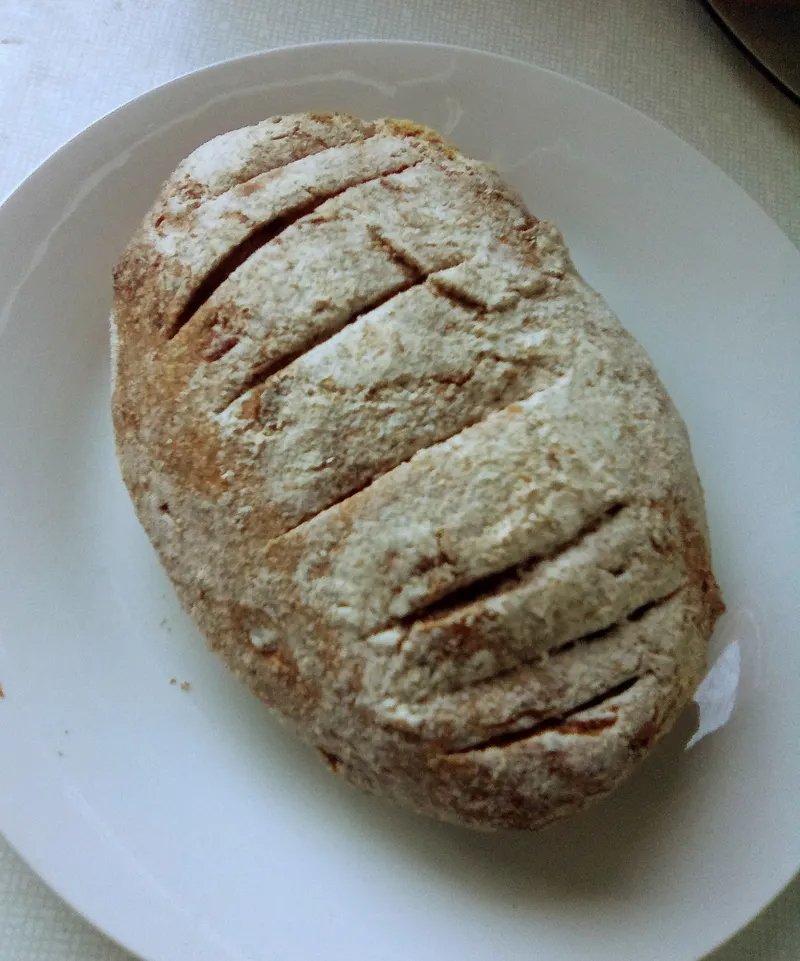
Boiled, mashed potato is stirred with flour and sugar and left warm for one to several days, until yeasts and lactic bacteria make this starter (the "bug") rise and bubble. The bug is kneaded with flour and water, and the dough is baked into a sweet-and-sour loaf; a small piece of the dough is kept back to start the next bug, and some potato cultures have been kept going for many decades.
Amounts from a sourceA reader's recipe posted in the comments on the Food Lovers rewena starter page (a New Zealand recipe site); the site says its member recipes are not individually tested. Quantities are in cups and make two loaves or rounds. A scoop of about two dessert spoons of the dough is kept back to start the next bug.
Potatoes3 medium
For the starter; peeled, sliced and boiled in 1 cup of water to a mash[foodlovers]
Flour2 cups
For the starter, added with the sugar once the mash is lukewarm[foodlovers]
other: potato starter (bug) of mashed potato, flour and sugar, back-slopped and fed like a sourdough
Total time across the recorded steps: 25 h – 3 days
Start
Drag the bar or press Play
What changes:Sliced potatoes boil soft in a little water and are mashed
Step 1 of 4
Boil and mash the potatoes
Time
Not documented
Temperature
Not documented
Salt
None given
Acidity
Not documented
Which microbes the steps name, step by step
Yeasts
L. paracasei
The potatoes are peeled, sliced and boiled in 1 cup of water to a mashing consistency, then mashed with the water left in the pot. Output: lukewarm mashed potato.
Flavour
Not documented
Texture
Not documented
Colour
Not documented
Microbes at work in this step
Not documented for this step.
Method
Measured measured in a studySet fixed by a specification or tested recipeReported one source reports itTypical a general value, not sourced for this fermentUnconfirmed not yet checked against a source
At a glance
Boiled, mashed potato is stirred with flour and sugar and left warm for one to several days, until yeasts and lactic bacteria make this starter (the "bug") rise and bubble. The bug is kneaded with flour and water, and the dough is baked into a sweet-and-sour loaf; a small piece of the dough is kept back to start the next bug, and some potato cultures have been kept going for many decades. Made in 4 steps over 25 h – 3 days. The longest step, make and ferment the bug, takes 24 h – 3 days (Wikipedia). Lacticaseibacillus paracasei and Saccharomyces cerevisiae do most of the fermenting.
Rēwena is leavened by a starter built on cooked potato, flour and sugar instead of flour and water alone. In the one starter studied, the lactic acid bacteria isolates were identified as Lacticaseibacillus paracasei and the yeast isolates as Saccharomyces cerevisiae.
Sun et al. 2022 write that Māori have baked rēwena for more than a century, and that some back-slopped potato starters have been maintained for many decades. Rēwena transliterates the English word "leaven" and parāoa the word "flour", which also came to mean bread or dough.