Side-by-side or overlay PDF diff driven by one engine that reads each file into a structured model — text, vector geometry, images, form fields, annotations — and compares the models. Moves show as moves, edits show only where they happened, and any PDF type works without picking a mode.
Open a STEP / STP part and it measures itself — volume, thinnest wall, draft and undercut checks on load, plus hole detection with a BOM. Measure, section, export STL. Rust + WASM B-rep kernel, runs in your browser.
A very wet starter of flour, sugar, water and a little dry yeast is stirred daily for ten days and fed twice with flour, sugar and milk. On day 10 it is divided into portions; one is baked into a sweet cake, one is kept to start again, and the rest are given to friends with the instructions.
A short entry: the sources we found record only what is said here about Herman itself.
Amounts from a sourceDr. Oetker's Hermann base recipe, which ends as four 200 g portions. The US Amish version from Cornell Cooperative Extension starts with 1 packet of yeast in 1/4 cup warm water and 1 cup each of flour, sugar and milk, and makes about 4 bags of 1 cup.
backslop (one portion of the finished starter begins the next cycle); first seeded with dry yeast
Total time across the recorded steps: 8 days
Start
Drag the bar or press Play
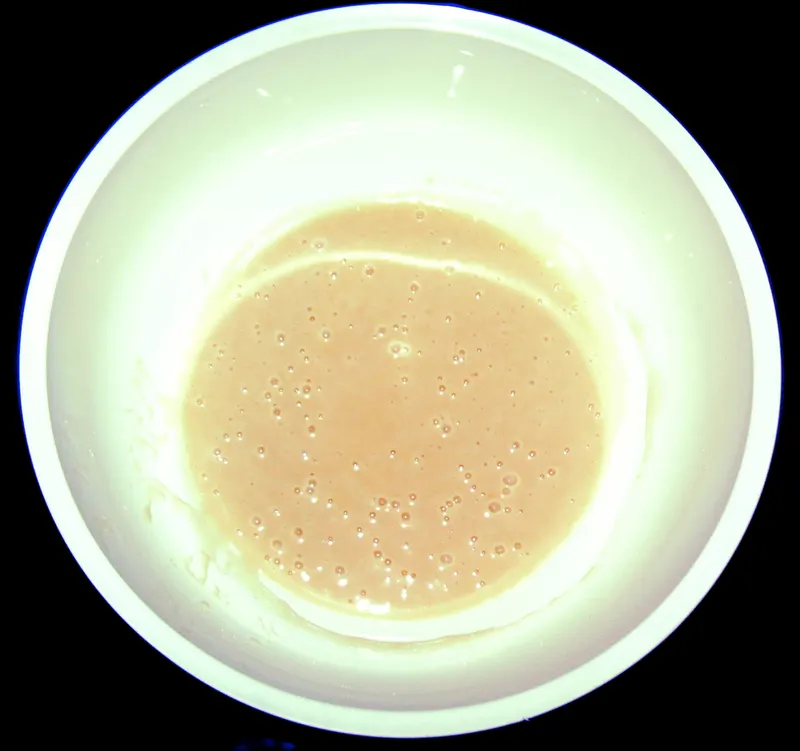
What changes:Flour, sugar, dry yeast and lukewarm water are stirred into a thin batter
Step 1 of 6
Mix the starter
Time
Not documented
Temperature
Not documented
Salt
None given
Acidity
Not documented
Which microbes the steps name, step by step
Yeasts
Use plastic or wooden bowls and spoons, not metal. Output: thin batter in a closed plastic bowl.
Flavour
Not documented
Texture
very liquid
Colour
Not documented
Microbes at work in this step
Not documented for this step.
Method
Measured measured in a studySet fixed by a specification or tested recipeReported one source reports itTypical a general value, not sourced for this fermentUnconfirmed not yet checked against a source
At a glance
A very wet starter of flour, sugar, water and a little dry yeast is stirred daily for ten days and fed twice with flour, sugar and milk. On day 10 it is divided into portions; one is baked into a sweet cake, one is kept to start again, and the rest are given to friends with the instructions. Made in 6 steps over 8 days. The longest step, rest warm, then stir daily, takes 4 days (Dr. Oetker Schweiz). Baker's yeast, added as dry yeast does most of the fermenting.
Amish friendship bread (USA)The same 10-day chain, started with yeast dissolved in water at about 110 °F, kept in a zip bag at room temperature, mashed daily and fed on day 6 and day 10 with 1 cup each, then 1/2 cup each, of flour, sugar and milk.
Refrigerated HermannDr. Oetker's German recipe moves the starter to the refrigerator from day 3.
Safety
University extension advice calls raw milk unsafe and says to discard a starter that smells bad or shows orange or red spots or slime. Milk and eggs can support the growth of disease-causing bacteria, so a starter of water, flour, sugar and yeast is a safer choice than one with milk and wild yeast. After the first two or three days at room temperature, NDSU says most food safety experts advise keeping the batter refrigerated, and the US Amish recipe's ten days on the counter does not follow that. NDSU also says outbreaks have not been directly linked to modern friendship starters, but it still advises these precautions.
Hazards the sources name: Bacteria from raw (unpasteurised) milk or from eggs, such as Salmonella, if these are used.
German Wikipedia says the name Hermann has been known in German-speaking countries since the 1970s at the latest, and that nothing reliable is known about the origin of the name. It says the starter is passed on by friends with a letter of instructions, the Hermann-Brief, a custom that arose around 1980 in the German peace and ecology movement and spread as a chain letter.