Side-by-side or overlay PDF diff driven by one engine that reads each file into a structured model — text, vector geometry, images, form fields, annotations — and compares the models. Moves show as moves, edits show only where they happened, and any PDF type works without picking a mode.
Open a STEP / STP part and it measures itself — volume, thinnest wall, draft and undercut checks on load, plus hole detection with a BOM. Measure, section, export STL. Rust + WASM B-rep kernel, runs in your browser.
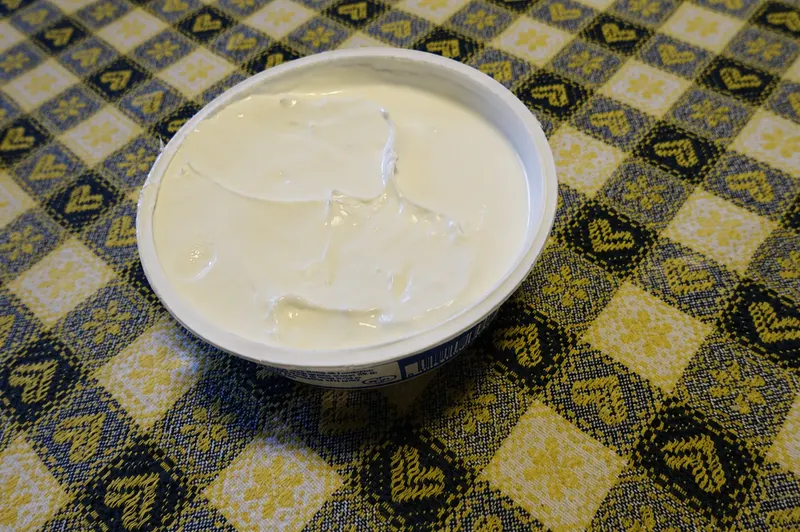
Mascarpone is a boundary entry, not a true ferment. Cream is heated to about 90 °C and set with citric or another food acid; no bacteria sour it. The curd rests for 8–12 hours, drains through fine cloth and is chilled, giving a sweet, buttery cream cheese.
Total time across the recorded steps: 46 h – 2.1 days
Start
Drag the bar or press Play
What changes:Cream is heated in a water bath to about 90 °C
Step 1 of 5
Heat the cream in a water bath
Time
Not documented
Temperature
85–95 °C
Reported
Salt
None given
Acidity
Not documented
Output: hot cream.
Flavour
Not documented
Texture
Not documented
Colour
Not documented
Microbes at work in this step
Not documented for this step.
Method
Measured measured in a studySet fixed by a specification or tested recipeReported one source reports itTypical a general value, not sourced for this fermentUnconfirmed not yet checked against a source
At a glance
Mascarpone is a boundary entry, not a true ferment. Cream is heated to about 90 °C and set with citric or another food acid; no bacteria sour it. The curd rests for 8–12 hours, drains through fine cloth and is chilled, giving a sweet, buttery cream cheese. Made in 5 steps over 46 h – 2.1 days. The longest step, drain through fine cloth, takes 20 h (Capozzi V 2020).
Mascarpone is made from cream, not milk, and is set by heat and acid, not by bacteria or rennet, so it is a boundary entry. Ricotta is also heat-set, but from whey.
Milk
Cream, not milk
Ripening
Fresh; it keeps only a short time
Setting
Cream heated to about 90 °C and set with citric acid (Lombardy PAT sheet)
Mascarpone is not acidified by bacteria. A survey of 1,017 retail samples, 878 of them from a plant involved in a botulism outbreak, found Clostridium botulinum spores in 32.5 % and type A toxin in 7 of the 878. The pH, water activity and redox potential of all samples allowed it to grow. It grew and made toxin in naturally and experimentally contaminated mascarpone after 3 and 4 days at 28 °C, so keep it refrigerated. The 90 °C heating does not kill the spores, which WHO says can survive boiling. In a challenge test that added spores of C. sporogenes, a non-toxic relative, there was no growth at 4 or 12 °C in checks up to 40 days, but it grew at 25 °C. The starting pH was 6.14.
Hazards the sources name: Clostridium botulinum spores in 32.5 % of 1,017 retail samples in one survey; 878 samples came from a plant involved in a botulism outbreak, and 7 of those also held type A toxin. It grew and made toxin in naturally and experimentally contaminated mascarpone held at 28 °C.
The regional sheet says the name probably comes from mascherpa, a Lombard dialect word for cream. Farms once made it only in winter, because it keeps badly.