Side-by-side or overlay PDF diff driven by one engine that reads each file into a structured model — text, vector geometry, images, form fields, annotations — and compares the models. Moves show as moves, edits show only where they happened, and any PDF type works without picking a mode.
Open a STEP / STP part and it measures itself — volume, thinnest wall, draft and undercut checks on load, plus hole detection with a BOM. Measure, section, export STL. Rust + WASM B-rep kernel, runs in your browser.
Cheese from Eastern parts of India, Bangladesh and Nepal
Chhenaছানা
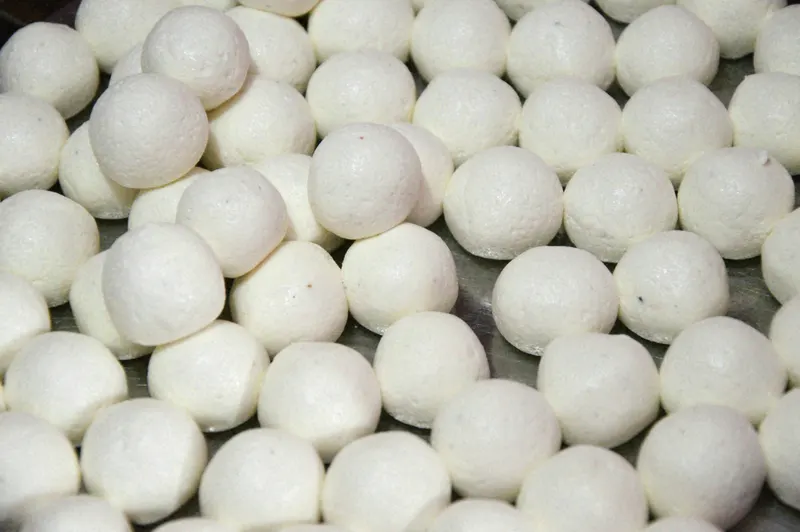
Chhena is a boundary entry, not a true ferment. Hot milk is curdled with citric acid, lime juice or another acid, and the soft curd is drained in muslin without pressing; no microbes do the work. It is the base of sweets such as rasogolla and sandesh.
Amounts from a sourceAmounts are from one laboratory method (Chakraborty et al. 2021) for 500 g of milk. Home makers use the juice of one ripe lime for a pan of boiling milk.
Total time across the recorded steps: 32 min – 37 min
Start
Drag the bar or press Play
What changes:The milk is heated nearly to boiling, then cooled a little
Step 1 of 4
Heat the milk
Time
12–17 min
Reported
Temperature
70–90 °C
Reported
Salt
None given
Acidity
Not documented
Home cooks in Nepal bring the milk to the boil while stirring. Output: hot milk.
Flavour
Not documented
Texture
Not documented
Colour
Not documented
Microbes at work in this step
Not documented for this step.
Method
Measured measured in a studySet fixed by a specification or tested recipeReported one source reports itTypical a general value, not sourced for this fermentUnconfirmed not yet checked against a source
At a glance
Chhena is a boundary entry, not a true ferment. Hot milk is curdled with citric acid, lime juice or another acid, and the soft curd is drained in muslin without pressing; no microbes do the work. It is the base of sweets such as rasogolla and sandesh. Made in 4 steps over 32 min – 37 min. The longest step, heat the milk, takes 12–17 min (Chakraborty P 2021) and runs at 70–90 °C (Chakraborty P 2021).
Chhena is curdled by acid and heat, not by microbes or rennet, so it is a boundary entry. Paneer is made the same way but pressed into blocks; chhena is only drained, which keeps it soft enough to knead into sweets.
Milk
Cow milk preferred; buffalo milk gives a harder, greasier chhena
Legal limits (India)
At most 70 % moisture and at least 50 % milk fat in dry matter, the same as paneer (FAO 1990)
Composition
Cow-milk chhena: 53.0 % fat in dry matter, 37.0 % protein (FAO 1990)
Chhena is a fresh, moist curd used fresh for sweets. In a refrigerator study at 4 ± 2 °C, 50 g samples stayed acceptable to a taste panel for up to 4 days in butter paper, 8 days in a PVC container and 12 days in aluminium foil or PVC film; that study judged taste, not microbes. A review of chhana shelf-life models reports that the total plate count reached its limit before coliforms or yeasts and moulds did.