Side-by-side or overlay PDF diff driven by one engine that reads each file into a structured model — text, vector geometry, images, form fields, annotations — and compares the models. Moves show as moves, edits show only where they happened, and any PDF type works without picking a mode.
Open a STEP / STP part and it measures itself — volume, thinnest wall, draft and undercut checks on load, plus hole detection with a BOM. Measure, section, export STL. Rust + WASM B-rep kernel, runs in your browser.
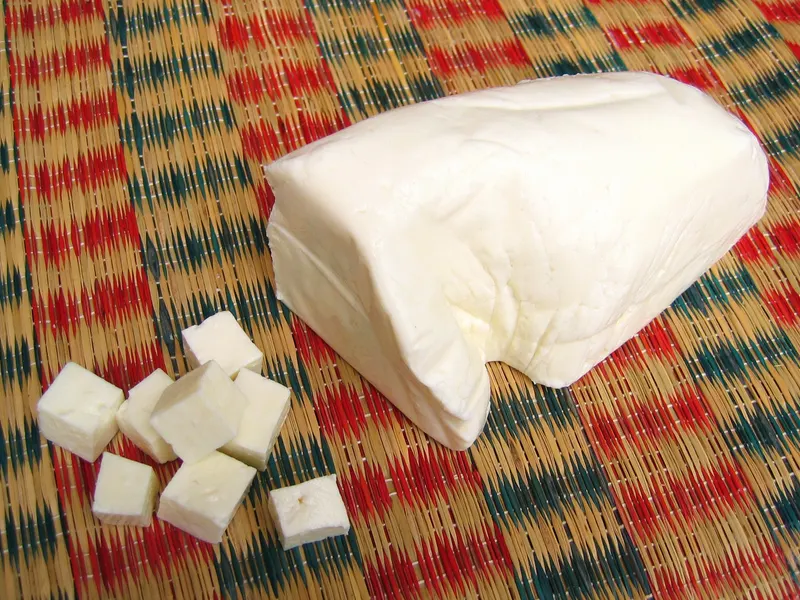
Paneer is not fermented. Hot milk is curdled with citric acid or another food acid, and the curd is pressed in muslin into a firm block, so no microbes take part. It is shown here as a contrast to cheeses that bacteria sour.
Amounts from a sourceLaboratory makes; one study heated an 8 l blend of milk and date extract (80:20) and set it with 2 % citric acid (Qureshi et al. 2019).
Whole milk8 l (one study's batch, a blend of milk and date extract)
Total time across the recorded steps: 2.4 h – 2.5 h
Start
Drag the bar or press Play
What changes:Milk is heated close to boiling, which kills its microbes
Step 1 of 5
Heat the milk
Time
5 min
Reported
Temperature
82–95 °C
Reported
Salt
None given
Acidity
Not documented
Output: hot milk.
Flavour
cooked milk
Texture
Not documented
Colour
white
Microbes at work in this step
heat kills most milk microbes
Method
Measured measured in a studySet fixed by a specification or tested recipeReported one source reports itTypical a general value, not sourced for this fermentUnconfirmed not yet checked against a source
At a glance
Paneer is not fermented. Hot milk is curdled with citric acid or another food acid, and the curd is pressed in muslin into a firm block, so no microbes take part. It is shown here as a contrast to cheeses that bacteria sour. Made in 5 steps over 2.4 h – 2.5 h. The longest step, chill in cold water, takes 2 h (Umaraw P 2022).
Paneer is curdled by hot milk and acid, not by starter bacteria or rennet, so it is not a fermented food. It is not ripened, but its pH falls in storage, which one study puts down to indigenous microorganisms making acid, so it is kept cold from the start.
Paneer keeps about a day at room temperature in the tropics and spoils through growth of microbes on its surface (Kumar et al. 2014). Coliforms, yeasts and moulds die when the milk is heated but can get back in after making, and fungus appeared on paneer after 12 days at 5 °C in one study. The NHS lists paneer among pasteurised soft cheeses that are safe to eat in pregnancy.
Hazards the sources name: Coliforms, yeasts and moulds are killed by heating milk at 82 °C for 5 min but can get back into paneer after making.
The earliest reference that resembles paneer, in the Kusana and Saka Satavahana periods (AD 75-300), describes a solid mass made from heated milk and curd. The review of Kumar et al. says paneer was first introduced to India by Afghan and Iranian travellers, and that milk was earlier set with heat and sour milk or with plant coagulants such as the bark of Palasa. In 1971 Bhattacharya and colleagues standardised a pilot-plant method (milk heated at 82 °C for 5 min, cooled to 70 °C and set with 1 % citric acid), and the Bureau of Indian Standards published a paneer specification (IS 10484) in 1983.