Side-by-side or overlay PDF diff driven by one engine that reads each file into a structured model — text, vector geometry, images, form fields, annotations — and compares the models. Moves show as moves, edits show only where they happened, and any PDF type works without picking a mode.
Open a STEP / STP part and it measures itself — volume, thinnest wall, draft and undercut checks on load, plus hole detection with a BOM. Measure, section, export STL. Rust + WASM B-rep kernel, runs in your browser.
Cereals and bread from Somalia, Somaliland, Djibouti and Ethiopia's Somali State
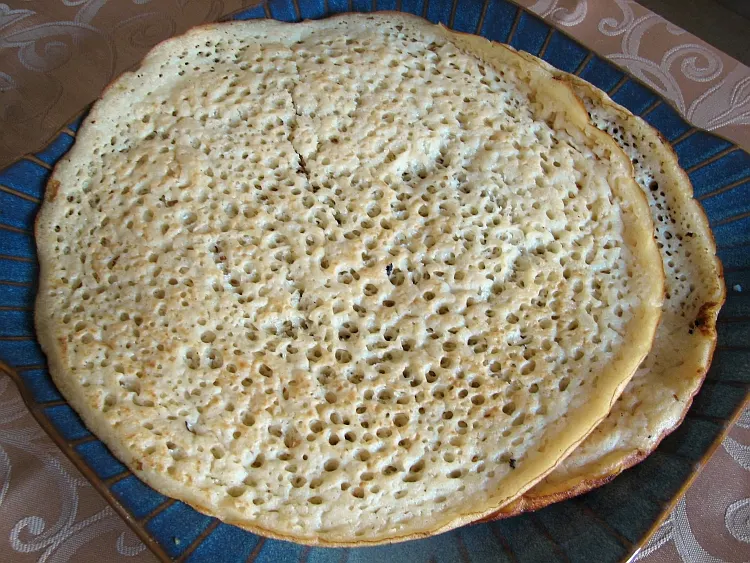
Lahoh / canjeero / laxooxلحوح
A runny batter of sorghum, maize, wheat or other flours and water is beaten by hand and left overnight to ferment, sometimes with a little batter from the day before. In the morning it is poured in a spiral onto a small greased griddle, covered and baked on one side into a soft, spongy, slightly sour pancake-bread.
Amounts from a sourceProportions from a 2022 survey of Somali household cooks and a 2023 study of their breads; each household mixes its own flour blend.
Flour blend (budo) of sorghum, maize, barley, millet or other grains1 part
spontaneous (wild yeasts), or backslop (dhanaanis); baker's yeast in some modern versions
Total time across the recorded steps: 9.7 h – 24 h
Start
Drag the bar or press Play
What changes:Flour and water are beaten by hand into a smooth, bubbly batter
Step 1 of 4
Mix the flours with water and beat by hand
Time
10–15 min
Reported
Temperature
Not documented
Salt
None given
Acidity
Not documented
Which microbes the steps name, step by step
Yeasts
Output: batter.
Flavour
Not documented
Texture
smooth, velvety, fluid batter
Colour
white, brown or yellow, depending on the flours
Microbes at work in this step
Not documented for this step.
Method
Measured measured in a studySet fixed by a specification or tested recipeReported one source reports itTypical a general value, not sourced for this fermentUnconfirmed not yet checked against a source
At a glance
A runny batter of sorghum, maize, wheat or other flours and water is beaten by hand and left overnight to ferment, sometimes with a little batter from the day before. In the morning it is poured in a spiral onto a small greased griddle, covered and baked on one side into a soft, spongy, slightly sour pancake-bread. Made in 4 steps over 9.7 h – 24 h. The longest step, ferment overnight, takes 9.5–24 h (Wolgamuth E 2026). Wild yeasts from the flour and the environment and Saccharomyces cerevisiae (commercial baker's yeast) in some batters do most of the fermenting.
Laxoox and lahoh ferment once, overnight, in a single batter. Ethiopian injera ferments twice, for days, and is made mostly from teff, while these breads use flour blends that often include wheat.
Yemeni lahoh with shorbaA pre-gelatinised dough (shorba) is fermented overnight separately and combined with the batter in the morning, or added hot to the batter before fermenting.
Lahoh Ariiqy (Aruuq, Taiz)Larger and thinner, with a zebra-stripe pattern of off-white and dark red.
Cajiin laxoox (South–Central Somalia)A hot-water pre-gelatinised dough (cajiin), now made by machine, goes into the batter.
Cambaabur (Somalia)Spiced Eid breakfast version.
Safety
The survey reports that cooks cover the fermenting batter to keep out animals and debris. It also notes that treating flour with hot water, as in cajiin, can in some cases decrease naturally occurring mycotoxins. The sources used here give no pH or microbe counts for the batter.
Hazards the sources name: Naturally occurring mycotoxins in the flour (the survey says the hot-water cajiin treatment can in some cases decrease them).
Wikipedia says Yemenite Jewish immigrants popularized lahoh in Israel. In the early to mid-20th century Somali laxoox was made from sorghum hand-ground with water on a saddle quern, with cajiin made by hand over one to two days. Industrial kneading machines for cajiin were introduced in several Somali cities in the late 20th century, and those in Somaliland cities were destroyed or dismantled in the conflict leading up to the civil war. The 2022 survey links the heritage style to the era of seminomadic pastoralists and the other styles to the Somali civil conflict. Refined wheat flour is now the most common ingredient.
Temperature, salt and pH
The sources we found give no temperature, salt or pH figure for any of its steps.