Side-by-side or overlay PDF diff driven by one engine that reads each file into a structured model — text, vector geometry, images, form fields, annotations — and compares the models. Moves show as moves, edits show only where they happened, and any PDF type works without picking a mode.
Open a STEP / STP part and it measures itself — volume, thinnest wall, draft and undercut checks on load, plus hole detection with a BOM. Measure, section, export STL. Rust + WASM B-rep kernel, runs in your browser.
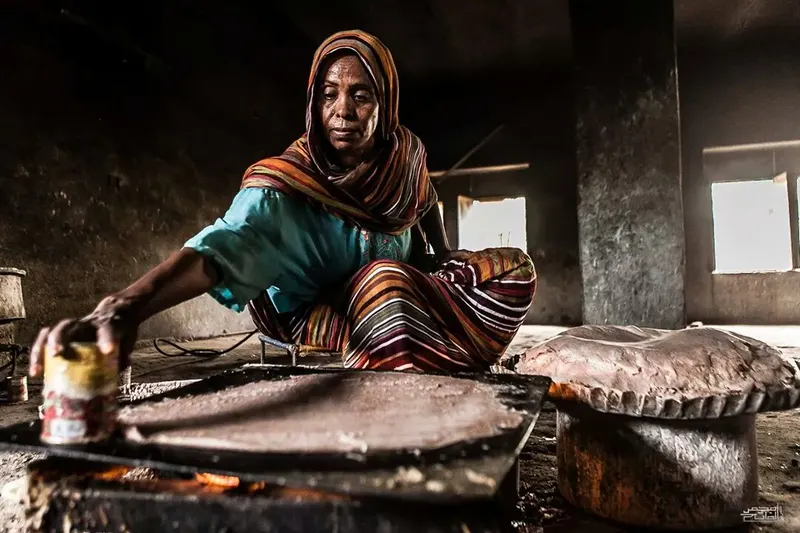
Whole sorghum flour is mixed with water into a thick paste and left 12 to 24 hours until lactic bacteria make it very sour. Just before baking the paste is thinned to a slurry and spread thin on a hot oiled pan.
Amounts from a sourceProportions from the FAO flow diagram (60 parts flour to 40 parts water, w/v). Households use no fixed batch size.
Whole sorghum flour60 parts (w/v)
Cultivars with a white, chalky pericarp and no subcoat give the best kisra[fao1999]
Water40 parts (w/v)
Flour to water 60:40 (w/v) for the thick paste; more water is added just before baking[fao1999]
Optional old batter
In a lab study, three fermentations in a row were each started with batter from the one before[mohammed1991]
Starter
spontaneous
Total time across the recorded steps: 12 h – 24 h
Start
Drag the bar or press Play
What changes:Sorghum grain is milled into whole flour
Step 1 of 5
Mill the sorghum
Time
Not documented
Temperature
Not documented
Salt
None given
Acidity
Not documented
Which microbes the steps name, step by step
Pediococcus pentosaceus
Lactobacilli
Output: whole sorghum flour.
Flavour
Not documented
Texture
Not documented
Colour
Not documented
Microbes at work in this step
Not documented for this step.
Method
Measured measured in a studySet fixed by a specification or tested recipeReported one source reports itTypical a general value, not sourced for this fermentUnconfirmed not yet checked against a source
At a glance
Whole sorghum flour is mixed with water into a thick paste and left 12 to 24 hours until lactic bacteria make it very sour. Just before baking the paste is thinned to a slurry and spread thin on a hot oiled pan. Made in 5 steps over 12 h – 24 h. The longest step, ferment the paste, takes 12–24 h (Haard N.F 1999) and runs at 30 °C (Mohammed S.I 1991). Pediococcus pentosaceus (dominant at 24 h and in back-slopped batter), Lactobacillus brevis, L. confusus and Yeasts Candida intermedia and Debaryomyces hansenii do most of the fermenting.
Kisra keeps the sorghum batter thick while it sours and thins it only just before baking it as a flatbread. Aceda and nasha are other Sudanese sour sorghum foods, cooked as a stiff porridge and a thin porridge.
Back-slopped kisraIn a lab study, with batter from the previous fermentation, bacteria level off at about 9 h instead of 18 h, and Pediococcus pentosaceus dominates; lactic acid reached 0.90 % and pH 3.86 by 9 h (Mohammed 1991 thesis).
Safety
Klebsiella pneumoniae and Enterobacter cloacae were among the bacteria isolated from sorghum batter during a 24 h lab fermentation at 30 °C. In that time the batter pH fell from 5.95 to 3.95 and Pediococcus pentosaceus became the dominant organism.
Hazards the sources name: Klebsiella pneumoniae and Enterobacter cloacae, found during the batter fermentation.