Side-by-side or overlay PDF diff driven by one engine that reads each file into a structured model — text, vector geometry, images, form fields, annotations — and compares the models. Moves show as moves, edits show only where they happened, and any PDF type works without picking a mode.
Open a STEP / STP part and it measures itself — volume, thinnest wall, draft and undercut checks on load, plus hole detection with a BOM. Measure, section, export STL. Rust + WASM B-rep kernel, runs in your browser.
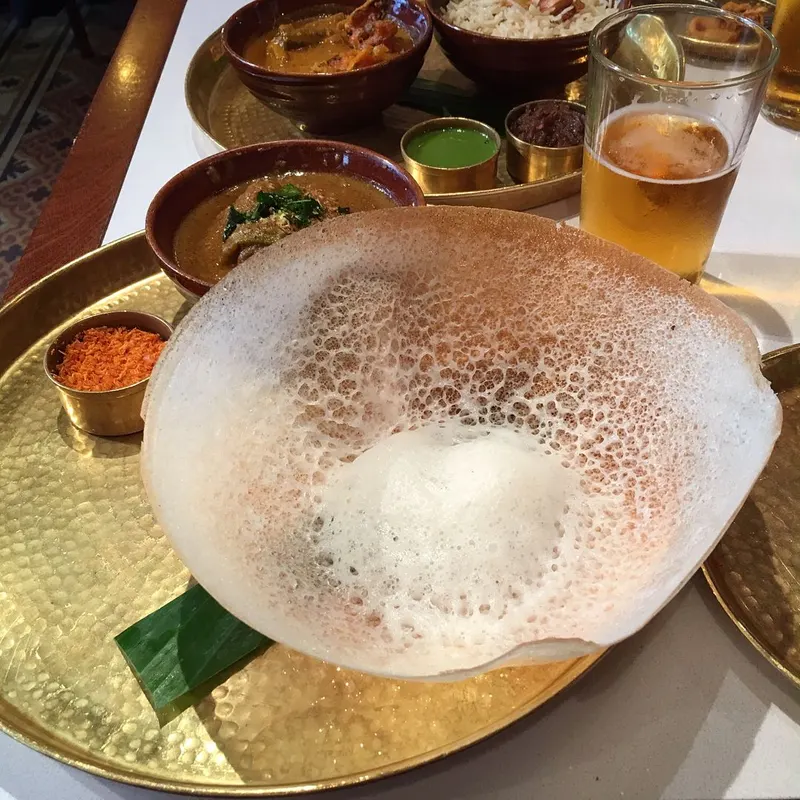
A batter of rice, coconut milk, a little sugar and salt is left for a few hours to ferment, traditionally with palm toddy and today often with yeast. It is swirled in a small, deep pan and covered, so it cooks into a bowl-shaped pancake with crisp, lacy edges and a soft, spongy centre.
What changes:Rice flour is mixed with water into a batter base
Step 1 of 4
Mix the rice flour with water
Time
Not documented
Temperature
Not documented
Salt
None given
Acidity
Not documented
Which microbes the steps name, step by step
Lactobacillus
Yeasts
Moulds
Saccharomyces cerevisiae
Lactic acid bacteria
In the laboratory study the batter began with 100 g of rice flour. Output: batter base.
Flavour
Not documented
Texture
Not documented
Colour
Not documented
Microbes at work in this step
Not documented for this step.
Method
Measured measured in a studySet fixed by a specification or tested recipeReported one source reports itTypical a general value, not sourced for this fermentUnconfirmed not yet checked against a source
At a glance
A batter of rice, coconut milk, a little sugar and salt is left for a few hours to ferment, traditionally with palm toddy and today often with yeast. It is swirled in a small, deep pan and covered, so it cooks into a bowl-shaped pancake with crisp, lacy edges and a soft, spongy centre. Made in 4 steps over 3 h – 5 h. The longest step, ferment for a few hours, takes 3–5 h (Manickavasagan A 2014) and runs at 28–30 °C (Manickavasagan A 2014). Salt is 2 % (Manickavasagan A 2014). Lactobacillus, rising from 2.30 to 5.36 log cfu/g in 5 h and Yeasts and moulds, counted in the batter do most of the fermenting.
Appam is a sweet, coconut rice batter fermented for only a few hours with yeast or toddy, so it stays mild. Dosa, a close relative, later added black lentils to its rice batter (Wikipedia).
KallappamNamed for kallu, Malayalam for palm toddy, the traditional leaven; Christians in Kerala prepare it on special occasions such as Easter, and yeast now often replaces the toddy (Wikipedia).
Egg hopper (Sri Lanka)An egg cracked into the centre.
VattayappamA steamed cake of rice flour, sugar and coconut, a tea-time snack in Kerala households (Wikipedia).
Kue apem / apam (Indonesia)A steamed cake of rice flour, coconut milk, yeast and palm sugar, usually served with grated coconut.
FDA's general advice on flour applies to the raw batter. Flour is a raw food, and processing grains into flour does not kill harmful bacteria such as Salmonella and pathogenic E. coli. FDA says never to eat or taste raw flour, dough or batter, and that cooking is the step that makes flour foods safe, so the batter is only eaten once it has set in the hot covered pan. This is a general rule for flour, not a finding about appam. The sources used here give no storage limit for the fermented batter.
Mentioned in Tamil Sangam literature (Perumpāṇāṟṟuppaṭai). Eighteenth-century accounts describe the agape cakes of the Saint Thomas Christians, and Cochin Jews used fresh toddy.