Side-by-side or overlay PDF diff driven by one engine that reads each file into a structured model — text, vector geometry, images, form fields, annotations — and compares the models. Moves show as moves, edits show only where they happened, and any PDF type works without picking a mode.
Open a STEP / STP part and it measures itself — volume, thinnest wall, draft and undercut checks on load, plus hole detection with a BOM. Measure, section, export STL. Rust + WASM B-rep kernel, runs in your browser.
Cereals and bread from South Asia, Iran, Arab countries, Central Asia, Africa
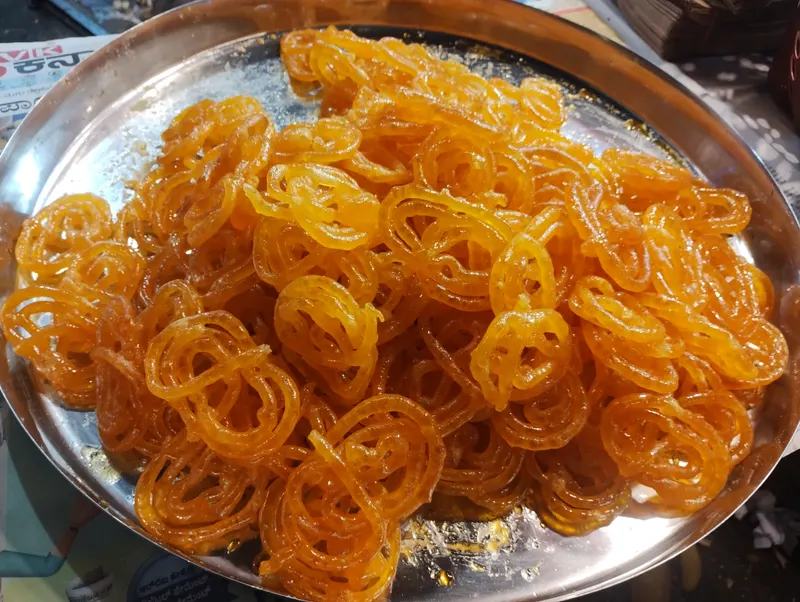
Jalebi (fermented-batter version)जलेबी
A thick batter of refined wheat flour, water and a little curd is left to ferment for up to a day until it is sour and full of gas. It is piped in spirals into hot oil or ghee, fried crisp and soaked in sugar syrup.
curd (0–10 % in the studied batters); some west Asian jalebi are made from a yeasted dough
Total time across the recorded steps: 3 min – 24 h
Start
Drag the bar or press Play
What changes:Flour, water and a little curd are mixed into a thick batter
Step 1 of 4
Mix flour, water and curd into a thick batter
Time
Not documented
Temperature
Not documented
Salt
None given
Acidity
Not documented
Which microbes the steps name, step by step
Lactic acid bacteria
Yeasts
Output: batter.
Flavour
Not documented
Texture
thick, smooth paste
Colour
Not documented
Microbes at work in this step
Not documented for this step.
Method
Measured measured in a studySet fixed by a specification or tested recipeReported one source reports itTypical a general value, not sourced for this fermentUnconfirmed not yet checked against a source
At a glance
A thick batter of refined wheat flour, water and a little curd is left to ferment for up to a day until it is sour and full of gas. It is piped in spirals into hot oil or ghee, fried crisp and soaked in sugar syrup. Made in 4 steps over 3 min – 24 h. The longest step, ferment, takes 0 min – 24 h (Chakkaravarthi A 2013). Lapidilactobacillus dextrinicus (the most abundant species) and other lactic acid bacteria, including Pediococcus stilesii and Enterococcus hirae and Saccharomyces bayanus do most of the fermenting.
Jalebi is a fried sweet made from a batter that is soured for up to a day first, which gives it a slight tang. The fried strands are porous and crisp, so they soak up the syrup.
Khoya (mawa) jalebiMade from khoya or mawa; reported to have been invented by Harprasad Badkul in Jabalpur in 1889.
West Asian and North African versionsIn some west Asian cuisines jalebi may be a yeast dough, fried and dipped in a syrup of honey and rose water; North African zalabia uses a different batter with honey and rose water.
Safety
In the Mysore study the batter's pH ranged from 3.53 to 5.29, falling with more curd and longer fermentation (Chakkaravarthi 2013). The spirals were fried at 150–180 °C in the frying trials (Chakkaravarthi 2014).
The earliest recipe is in Ibn Sayyar al-Warraq's 10th-century Kitab al-Tabikh. Indian sources include the Priyamkara-nrpa-katha of about 1450 and the Gunyagunabodhini, before 1600.