Side-by-side or overlay PDF diff driven by one engine that reads each file into a structured model — text, vector geometry, images, form fields, annotations — and compares the models. Moves show as moves, edits show only where they happened, and any PDF type works without picking a mode.
Open a STEP / STP part and it measures itself — volume, thinnest wall, draft and undercut checks on load, plus hole detection with a BOM. Measure, section, export STL. Rust + WASM B-rep kernel, runs in your browser.
Cereals and bread from Foshan for bai tang gao, Longyou for a fermented rice cake, Hakka regions, Singapore, Thailand, Mauritius, Réunion
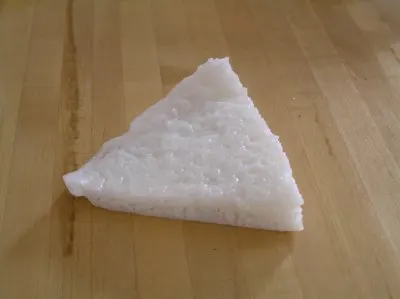
Bai tang gao and fa gao (Chinese fermented steamed rice cakes)白糖糕
Bai tang gao and fa gao are steamed cakes of rice flour or rice slurry, sugar and water that are leavened by fermentation. Yeasts and lactic acid bacteria raise the batter and give bai tang gao its slight sourness before it is steamed. Some recipes use baking powder instead and are not fermented.
Amounts from a sourceThe sugar and starter levels are the optimum found in a laboratory study of fermented rice cakes (He et al. 2022); household recipes vary.
Lactiplantibacillus plantarum, Saccharomyces cerevisiae and Candida humilis in a 1:3:6 ratio, the strains named in the study, isolated from a fermented rice cake slurry[he2022]
Starter
yeast (traditionally) or a composite yeast and lactic acid bacteria starter
Total time across the recorded steps: 8 h
Start
Drag the bar or press Play
What changes:Soaked rice is ground into a smooth slurry
Step 1 of 4
Soak and grind the rice into a slurry
Time
Not documented
Temperature
Not documented
Salt
None given
Acidity
Not documented
Which microbes the steps name, step by step
Saccharomyces
Lactobacillus
Yeasts
Lactic acid bacteria
Output: rice slurry.
Flavour
Not documented
Texture
Not documented
Colour
Not documented
Microbes at work in this step
Not documented for this step.
Method
Measured measured in a studySet fixed by a specification or tested recipeReported one source reports itTypical a general value, not sourced for this fermentUnconfirmed not yet checked against a source
At a glance
Bai tang gao and fa gao are steamed cakes of rice flour or rice slurry, sugar and water that are leavened by fermentation. Yeasts and lactic acid bacteria raise the batter and give bai tang gao its slight sourness before it is steamed. Some recipes use baking powder instead and are not fermented. Made in 4 steps over 8 h. The longest step, ferment the batter, takes 8 h (He L. et al. 2022) and runs at 32 °C (He L. et al. 2022). Saccharomyces (yeast), which became dominant in a fermenting rice slurry and Lactobacillus (lactic acid bacteria), also dominant in the same slurry do most of the fermenting.
Bai tang gao and fa gao are raised by a short warm fermentation of a rice batter, not by kneaded wheat dough. Steamed buns and mantou are wheat; these cakes are rice. Versions made with baking powder skip the fermentation.
[li2025] Li W., Chen Z., Chen C., Jin D., Gu Z., Hong Y. 2025, Dynamic microbial succession and flavor characteristics during Longyou rice cake fermentation, Cereal Chemistry 102(3):681–691 (abstract)paper