Side-by-side or overlay PDF diff driven by one engine that reads each file into a structured model — text, vector geometry, images, form fields, annotations — and compares the models. Moves show as moves, edits show only where they happened, and any PDF type works without picking a mode.
Open a STEP / STP part and it measures itself — volume, thinnest wall, draft and undercut checks on load, plus hole detection with a BOM. Measure, section, export STL. Rust + WASM B-rep kernel, runs in your browser.
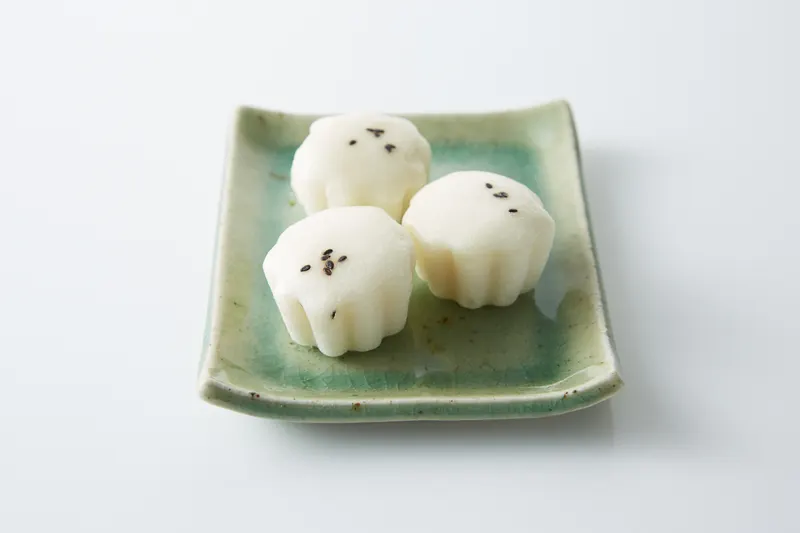
Rice flour is mixed with makgeolli (unfiltered rice wine), sugar, salt and water. Yeasts and lactic bacteria from the makgeolli raise the dough in rises of a few hours, with the gas stirred out between them, and the risen dough is steamed into a soft, sponge-like, slightly sour cake. Korean Wikipedia says it is mainly eaten in summer.
Fully documentedCereals and bread4.2 days – 4.4 days
Amounts from a sourceLab recipe per 100 g of rice flour from Lim 2017; Park 2017 uses the same amounts of flour, makgeolli, water and salt. The sources used here give no household quantities. Yoon 2003 (abstract) found 1 part makgeolli to 2 parts water gave the highest rise. Seo 1992 (abstract) found rice flour, takju and sugar at 10:5:2 (w/v/w) gave the largest rise.
Rice flour100 g
Commercial rice flour in the lab recipes; Wikipedia describes sieved non-glutinous rice flour[lim2017][park2017][wp]
Makgeolli30 ml
Commercial makgeolli; it carries the live yeasts and lactic bacteria[lim2017][park2017]
other: makgeolli (takju), which carries live yeasts and lactic acid bacteria
Total time across the recorded steps: 4.2 days – 4.4 days
Start
Drag the bar or press Play
What changes:Starting material: sieved non-glutinous rice flour
Step 1 of 6
Start with sieved rice flour
Time
Not documented
Temperature
Not documented
Salt
None given
Acidity
Not documented
Which microbes the steps name, step by step
Yeasts
Lactic acid bacteria
Saccharomyces cerevisiae
Lactobacillus plantarum
Lb. pentosus
In the lab studies commercial rice flour was used. Particle size of the flour did not change how far the dough expanded (Seo 1992, abstract). Output: rice flour.
Flavour
Not documented
Texture
Not documented
Colour
Not documented
Microbes at work in this step
Not documented for this step.
Method
Measured measured in a studySet fixed by a specification or tested recipeReported one source reports itTypical a general value, not sourced for this fermentUnconfirmed not yet checked against a source
At a glance
Rice flour is mixed with makgeolli (unfiltered rice wine), sugar, salt and water. Yeasts and lactic bacteria from the makgeolli raise the dough in rises of a few hours, with the gas stirred out between them, and the risen dough is steamed into a soft, sponge-like, slightly sour cake. Korean Wikipedia says it is mainly eaten in summer. Made in 6 steps over 4.2 days – 4.4 days. The longest step, keep after steaming, takes 4 days (Yoon S.-J. 2003). Saccharomyces cerevisiae and Lactobacillus plantarum, Lb. pentosus and Lb. brevis do most of the fermenting.
Jeungpyeon is leavened by makgeolli, a rice liquor that carries live yeasts and lactic bacteria, so the dough rises in hours in the lab studies. FAO groups it with puto and idli as a leavened steamed rice cake, but without the legumes of idli. It needs sugar to rise, and the gas is mixed out between rises.
Lactic starters from jeung-pyunLactic bacteria isolated from jeung-pyun (Leuconostoc and Lactobacillus brevis) were tested as defined starters, but in wheat-flour dough rather than in rice dough (Lim 2018).
Safety
The dough reached pH 4.12–4.79 after 6.5 h at 35 °C in one study of five makgeolli. Korean Wikipedia says it does not go off quickly.
Korean Wikipedia says it is unclear when jeungpyeon was first eaten. It notes that sanghwa, a similar fermented cake brought from Yuan China, is recorded in the Goryeo period. The cake goes by several names, including gijeungtteok, gijitteok, sultteok and beong-geojitteok. FAO lists it as kichudok, made at household level in Korea and eaten on special occasions.