Side-by-side or overlay PDF diff driven by one engine that reads each file into a structured model — text, vector geometry, images, form fields, annotations — and compares the models. Moves show as moves, edits show only where they happened, and any PDF type works without picking a mode.
Open a STEP / STP part and it measures itself — volume, thinnest wall, draft and undercut checks on load, plus hole detection with a BOM. Measure, section, export STL. Rust + WASM B-rep kernel, runs in your browser.
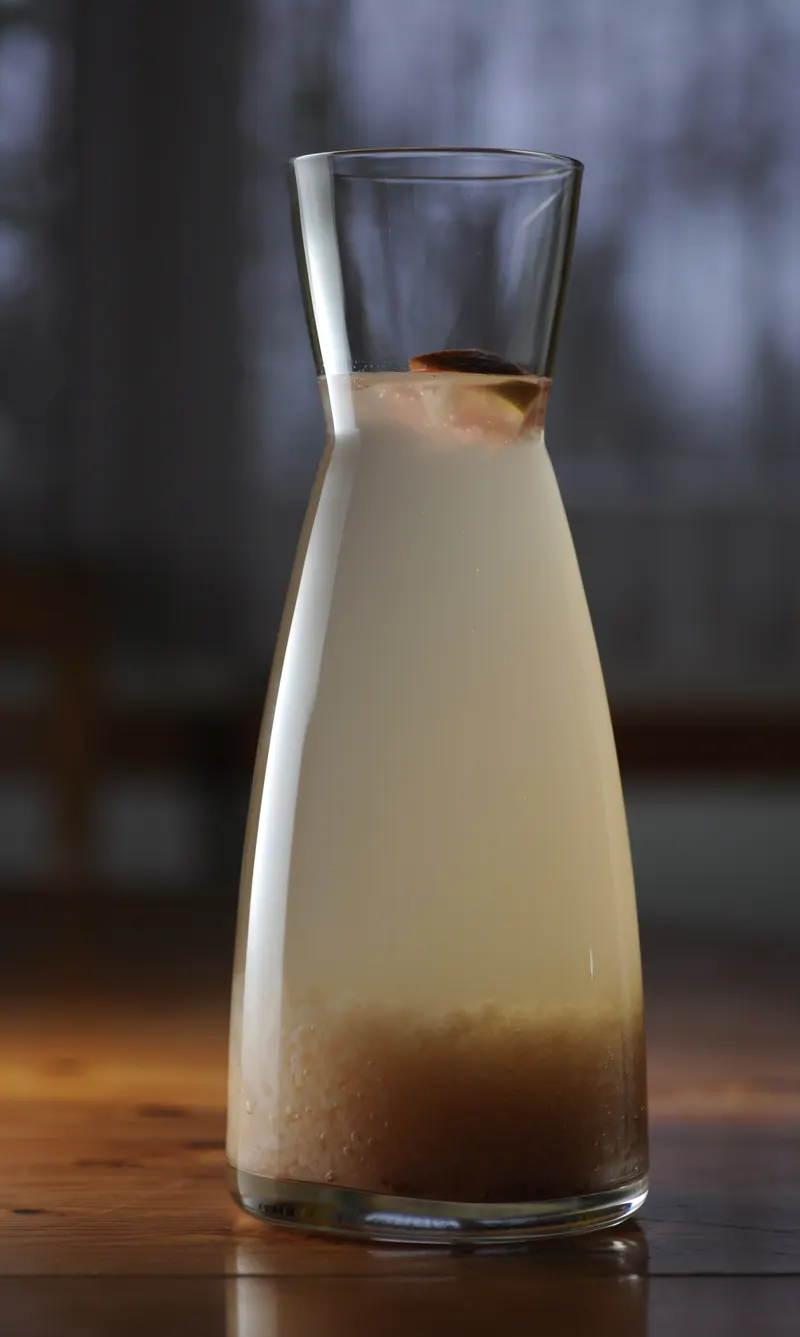
Water kefir is sugar water with dried fruit, fermented by grains made of dextran that hold lactic bacteria and yeasts. In one to seven days at room temperature it turns sour and slightly alcoholic. The grains are sieved out and start the next batch.
Amounts from a sourceHousehold-style laboratory recipe from Laureys et al. 2022, made in 250-mL bottles. Grains from private holders in Uruguay were fed 500 mL of 100 g/L unrefined cane sugar per 50 g of grains (Garmendia et al. 2025).
Total time across the recorded steps: 24 h – 7 days
Start
Drag the bar or press Play
What changes:Sugar dissolves into water with dried figs as food for the grains
Step 1 of 4
Mix sugar water with dried figs
Time
Not documented
Temperature
Not documented
Salt
None given
Acidity
Not documented
Which microbes the steps name, step by step
Yeasts
Lactic acid bacteria
Output: sugar and fig medium.
Flavour
sweet
Texture
thin
Colour
Not documented
Microbes at work in this step
Not documented for this step.
Method
Measured measured in a studySet fixed by a specification or tested recipeReported one source reports itTypical a general value, not sourced for this fermentUnconfirmed not yet checked against a source
At a glance
Water kefir is sugar water with dried fruit, fermented by grains made of dextran that hold lactic bacteria and yeasts. In one to seven days at room temperature it turns sour and slightly alcoholic. The grains are sieved out and start the next batch. Made in 4 steps over 24 h – 7 days. The longest step, ferment at room temperature, takes 24 h – 7 days (Laureys D 2022) and runs at 17–29 °C (Laureys D 2022). Liquorilactobacillus nagelii and Lentilactobacillus hilgardii do most of the fermenting.
Water kefir grains are a different community from milk kefir grains. They are dextran, not kefiran, and they ferment sucrose and fruit in water rather than lactose in milk. Kombucha ferments sweet tea under a floating cellulose mat instead.
Unrinsed grainsGrains not rinsed between batches give more acid and alcohol in the drink and more Dekkera bruxellensis and Liquorilactobacillus nagelii.
Long cyclesLonger gaps between feeds (up to 4 days were tested) favour Oenococcus sicerae and Dekkera bruxellensis; short gaps favour Liquorilactobacillus nagelii and S. cerevisiae.
Safety
Water kefir is not always alcohol-free. Drinks from four Uruguayan grains held 0.94–1.32 % ethanol after 7 days (Garmendia 2025). Eight retail drinks from three makers near Vancouver held 0.14–1.70 % ABV; Sy and colleagues note that water kefir sold as non-alcoholic must be under 0.5 % ABV in the United States and under 1.1 % in Canada, and 4 of the 8 were above 0.5 % and 1 above 1.1 %. The finished drink reaches about pH 3.5.
Hazards the sources name: Clostridium DNA in some grains; not detected in the finished drinks.
Water kefir is kept going in households by passing grains from batch to batch. Grains studied in Uruguay had been shared and propagated that way for years (Garmendia et al. 2025).