Side-by-side or overlay PDF diff driven by one engine that reads each file into a structured model — text, vector geometry, images, form fields, annotations — and compares the models. Moves show as moves, edits show only where they happened, and any PDF type works without picking a mode.
Open a STEP / STP part and it measures itself — volume, thinnest wall, draft and undercut checks on load, plus hole detection with a BOM. Measure, section, export STL. Rust + WASM B-rep kernel, runs in your browser.
Fermented milk from Caucasus region, popular in the North Caucasus
Kefir (traditional grain kefir)кефир
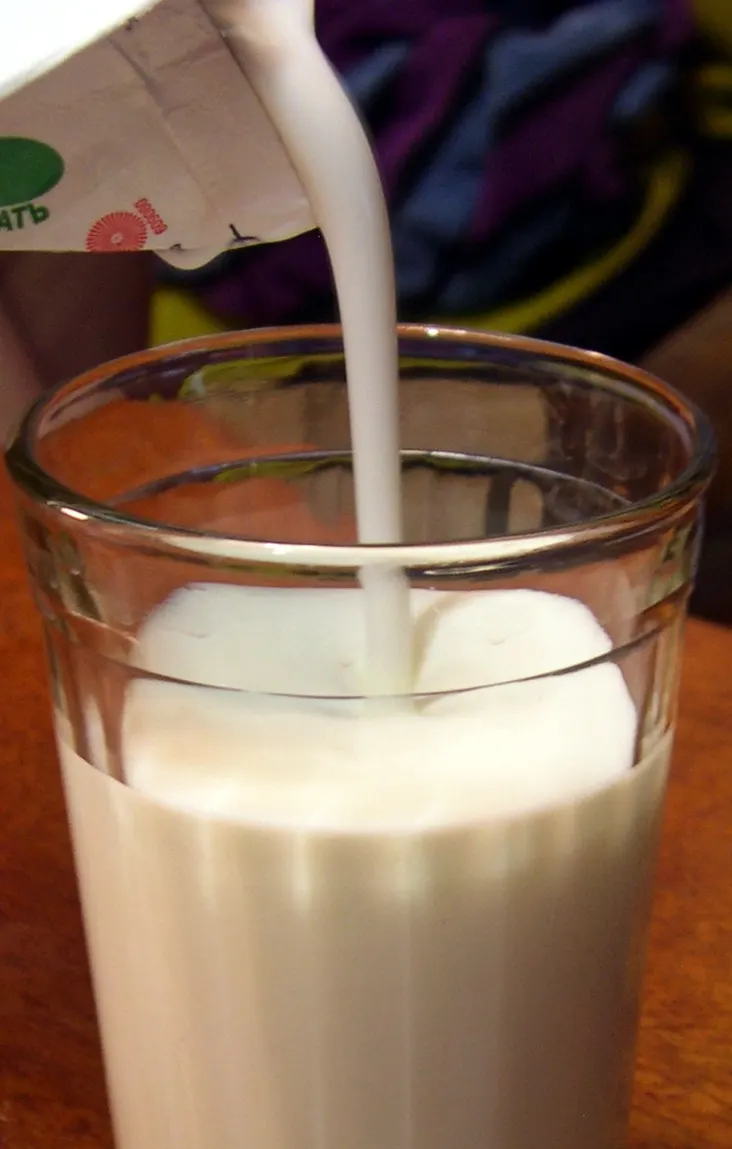
Kefir is milk soured by kefir grains, clusters of lactic bacteria, acetic bacteria and yeasts held together by a network of protein and polysaccharide. The grains sit in milk at about 23–25 °C for about a day, are sieved out and reused. The drink is acid, slightly yeasty and lightly fizzy.
Amounts from a sourceGrain-to-milk ratio from the Tetra Pak grain culture; households use no fixed batch size. BC food-service guidance uses 25 mL of commercial grains per 10 L of milk and fresh grains each time.
Milk (cow, goat or sheep)
Fat of 2.5–3.5 % is common; the milk is heated first[tp]
Kefir grains1 part to 20–30 parts milk (about 3.5–5 %)
One study used 2 % grains (weight/volume) in pasteurised whole milk[tp][walsh2016]
Starter
kefir-grains
Total time across the recorded steps: 24 h – 38 h
Start
Drag the bar or press Play
What changes:Heat kills stray bacteria and phages before the grains go in
Step 1 of 5
Heat the milk
Time
5 min
Reported
Temperature
90–95 °C
Reported
Salt
None given
Acidity
Not documented
Which microbes the steps name, step by step
Yeasts
Leuconostoc
Acetobacter
Flavour
Not documented
Texture
Not documented
Colour
Not documented
Microbes at work in this step
heat kills competing bacteria and phages that would harm the grains
Method
Measured measured in a studySet fixed by a specification or tested recipeReported one source reports itTypical a general value, not sourced for this fermentUnconfirmed not yet checked against a source
At a glance
Kefir is milk soured by kefir grains, clusters of lactic bacteria, acetic bacteria and yeasts held together by a network of protein and polysaccharide. The grains sit in milk at about 23–25 °C for about a day, are sieved out and reused. The drink is acid, slightly yeasty and lightly fizzy. Made in 5 steps over 24 h – 38 h. The longest step, ferment with occasional stirring, takes 12–24 h (FOODSAFE BC with the BC Ministry of Health 2022) and runs at 23–25 °C (Tetra Pak). Lactobacillus kefiranofaciens and Lentilactobacillus kefiri do most of the fermenting.
Kefir is soured by a reusable grain that holds bacteria and yeasts together, so it is acid, a little alcoholic and fizzy. Yoghurt uses only two bacteria and no yeast. Koumiss is mare milk soured by a liquid starter, with no grains.
Industrial kefir (bulk starter)The grains make a mother culture, which starts a bulk starter at 3–5 %. The bulk starter goes into the kefir milk at 2–3 %. The milk is homogenised at 65–70 °C and 175–200 bar, heated to 90–95 °C for 5 min, soured about 12 h at about 23 °C to pH 4.5, pre-cooled to 14–16 °C, ripened 12–14 h to pH about 4.4 and cooled to 5–8 °C.
Kefir from freeze-dried cultureStrains isolated from grains are sold as a concentrated culture, with no grains. Some countries do not allow the product to be called kefir and call it "kefir type".
Safety
Codex requires kefir to reach a titratable acidity of at least 0.6 % lactic acid and to hold at least 10^4 yeasts and 10^7 starter bacteria per gram. BC food-safety guidance uses pasteurised milk, sets pH 4.6 or lower as the critical limit, keeps kefir at 4 °C or colder and bans reusing grains between batches in food service.
Tetra Pak's Dairy Processing Handbook says kefir originates from the Caucasus region. Proteins in lumps found with Early Bronze Age burials at the Xiaohe cemetery in Xinjiang point to a kefir-like dairy there (Yang et al. 2014).