Side-by-side or overlay PDF diff driven by one engine that reads each file into a structured model — text, vector geometry, images, form fields, annotations — and compares the models. Moves show as moves, edits show only where they happened, and any PDF type works without picking a mode.
Open a STEP / STP part and it measures itself — volume, thinnest wall, draft and undercut checks on load, plus hole detection with a BOM. Measure, section, export STL. Rust + WASM B-rep kernel, runs in your browser.
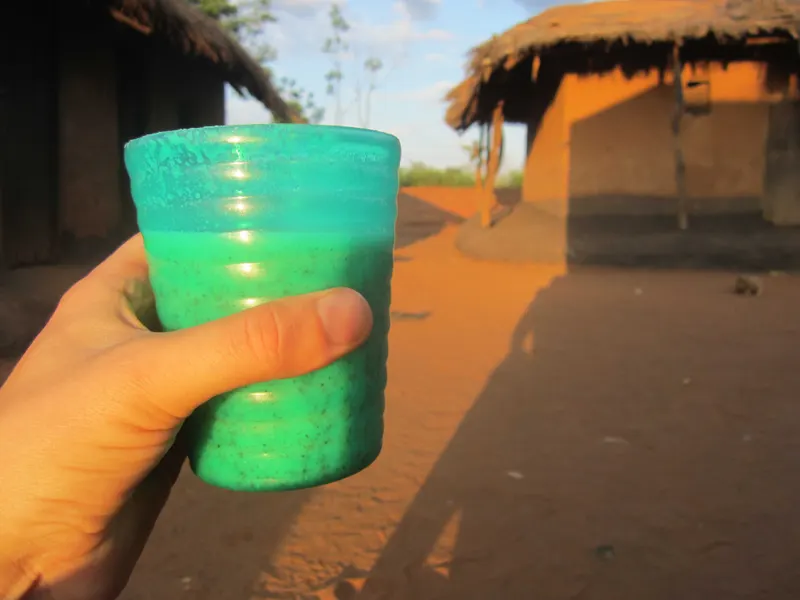
Thobwa is a thick, sweet-sour Malawian drink. A maize porridge is cooled, ground malt is stirred in, and the mixture is left overnight to ferment; it is then boiled again. Children drink it too.
Amounts from a sourceA 15 L batch prepared by experienced women brewers following a standardised procedure based on a recipe mainly used in central Malawi (Namaumbo et al. 2023). The study used maize contaminated with aflatoxin on purpose, and the recipe differs in other regions.
Maize malt in the central region. A Lilongwe school survey describes thobwa as made from whole maize and germinated sorghum.[namaumbo2023][kalimbira2015]
Starter
natural fermentation; the traditional preparation adds no culture starter (Namaumbo 2023)
Total time across the recorded steps: 19 h
Start
Drag the bar or press Play
What changes:Maize flour and water boil into a porridge
Step 1 of 5
Cook a maize porridge
Time
1.3 h
Reported
Temperature
Not documented
Salt
None given
Acidity
Not documented
Which microbes the steps name, step by step
Lactobacillus plantarum
L. brevis
L. fermentum
Pediococcus pentosaceus
Output: porridge.
Flavour
Not documented
Texture
Not documented
Colour
Not documented
Microbes at work in this step
Not documented for this step.
Method
Measured measured in a studySet fixed by a specification or tested recipeReported one source reports itTypical a general value, not sourced for this fermentUnconfirmed not yet checked against a source
At a glance
Thobwa is a thick, sweet-sour Malawian drink. A maize porridge is cooled, ground malt is stirred in, and the mixture is left overnight to ferment; it is then boiled again. Children drink it too. Made in 5 steps over 19 h. The longest step, leave overnight to ferment, takes 17 h (Namaumbo S 2023). Lactobacillus plantarum, L. brevis, L. fermentum, L. cellobiosus, Pediococcus pentosaceus and Weissella confusa and Issatchenkia orientalis, Saccharomyces cerevisiae, Candida pelliculosa and C. tropicalis do most of the fermenting.
Thobwa is boiled a second time after its overnight ferment (40 min in one study). Togwa's village method heats the slurry once, before the malt goes in, and has no second boil; it is drunk sweet or sour.
Maize and germinated sorghum thobwaA survey of school children in Lilongwe describes thobwa as a whole maize and germinated sorghum drink, usually with sugar added (Kalimbira 2015).
Safety
Maize and malt can carry aflatoxins, which can damage the liver and cause liver cancer (WHO). In one study of brews from contaminated maize, boiling cut them by about 33 % and fermenting by about 20 %, but about 37 % of the starting aflatoxin was still in the finished drink, so neither step makes contaminated grain safe. Infants and children drink thobwa. Start from clean, sound grain and malt, and throw out any that looks mouldy, discoloured or shrivelled (WHO). Some households in central Malawi keep low-grade, shrivelled maize for brewing, which raises the risk.
Hazards the sources name: Aflatoxins from the maize and malt; about 37 % of the starting level stayed in the finished drink in a brewing trial.
Thobwa is a traditional fermented non-alcoholic drink made in Malawi from various grains and their malts, and anyone, children included, drinks it (Namaumbo 2023). In central Malawi some households keep low-grade, shrivelled maize for brewing thobwa for celebrations and rituals, a practice that carries aflatoxin risk.