Side-by-side or overlay PDF diff driven by one engine that reads each file into a structured model — text, vector geometry, images, form fields, annotations — and compares the models. Moves show as moves, edits show only where they happened, and any PDF type works without picking a mode.
Open a STEP / STP part and it measures itself — volume, thinnest wall, draft and undercut checks on load, plus hole detection with a BOM. Measure, section, export STL. Rust + WASM B-rep kernel, runs in your browser.
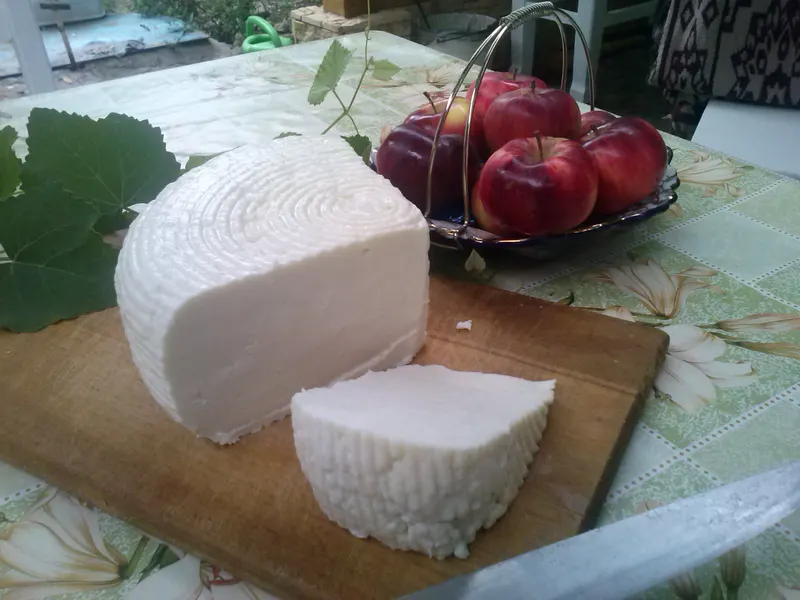
A boundary entry. Pasteurised, standardised cow milk is heated to 93–95 °C and curdled by stirring in 8–10 % of whey whose acidity is 85–150 °T; the whey is stored until its acidity rises, so the souring happens in the whey, not in the cheese. The curd is held up to 5 minutes, self-pressed in wicker baskets for 10–15 minutes, salted for 16–18 hours and ripened for 3 days.
whey stored until its acidity rises (85–150 °T in the patent's account of the instruction, 85–350 °T in a 2024 article); that article says up to 1 % of a Bulgarian-bacillus or L. helveticus culture, or citric acid, can speed this up
Total time across the recorded steps: 3.7 days – 3.8 days
Start
Drag the bar or press Play
What changes:Filtered whey is stored until its acidity rises
Step 1 of 6
Sour the whey
Time
Not documented
Temperature
Not documented
Salt
None given
Acidity
Not documented
Which microbes the steps name, step by step
Bacillus
Lactobacillus helveticus
Fresh, filtered whey is stored until its acidity rises. A 2024 article says a culture or citric acid can speed this up.
Flavour
Not documented
Texture
Not documented
Colour
Not documented
Microbes at work in this step
Not documented for this step.
Method
Measured measured in a studySet fixed by a specification or tested recipeReported one source reports itTypical a general value, not sourced for this fermentUnconfirmed not yet checked against a source
At a glance
A boundary entry. Pasteurised, standardised cow milk is heated to 93–95 °C and curdled by stirring in 8–10 % of whey whose acidity is 85–150 °T; the whey is stored until its acidity rises, so the souring happens in the whey, not in the cheese. The curd is held up to 5 minutes, self-pressed in wicker baskets for 10–15 minutes, salted for 16–18 hours and ripened for 3 days. Made in 6 steps over 3.7 days – 3.8 days. The longest step, store cold, takes 3 days (Klassen N.V 1999) and runs at 2–6 °C (Dunchenko N 2023). Bulgarian bacillus and Lactobacillus helveticus cultures, which a 2024 article says can be added at up to 1 % to speed the souring of the stored whey does most of the fermenting.
The milk is pasteurised and heated again to 93–95 °C. A 2024 article says the plant keeps the cheese no more than 3 days after making, and lists 4 ± 2 °C as its temperature when it leaves the plant.