Side-by-side or overlay PDF diff driven by one engine that reads each file into a structured model — text, vector geometry, images, form fields, annotations — and compares the models. Moves show as moves, edits show only where they happened, and any PDF type works without picking a mode.
Open a STEP / STP part and it measures itself — volume, thinnest wall, draft and undercut checks on load, plus hole detection with a BOM. Measure, section, export STL. Rust + WASM B-rep kernel, runs in your browser.
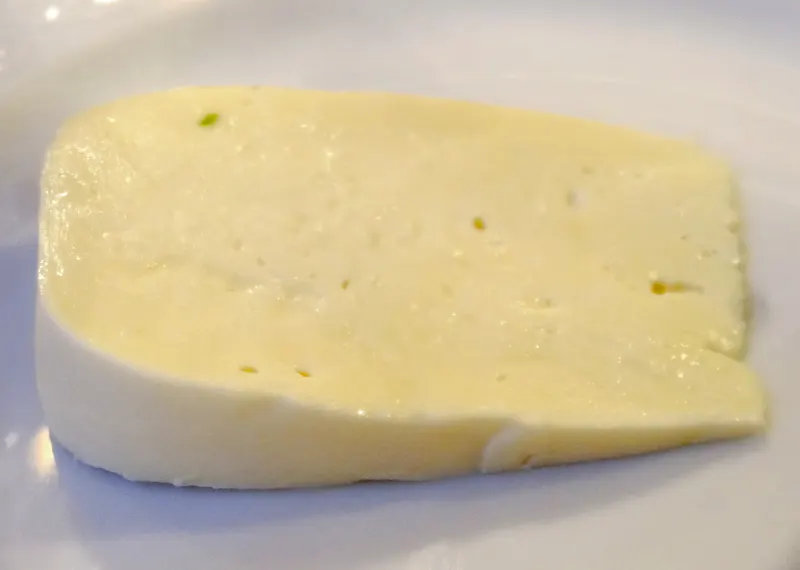
Sulguni is a Georgian stretched-curd cheese of cow, buffalo or goat milk. Renneted curd is drained and left to sour for 2–24 hours, then sliced into very hot water, stretched, folded and shaped. It is salted in brine for 6–24 hours or with dry salt and eaten fresh, dried or smoked.
Dry on the surface, or as a 14–22 % brine[sulguni-gi]
Mint, tarragon, savory, adjika, honey, wine, chacha or nutsoptional
Georgian ingredients only, kneaded in or added after[sulguni-gi]
Starter
none allowed in Sulguni Classic (the specification bars a lacto-bacterial starter); an optional starter in other types
Total time across the recorded steps: 8.1 h – 4 days
Start
Drag the bar or press Play
What changes:Rennet goes into milk warmed to 32–39 °C and it sets into a curd
Step 1 of 5
Warm the milk and add rennet
Time
Not documented
Temperature
32–39 °C
Set
Salt
None given
Acidity
Not documented
Output: firm curd.
Flavour
Not documented
Texture
Not documented
Colour
Not documented
Microbes at work in this step
rennet sets the milk; Sulguni Classic is made without a starter
Method
Measured measured in a studySet fixed by a specification or tested recipeReported one source reports itTypical a general value, not sourced for this fermentUnconfirmed not yet checked against a source
At a glance
Sulguni is a Georgian stretched-curd cheese of cow, buffalo or goat milk. Renneted curd is drained and left to sour for 2–24 hours, then sliced into very hot water, stretched, folded and shaped. It is salted in brine for 6–24 hours or with dry salt and eaten fresh, dried or smoked. Made in 5 steps over 8.1 h – 4 days. The longest step, salt in brine or with dry salt, takes 6 h – 3 days (Ministry of Environmental Protection and Agri…). Salt is 14–22 % (Ministry of Environmental Protection and Agri…).
Like other pasta filata cheeses, sulguni is stretched in hot water once its curd has soured for hours. It is shaped as a low, rindless round of up to 2.2 kg and brined for up to a day, and the Classic version uses raw milk with no starter.
Milk
Cow, buffalo or goat milk or a mix; raw or pasteurised
Ripening
Fresh, sold from 24 hours after salting; may be dried for days or weeks
Size
Low cylinder of 0.25–2.2 kg, 7–30 cm across and 2–7 cm high
pH (suluguni-like cheese from Russia)
pH 5 and 5.5 in three suluguni-like cheeses sampled in Russia; a related product, not Georgian sulguni
Megruli sulguni (Georgian GI no. 9)Samegrelo only; 15–20 cm, 0.5–1.5 kg; milk set at 30–35 °C, curd reheated to 34–37 °C with 70–80 % of the whey removed, soured to 140–150 °T and stretched at 75–80 °C; brined at 17–18 % and 8–12 °C.
Shebolili (smoked) sulguniSmoked over non-coniferous wood (pear, apple, alder, beech, quince), hot for 1–12 hours or cold for 72 hours to a week. Golden-brown outside, slightly saltier; Megruli shebolili has at most 40 % moisture and 3–5 % salt.
Dried sulguniDried for days or weeks on wooden shelves in a dry, airy place.
Svanuri sulguni (Georgian GI no. 11)Made in the Lentekhi and Mestia municipalities of Svaneti, from cow or goat milk or a mix, as irregular cheeses of 2–6 kg; registered separately.
Safety
The specification allows raw or pasteurised milk, and Sulguni Classic uses fresh raw milk. The CDC says people at higher risk, including pregnant women, people 65 or older and people with weak immunity, should avoid raw-milk cheese unless it is heated to 165 °F (74 °C) or until steaming hot.
A 2014 Georgian study argues that sulguni is a Colchian (West Georgian) product and that kneading and boiling the curd was due to the region's excessive humidity (Topchishvili). It was registered as a Georgian geographical indication on 24 January 2012, with Megruli and Svanuri sulguni as separate registrations. The specification cites a 17th-century dictionary by Sulkhan-Saba Orbeliani as the earliest written evidence of the cheese in Samegrelo and Svaneti.