Side-by-side or overlay PDF diff driven by one engine that reads each file into a structured model — text, vector geometry, images, form fields, annotations — and compares the models. Moves show as moves, edits show only where they happened, and any PDF type works without picking a mode.
Open a STEP / STP part and it measures itself — volume, thinnest wall, draft and undercut checks on load, plus hole detection with a BOM. Measure, section, export STL. Rust + WASM B-rep kernel, runs in your browser.
Cow milk is set with rennet at 30–34 °C, cut small and pressed in moulds, then salted. Farms use raw milk straight after milking and press for at least 8 hours. The young cheeses are washed at least twice in the cave and then rubbed and turned weekly for at least 28 days, until a grey, white and brown mould crust covers them.
Dairy cheese only, to replace part of the whey[cdc-sn2025]
Starter
added cultures of bacteria, yeasts and moulds are allowed; PDO producers of the Massif Central mostly use commercial starters
Total time across the recorded steps: 24 days – 31 days
Start
Drag the bar or press Play
What changes:Starting material: cow milk, used on farms straight after milking
Step 1 of 7
Bring in the milk
Time
up to 2 days
Set
Temperature
up to 40 °C
Set
Salt
None given
Acidity
Not documented
Which microbes the steps name, step by step
S. thermophilus
Mucor
Output: cheese milk.
Flavour
Not documented
Texture
Not documented
Colour
white
Microbes at work in this step
Not documented for this step.
Method
Measured measured in a studySet fixed by a specification or tested recipeReported one source reports itTypical a general value, not sourced for this fermentUnconfirmed not yet checked against a source
At a glance
Cow milk is set with rennet at 30–34 °C, cut small and pressed in moulds, then salted. Farms use raw milk straight after milking and press for at least 8 hours. The young cheeses are washed at least twice in the cave and then rubbed and turned weekly for at least 28 days, until a grey, white and brown mould crust covers them. Made in 7 steps over 24 days – 31 days. The longest step, wash, rub and ripen in the cave, takes at least 21 days (Ministère de l'agriculture 2025) and runs at 6–14 °C (Ministère de l'agriculture 2025). Streptococcus thermophilus; wild strains were isolated from milk on farms in the Saint-Nectaire area, while PDO cheese producers of the Massif Central mostly use commercial starters does most of the fermenting.
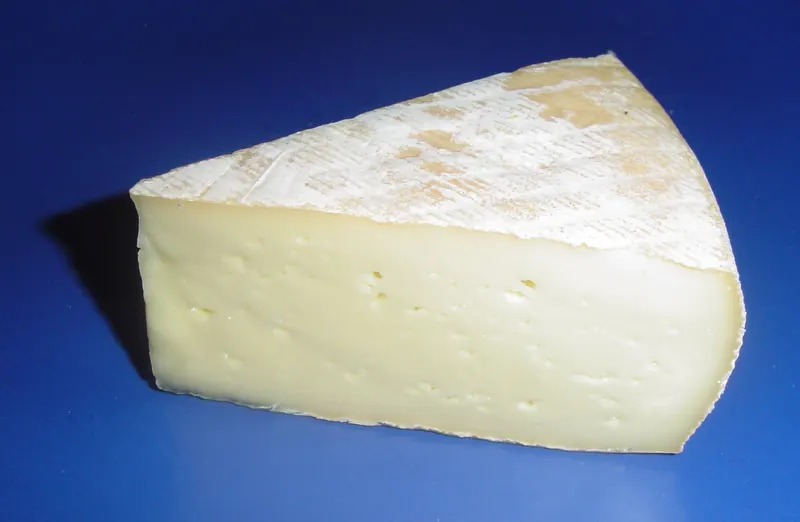
Saint-Nectaire is pressed but not cooked, and farm cheese is made from raw milk straight after milking, then pressed for at least 8 hours. Farms traditionally sell the cheeses white to specialist affineurs, who wash them at least twice and then rub them weekly in damp caves. The rind is a crust of grey, white and brown moulds, Mucor among them.
Milk
Raw cow milk on farms; raw or pasteurised milk in dairies
Ripening
At least 28 days after entering the cave; 21 days for the small format
Size
20–24 cm across, 3.5–5.5 cm high, 1.450–1.950 kg; small format 12–14 cm, 0.500–0.700 kg; fat at least 45 g per 100 g dry matter
Saint-Nectaire fermierRaw milk used straight after milking; coagulation 25–45 min; pressed at least 8 h at 20–25 °C.
Saint-Nectaire laitierRaw or pasteurised milk; part of the whey may be replaced with water; pressed at least 1 h.
Petit format12–14 cm across, 0.500–0.700 kg, ripened at least 21 days.
Safety
Farm Saint-Nectaire is made from raw milk. ANSES lists pressed uncooked, briefly ripened cheeses such as Saint-Nectaire among the main sources of Listeria, Salmonella and enterohaemorrhagic E. coli outbreaks linked to raw-milk cheese, and advises pregnant women, young children, people over 65 and people with weak immunity not to eat raw-milk cheeses other than cooked pressed ones such as Gruyère or Comté.
Hazards the sources name: Salmonella enterica serovar Dublin, isolated from Saint-Nectaire cheese; Listeria monocytogenes, Salmonella and enterohaemorrhagic E. coli (ANSES names Saint-Nectaire among the main cheese sources of these hazards).
The specification says the cheese has been made in the Monts Dore for several centuries and that its name appears in gastronomy in the 17th century, with works citing it in 1786 and 1787. Production grew in the 19th and 20th centuries on small mountain farms, where it became the work of the farmwomen. Makers rarely ripened it, and took it white to markets, where specialist affineurs bought it. A court at Issoire recognised the appellation in 1955.