Side-by-side or overlay PDF diff driven by one engine that reads each file into a structured model — text, vector geometry, images, form fields, annotations — and compares the models. Moves show as moves, edits show only where they happened, and any PDF type works without picking a mode.
Open a STEP / STP part and it measures itself — volume, thinnest wall, draft and undercut checks on load, plus hole detection with a BOM. Measure, section, export STL. Rust + WASM B-rep kernel, runs in your browser.
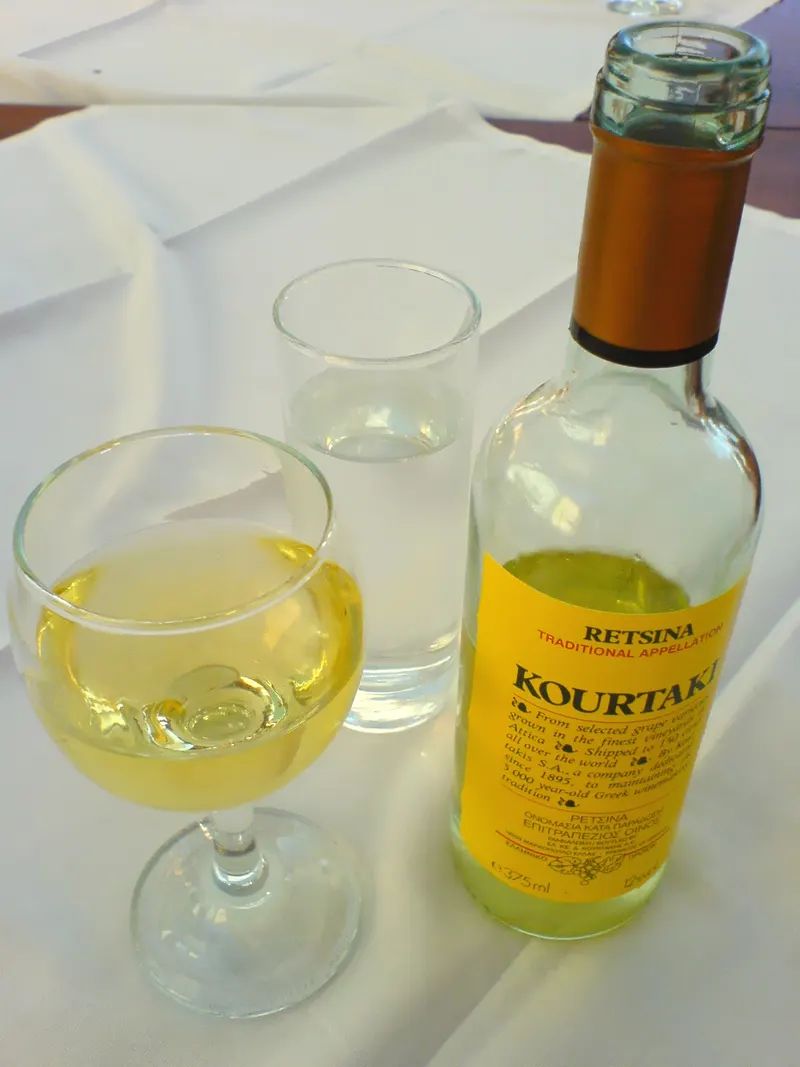
Retsina is a dry white or rosé Greek wine. Aleppo pine resin goes into the grape must before or early in fermentation and comes out once the wine is made, leaving a pine aroma. EU law allows the resin only for retsina made in Greece.
Amounts from a sourceThe resin amount is the EU legal maximum. The other amounts come from one university micro-vinification trial (5 L containers); the tradition has no fixed recipe.
Savatiano grape must
For the PGI, mainly Savatiano, or Savatiano and Roditis at 10 to 1, making up at least 85 % of the grapes[natskoulis2024]
What changes:The press squeezes juice out of the crushed Savatiano grapes
Step 1 of 5
Crush and press the grapes
Time
Not documented
Temperature
Not documented
Salt
None given
Acidity
pH 3.2
Measured
Which microbes the steps name, step by step
Yeasts
Output: white grape must.
Flavour
fresh, fruity grape juice
Texture
Not documented
Colour
Not documented
Microbes at work in this step
Not documented for this step.
Method
Measured measured in a studySet fixed by a specification or tested recipeReported one source reports itTypical a general value, not sourced for this fermentUnconfirmed not yet checked against a source
At a glance
Retsina is a dry white or rosé Greek wine. Aleppo pine resin goes into the grape must before or early in fermentation and comes out once the wine is made, leaving a pine aroma. EU law allows the resin only for retsina made in Greece. Made in 5 steps over 15 days. The longest step, ferment with the resin in, takes 13 days (Natskoulis P.I 2024) and runs at 18–20 °C (Natskoulis P.I 2024). Saccharomyces cerevisiae does most of the fermenting.
The method is a normal dry white wine, plus one step. Aleppo pine resin is added to the must and taken out after fermentation. EU law allows the resin only for retsina made in Greece, and caps it at 1000 g per hectolitre. In the study, resin raised alpha-pinene, a marker of resin aroma, and lowered the esters linked to fruity and floral notes.
Natskoulis et al. (2024) cite McGovern and colleagues for terebinth resin residues in a Neolithic wine jar from north-west Iran (about 5400–5000 BC), and for pine resin used to preserve wine in jars from shipwrecks in the Aegean Sea and off western Anatolia and Corfu (5th to 3rd centuries BC). Wikipedia says retsina has been made for at least 2,000 years, and that the Roman writer Columella (1st century) gave the earliest recorded mention of resin used with wine in amphorae.