Side-by-side or overlay PDF diff driven by one engine that reads each file into a structured model — text, vector geometry, images, form fields, annotations — and compares the models. Moves show as moves, edits show only where they happened, and any PDF type works without picking a mode.
Open a STEP / STP part and it measures itself — volume, thinnest wall, draft and undercut checks on load, plus hole detection with a BOM. Measure, section, export STL. Rust + WASM B-rep kernel, runs in your browser.
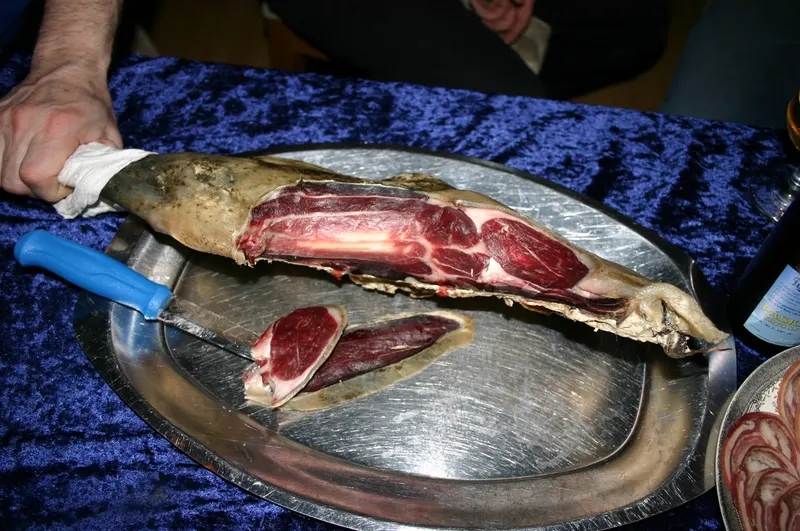
Ræst kjøt is unsalted mutton hung in a slatted wind shed, the hjallur, from October. By around Christmas the meat is fermented and ræst, half-dry with a strong, pungent taste, and it is eaten cooked. Left longer, it dries fully into skerpikjøt.
No fixed amounts recordedTraditional household practice with no fixed amounts; the slaughtered carcases are hung in the hjallur.
Mutton or lamb carcases
Hung with no salt, smoke or other treatment; the skerpikjøt in the Charmpi study was sampled from ripened sheep legs[svanberg2023]
Total time across the recorded steps: 3 months – 5 months
Start
Drag the bar or press Play
What changes:Starting material: unsalted mutton carcases hung in the slatted wind shed
Step 1 of 4
Hang the carcases in the hjallur
Time
Not documented
Temperature
-5–13 °C
Reported
Salt
None given
Acidity
Not documented
Which microbes the steps name, step by step
Yeasts
Moulds
Flavour
Not documented
Texture
Not documented
Colour
Not documented
Microbes at work in this step
Not documented for this step.
Method
Measured measured in a studySet fixed by a specification or tested recipeReported one source reports itTypical a general value, not sourced for this fermentUnconfirmed not yet checked against a source
At a glance
Ræst kjøt is unsalted mutton hung in a slatted wind shed, the hjallur, from October. By around Christmas the meat is fermented and ræst, half-dry with a strong, pungent taste, and it is eaten cooked. Left longer, it dries fully into skerpikjøt. Made in 4 steps over 3 months – 5 months. The longest step, dry stage, takes 3–5 months (Svanberg I. 2023). Staphylococcus and Micrococcus on the surface and Staphylococcus equorum (most common), Kocuria, Mammaliicoccus vitulinus and S. saprophyticus in skerpikjøt, the fully dried stage do most of the fermenting.
Ræst kjøt is fermented and dried by the weather alone, with no salt and no smoke. It is the middle stage of the Faroese wind-drying; skerpikjøt is the same meat taken on until fully dry.
SkerpikjøtThe fully dried end stage, the most valued form.
Wind-dried fish, birds and pilot whale meatHung in the hjallur the same way, without salt or smoke.
Safety
No salt is used, so the weather decides the outcome. Cold weather early on spoils the taste, and high temperatures risk an inedible and even dangerous product. Nine botulism cases were reported in the Faroes from 1988 to 2007, 2 of them fatal; fish products are believed to have contaminated the mutton, and the study links the risk to missing hjallur access and lost know-how. The sources give no tested home method, so this page is a record of the craft, not a recipe.
Hazards the sources name: Clostridium botulinum (9 cases in the Faroes from 1988 to 2007, 2 fatal); Clostridium putrefaciens (the most abundant species in some skerpikjøt core samples).
Salt was once too precious to use on meat, and with the trees gone since the Middle Ages the islanders could not smoke it, so meat, birds and fish were wind-dried instead.
Starter
The sources we found do not say how its fermentation begins.