Side-by-side or overlay PDF diff driven by one engine that reads each file into a structured model — text, vector geometry, images, form fields, annotations — and compares the models. Moves show as moves, edits show only where they happened, and any PDF type works without picking a mode.
Open a STEP / STP part and it measures itself — volume, thinnest wall, draft and undercut checks on load, plus hole detection with a BOM. Measure, section, export STL. Rust + WASM B-rep kernel, runs in your browser.
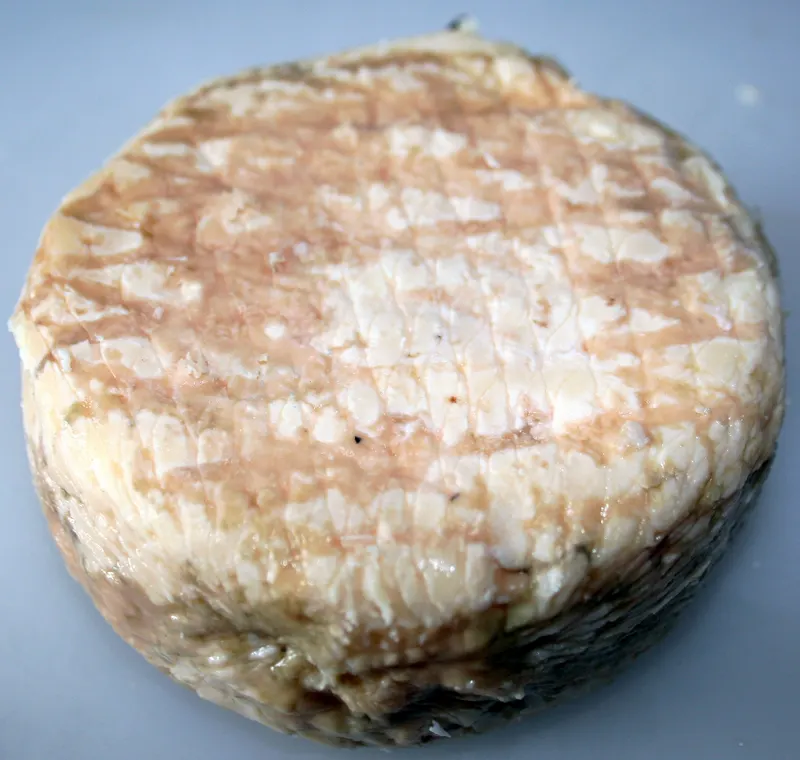
A simple fresh cheese of eastern Asturias, once sold at coastal markets. Cow milk, or sheep or goat milk in spring and early summer, is set with rennet, cut small and lightly pressed, then rubbed with salt on both faces. The ministry catalogue describes it as fresh and unripened, soft, moist and mild, with a pH of about 6; it names cultures only for pasteurised milk, so little fermentation is documented.
Photo: Sitomon, Public domain, via Wikimedia Commons
No fixed amounts recordedTraditional cheese with no fixed recipe. The ministry catalogue gives about 0.5 kg per cheese; a 2007 book describes one Porrúa maker's fresh cheese as about 300 g.
lactic cultures, added only when the milk is pasteurised
Total time across the recorded steps: 3 days
Start
Drag the bar or press Play
What changes:Starting material: cow milk, or sheep or goat milk in spring
Step 1 of 5
Warm the milk
Time
Not documented
Temperature
Not documented
Salt
None given
Acidity
Not documented
Farms were mixed, mostly cattle with a few sheep and goats, so most cheese was cow milk, with sheep or goat cheese in spring and early summer.
Flavour
Not documented
Texture
Not documented
Colour
Not documented
Microbes at work in this step
Not documented for this step.
Method
Measured measured in a studySet fixed by a specification or tested recipeReported one source reports itTypical a general value, not sourced for this fermentUnconfirmed not yet checked against a source
At a glance
A simple fresh cheese of eastern Asturias, once sold at coastal markets. Cow milk, or sheep or goat milk in spring and early summer, is set with rennet, cut small and lightly pressed, then rubbed with salt on both faces. The ministry catalogue describes it as fresh and unripened, soft, moist and mild, with a pH of about 6; it names cultures only for pasteurised milk, so little fermentation is documented. Made in 5 steps over 3 days. The longest step, cut and drain in the mould, takes 3 days (Asociación de Queseros Artesanos (Asturias)). Salt is 2 % (Ministerio de Agricultura (MAPA) 2015).
Queso de Porrúa is a plain market cheese, only lightly pressed and salted on its faces. Its milk changes with the season, from cow milk most of the year to sheep or goat milk in spring.
Size
3–5 cm high, 8–10 cm across, about 0.5 kg; disc-shaped
Composition
40–45 % dry matter, 55–60 % moisture, about 50 % fat in dry matter, 2 % salt
De ovejaSheep milk, from about April to August (Wikipedia).
Safety
The ministry catalogue describes a fresh, unripened cheese with a pH of 6.0 and about 2 % salt, made from raw or pasteurised milk, with lactic cultures added when the milk is pasteurised. If the milk is raw, the CDC says people at higher risk, including pregnant women, people 65 or older and people with weak immunity, should avoid raw-milk cheese unless it is heated to 165 °F (74 °C) or until steaming hot.
The ministry catalogue says it was a homemade cheese sold at the local markets of the eastern Asturian coast. Growing demand moved production into small specialised dairies. A 2007 book on the artisan cheeses of eastern Asturias describes a Porrúa maker, Emérita Romano, making the fresh cheese from cow milk of the La Mañanga pastures, with the marks of the mould on its surface, and notes that Porrúa cheeses also exist in cured cow and goat versions.