Side-by-side or overlay PDF diff driven by one engine that reads each file into a structured model — text, vector geometry, images, form fields, annotations — and compares the models. Moves show as moves, edits show only where they happened, and any PDF type works without picking a mode.
Open a STEP / STP part and it measures itself — volume, thinnest wall, draft and undercut checks on load, plus hole detection with a BOM. Measure, section, export STL. Rust + WASM B-rep kernel, runs in your browser.
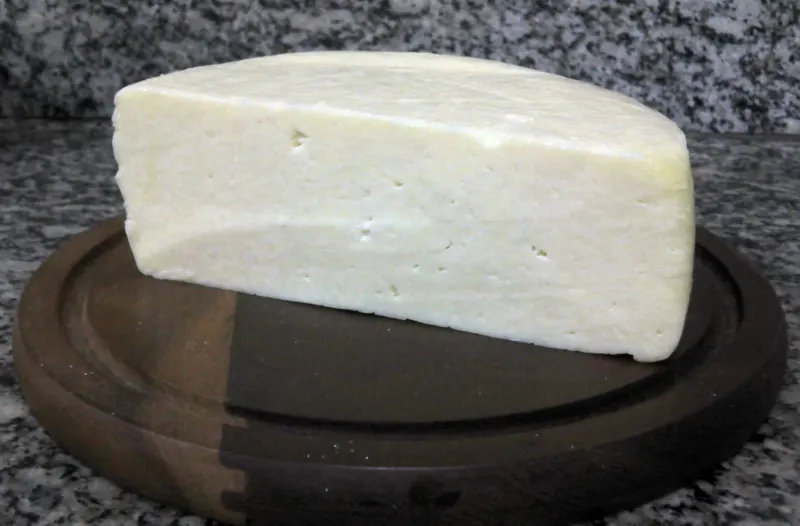
Milk is set with rennet in about 40 minutes, and the curd is cut, stirred and heated to up to 45 °C (semi-cooked) or 45–55 °C (cooked). The curd is salted, moulded and pressed, then kept at 10–12 °C and normally sold within 10 days. It is firm enough to grill on a skewer without melting away.
Amounts from a sourceAmounts from the Embrapa small-producer manual (Nassu et al. 2006), scaled to the milk. The federal regulation fixes the ingredients and the main steps but not the amounts.
Whole milk, or milk standardised to 3 % fat
The regulation requires pasteurisation or an equivalent heat treatment[mapa-in30]
Optional; the amount follows the culture maker's instructions[embrapa2006]
Salt1–2 % of the milk volume
Dissolved in whey and stirred into the curd[embrapa2006]
Starter
A selected lactic culture is optional; in artisanal raw-milk coalho the fermentation is spontaneous
Total time across the recorded steps: 5 days – 10 days
Start
Drag the bar or press Play
What changes:The milk is pasteurised before cheese making
Step 1 of 7
Pasteurise and cool the milk
Time
0.3–30 min
Reported
Temperature
62–72 °C
Reported
Salt
None given
Acidity
Not documented
Which microbes the steps name, step by step
Enterococcus
Lactococcus
Streptococcus
Leuconostoc
The federal regulation requires pasteurisation or an equivalent heat treatment. Artisanal makers often use raw milk. Output: pasteurised milk.
Flavour
Not documented
Texture
Not documented
Colour
Not documented
Microbes at work in this step
the Embrapa manual says pasteurisation eliminates disease-causing microbes
Method
Measured measured in a studySet fixed by a specification or tested recipeReported one source reports itTypical a general value, not sourced for this fermentUnconfirmed not yet checked against a source
At a glance
Milk is set with rennet in about 40 minutes, and the curd is cut, stirred and heated to up to 45 °C (semi-cooked) or 45–55 °C (cooked). The curd is salted, moulded and pressed, then kept at 10–12 °C and normally sold within 10 days. It is firm enough to grill on a skewer without melting away. Made in 7 steps over 5 days – 10 days. The longest step, ripen briefly and keep cool, takes 5–10 days (Nassu R.T 2006) and runs at 10–12 °C (Nassu R.T 2006). Salt is 1–2 % (Nassu R.T 2006). Lactic acid bacteria dominated by Enterococcus and Selected lactic cultures, when the maker adds them do most of the fermenting.
Queijo coalho is cooked or semi-cooked and sold within about ten days, so it keeps a medium to high moisture and an elastic texture. Its main use is grilling on a skewer. Queijo de manteiga, its regional cousin, is set with acid instead of rennet and melted with butter oil.
Milk
Whole or standardised milk; the federal regulation and the Embrapa manual do not name the species, and one study covers goat coalho. Raw in artisanal making, pasteurised under the federal regulation
Curd
Semi-cooked (up to 45 °C) or cooked (45–55 °C); a raw-paste version is allowed
Sold within
Normally sold within 10 days of making
Fat
35–60 % fat in total solids; medium to high moisture
Coalho ripened on wooden planksArtisanal cheese ripened 30–60 days in one study; moisture and pH fall as it ages
Queijo de manteiga (queijo do sertão)Acid-set, washed and melted with manteiga de garrafa; a heat-and-acid product, not rennet-set
Safety
Raw-milk coalho has carried Staphylococcus aureus with enterotoxin genes, and also E. coli, Salmonella and Listeria in one study of goat cheese. The federal regulation requires pasteurised or equivalently heated milk and storage at no more than 12 °C.
Hazards the sources name: Staphylococcus aureus with enterotoxin genes, the pathogen most often isolated from goat coalho in one study; Escherichia coli, Salmonella and Listeria strains isolated from goat coalho.
Brazil's agriculture ministry set the identity and quality standard for queijo de coalho in 2001, together with those for manteiga de garrafa and queijo de manteiga. It is made mainly in Ceará, Rio Grande do Norte, Paraíba and Pernambuco.