Side-by-side or overlay PDF diff driven by one engine that reads each file into a structured model — text, vector geometry, images, form fields, annotations — and compares the models. Moves show as moves, edits show only where they happened, and any PDF type works without picking a mode.
Open a STEP / STP part and it measures itself — volume, thinnest wall, draft and undercut checks on load, plus hole detection with a BOM. Measure, section, export STL. Rust + WASM B-rep kernel, runs in your browser.
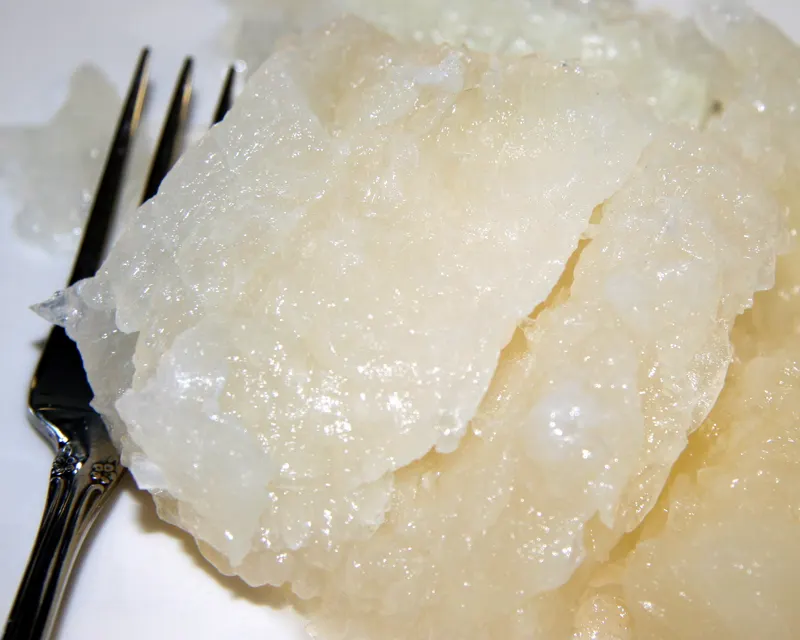
Lutefisk is lye-cured fish, kept in the atlas as a boundary entry. Air-dried stockfish is soaked in cold water for about a week, then in lye for two to four days until it reaches pH 11–12, then soaked in water again to remove the lye. Hassoun and colleagues note that the role of its microbiota has been studied only recently.
Total time across the recorded steps: 11 days – 17 days
Start
Drag the bar or press Play
What changes:Hard, dry stockfish soaks in cold water for about a week and takes up water
Step 1 of 4
Soak the stockfish in cold water
Time
5–7 days
Reported
Temperature
Not documented
Salt
None given
Acidity
Not documented
Output: rehydrated fish.
Flavour
Not documented
Texture
dry, hard fish takes up water
Colour
Not documented
Microbes at work in this step
Not documented for this step.
Method
Measured measured in a studySet fixed by a specification or tested recipeReported one source reports itTypical a general value, not sourced for this fermentUnconfirmed not yet checked against a source
At a glance
Lutefisk is lye-cured fish, kept in the atlas as a boundary entry. Air-dried stockfish is soaked in cold water for about a week, then in lye for two to four days until it reaches pH 11–12, then soaked in water again to remove the lye. Hassoun and colleagues note that the role of its microbiota has been studied only recently. Made in 4 steps over 11 days – 17 days. The longest step, soak the stockfish in cold water, takes 5–7 days (Hassoun A 2020).
Lutefisk is a boundary entry. The sources describe the change as soaking in water and lye, which swells the fish and makes it soft. Rakfisk, by contrast, is a Norwegian fish product fermented in brine.
Fish salted before cookingA layer of salt on the fish about half an hour before cooking draws out water, so the cooked fish is firm and not jelly-like, close to freshly boiled cod; the salt is rinsed off first.
Safety
Lye (sodium hydroxide) burns skin and eyes, even when it is food-grade. The long soak in clean water after the lye is what makes the fish edible, and finished lutefisk is still strongly alkaline, at about pH 10. No source here gives a lye strength or says when the lye is gone, so these steps cannot be followed as a home method. The Institute of Marine Research reports that researchers who checked ready-soaked lutefisk from shops with DNA tests found alkaline-loving bacteria but no gut bacteria and no Listeria, Salmonella or Vibrio. The article does not say how many samples were tested.
Lutefisk was first mentioned in the literature in the 16th century, by the Nordic priest and ethnographer Olaus Magnus (Hassoun 2020). The Institute of Marine Research says recipes for it go back to 1555. Wikipedia says it is not known when people first treated dried fish with lye. One suggestion is that beech or birch ash was added to the boiling water for hard, low-quality stockfish to speed up cooking, so that lye came in by accident. A popular legend instead has burned birch drying racks and a rainstorm soaking the fish in ash water.