Side-by-side or overlay PDF diff driven by one engine that reads each file into a structured model — text, vector geometry, images, form fields, annotations — and compares the models. Moves show as moves, edits show only where they happened, and any PDF type works without picking a mode.
Open a STEP / STP part and it measures itself — volume, thinnest wall, draft and undercut checks on load, plus hole detection with a BOM. Measure, section, export STL. Rust + WASM B-rep kernel, runs in your browser.
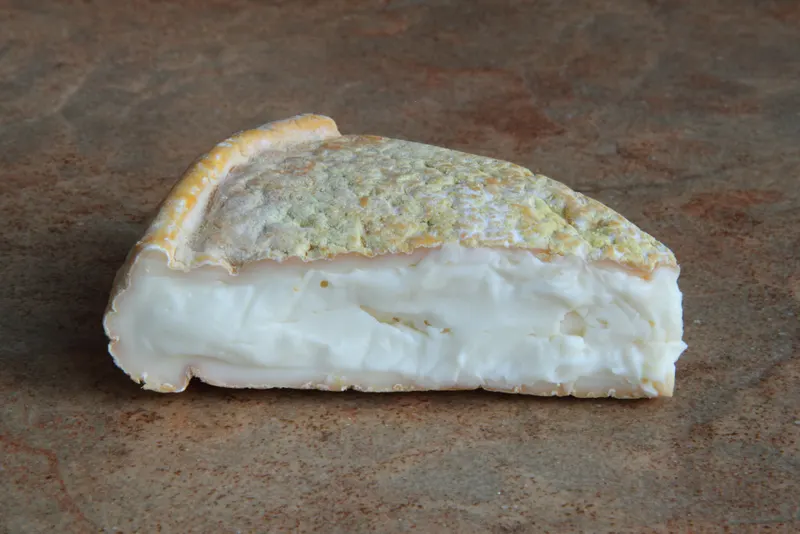
Raw milk from Canadienne cows is set by a mix of culture souring and rennet, and the curd drains slowly. The soft cheese gets a washed rind that turns irregular orange, and as a raw-milk cheese it must be held 60 days at 2 °C or more before sale. It is soft and slightly sticky, with an intense, lactic and animal flavour.
No fixed amounts recordedThe sources give no amounts or batch size.
Unpasteurised milk of Canadienne cows
The herd must be 100 % Canadienne females, fed at least 65 % forage; the 2010 Châtelaine article calls the milk raw, from cows fed on local fodder and pasture[cartv-cdc][chatelaine2010]
Bacterial cultures (acidifying and ripening bacteria, yeasts and moulds are allowed)
The specification allows rennet, and describes the cheese as mixed (lactic and rennet) coagulation[cartv-cdc]
Salt
The specification mentions brines, ripening solutions and smears for the washed rind[cartv-cdc]
Starter
lactic bacteria with a coagulant (the specification's definition of the cheese); mixed coagulation
Start
Drag the bar or press Play
What changes:The island's Canadienne cows are milked for raw cheese milk
Step 1 of 5
Milk the Canadienne herd
Time
Not documented
Temperature
Not documented
Salt
None given
Acidity
Not documented
Only milk from Canadienne cows may be used; components for standardising must also come from Canadienne milk.
Flavour
Not documented
Texture
Not documented
Colour
Not documented
Microbes at work in this step
Not documented for this step.
Method
Measured measured in a studySet fixed by a specification or tested recipeReported one source reports itTypical a general value, not sourced for this fermentUnconfirmed not yet checked against a source
At a glance
Raw milk from Canadienne cows is set by a mix of culture souring and rennet, and the curd drains slowly. The soft cheese gets a washed rind that turns irregular orange, and as a raw-milk cheese it must be held 60 days at 2 °C or more before sale. It is soft and slightly sticky, with an intense, lactic and animal flavour.
Pied-De-Vent is made only from the raw milk of Canadienne cows, the old Québec breed, at Havre-aux-Maisons on the Magdalen Islands, and carries Québec's 'Canadienne cow cheese' designation. It is a soft cheese with mixed lactic and rennet coagulation and slow draining, under a washed rind.
Milk
Raw milk of Canadienne cows only
Minimum age for sale
Raw-milk cheese must be stored 60 days or more from the start of making before it is sold in Canada
Canada's federal Food and Drug Regulations bar selling cheese from unpasteurised milk to shoppers until it has been stored at 2 °C or more for at least 60 days from the start of making. That is a sale rule, not a safety guarantee. ANSES ranks soft washed-rind cheeses just after the main raw-milk sources of Listeria, Salmonella and enterohaemorrhagic E. coli. Health Canada tells people who are pregnant, aged 60 or over, aged 5 or under, or who have a weak immune system to avoid all uncooked cheese from unpasteurised milk.
A Canadienne herd bought on Île Verte arrived on the Magdalen Islands in 1998, when no dairy farm was left there. By 2010 Châtelaine called Pied-De-Vent the best known of the family's cheeses and an emblem of the islands' farming revival. Québec reserved the designation 'Fromage de vache de race Canadienne' on 9 March 2016. The specification describes Pied-De-Vent as one of the three Canadienne-milk cheeses assessed in 2012.