Side-by-side or overlay PDF diff driven by one engine that reads each file into a structured model — text, vector geometry, images, form fields, annotations — and compares the models. Moves show as moves, edits show only where they happened, and any PDF type works without picking a mode.
Open a STEP / STP part and it measures itself — volume, thinnest wall, draft and undercut checks on load, plus hole detection with a BOM. Measure, section, export STL. Rust + WASM B-rep kernel, runs in your browser.
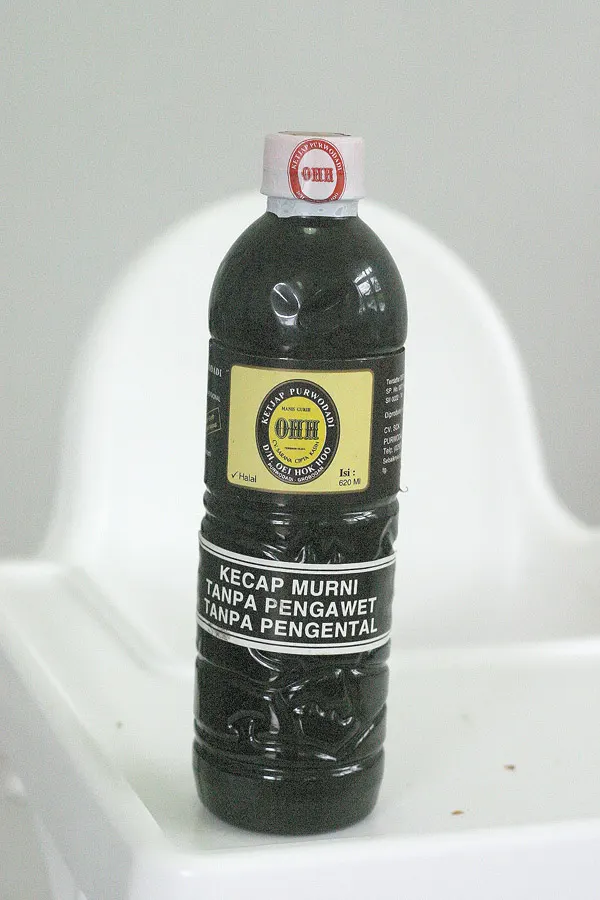
Kecap manis (Indonesian sweet soy sauce)kecap manis
Kecap manis is Indonesia's thick, sweet soy sauce, the most popular kind of kecap. Cooked black soybeans go mouldy on bamboo trays, are sun-dried and left in strong salt brine in the sun for weeks to months. The filtered liquid is boiled with palm sugar and spices for 4–5 hours.
Fully documentedSauces and condiments19 days – 4.3 months
Amounts from a sourceSoybeans, water and salt are one traditional factory batch at Zebra Bogor Co., Bogor, spread on 10 bamboo trays (Sulistyo and Nikkuni 2006). The paper gives no amounts for palm sugar or spices.
Boiled into the filtered liquid; the source gives no amounts[sulistyo2006]
Starter
spontaneous (moulds from the air and the reused trays) | koji-starter (an aflatoxin-free Aspergillus starter in trials)
Total time across the recorded steps: 19 days – 4.3 months
Start
Drag the bar or press Play
What changes:Black soybeans soak overnight, then boil for about 3 hours
Step 1 of 5
Soak and boil the black soybeans
Time
3 h
Reported
Temperature
Not documented
Salt
None given
Acidity
Not documented
Which microbes the steps name, step by step
Moulds
Aspergillus
Rhizopus
Mucor
T. halophila
Output: soft cooked black soybeans.
Flavour
Not documented
Texture
Not documented
Colour
Not documented
Microbes at work in this step
Not documented for this step.
Method
Measured measured in a studySet fixed by a specification or tested recipeReported one source reports itTypical a general value, not sourced for this fermentUnconfirmed not yet checked against a source
At a glance
Kecap manis is Indonesia's thick, sweet soy sauce, the most popular kind of kecap. Cooked black soybeans go mouldy on bamboo trays, are sun-dried and left in strong salt brine in the sun for weeks to months. The filtered liquid is boiled with palm sugar and spices for 4–5 hours. Made in 5 steps over 19 days – 4.3 months. The longest step, ferment in salt brine in the sun, takes 14 days – 3.9 months (Sulistyo J 2006) and runs at 58 °C (Sulistyo J 2006). Salt is 20 % (Sulistyo J 2006). Aspergillus moulds and Rhizopus and Mucor moulds do most of the fermenting.
In the traditional factory method the koji is black soybeans only, with no wheat, and the moulds come from the air and the trays rather than a starter. After brining the liquid is boiled with palm sugar and spices, so it ends up thick and sweet, with 26–65 % carbohydrate and only 3–9 % salt.
Kecap MajalengkaWest Javanese family-factory kecap; a 2018 detik.com report on the Maja Menjangan factory gives a 7–10 day brine soak and a reduction of up to 12 hours before the palm sugar goes in (see kecap-majalengka).
Starter-culture kecap kojiCooked beans inoculated with a white-spored, aflatoxin-free Aspergillus starter mould in 3 days instead of 9.
Safety
Without a pure starter, aflatoxin-forming moulds can grow on the koji; one survey found aflatoxin B1 above 5 μg/kg in about 47 % of 32 kecap samples. An aflatoxin-free starter culture cut the outside aspergilli in koji to a tenth. WHO says most mycotoxins survive food processing, so the final boil cannot be counted on to remove aflatoxin.
Hazards the sources name: Aflatoxin-producing Aspergillus from the surroundings (aflatoxin B1 above 5 μg/kg in about 47 % of 32 kecap samples in one survey).
Kecap is Indonesia's soy sauce; the sweetened kecap manis is the most popular kind (Sulistyo and Nikkuni 2006). Shurtleff and Aoyagi think Chinese from south China brought soy sauce to Indonesia, and say the earliest known descriptions are Dutch, with Isaac Titsing in 1787 noting the name ketjap in Batavia. A 1976 survey they cite counted 588 Indonesian kecap makers and estimated that kecap manis, which can hold up to 50 % palm sugar, was about 90 % of national output, with more than half of all kecap made in West Java.