Side-by-side or overlay PDF diff driven by one engine that reads each file into a structured model — text, vector geometry, images, form fields, annotations — and compares the models. Moves show as moves, edits show only where they happened, and any PDF type works without picking a mode.
Open a STEP / STP part and it measures itself — volume, thinnest wall, draft and undercut checks on load, plus hole detection with a BOM. Measure, section, export STL. Rust + WASM B-rep kernel, runs in your browser.
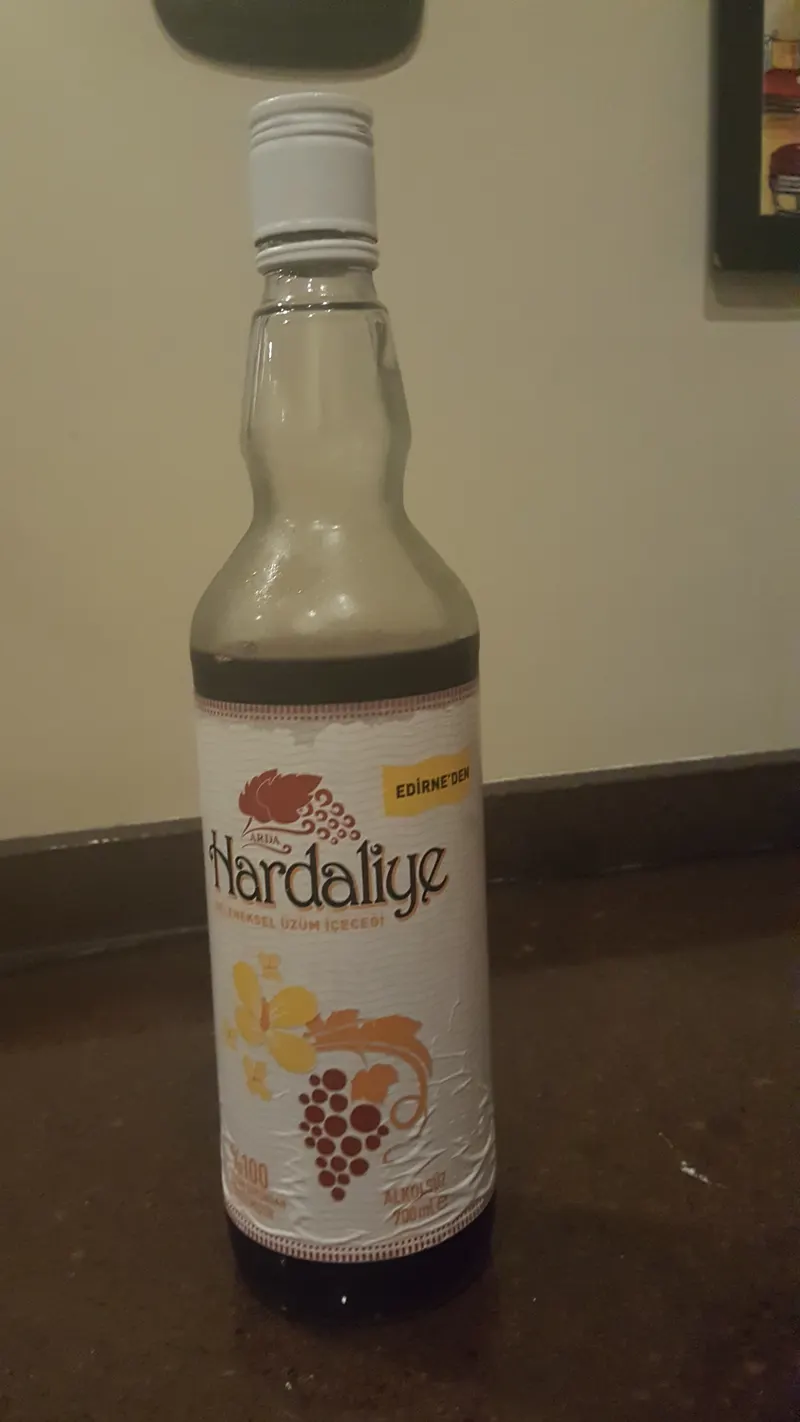
Hardaliye is a red, lightly pungent grape drink from Thrace. Crushed red grapes with their skins and seeds are layered in a vat with sour cherry leaves and crushed mustard seed, fermented by lactic bacteria for several weeks, then settled and drawn off clear.
No fixed amounts recordedThe GI specification gives mustard at 0.5–1 % and sour cherry leaf at 0.02–0.05 % (the basis of the percentage is not stated), pomace layers of 5–10 cm and preservative limits, but no grape quantities. Atmaca et al. (2023) note that mustard is used at different concentrations, fresh or roasted, whole or ground.
Ripe, aromatic red or black grapes, crushed with skins and seeds
Sorbic acid or sorbates and/or benzoic acid or benzoates
Preservatives scattered with the leaves and mustard in the GI method[gi278]
Sugar
Optional, when the grapes are low in sugar[atmaca2023]
Total time across the recorded steps: 42 days – 56 days
Start
Drag the bar or press Play
What changes:Starting material: ripe red grapes, crushed with their skins and seeds
Step 1 of 5
Pick ripe red grapes at vintage and crush them
Time
Made at the grape harvest, in September, October and November
Reported
Temperature
Not documented
Salt
None given
Acidity
Not documented
Which microbes the steps name, step by step
L. paracasei
Lactobacillus casei
Lactobacilli
Yeasts
Output: crushed grapes with skins and seeds (pomace and must).
Flavour
Not documented
Texture
Not documented
Colour
Not documented
Microbes at work in this step
Not documented for this step.
Method
Measured measured in a studySet fixed by a specification or tested recipeReported one source reports itTypical a general value, not sourced for this fermentUnconfirmed not yet checked against a source
At a glance
Hardaliye is a red, lightly pungent grape drink from Thrace. Crushed red grapes with their skins and seeds are layered in a vat with sour cherry leaves and crushed mustard seed, fermented by lactic bacteria for several weeks, then settled and drawn off clear. Made in 5 steps over 42 days – 56 days. The longest step, ferment, pumping juice over daily at first, takes 28–35 days (Turkish Patent and Trademark Office 2017) and runs at 20–22 °C (Turkish Patent and Trademark Office 2017). Lacticaseibacillus paracasei subsp. paracasei and Lactobacillus casei subsp. pseudoplantarum, which dominate a succession of lactobacilli does most of the fermenting.
Hardaliye is grape juice fermented by lactic bacteria rather than yeast. Crushed mustard seed and sour cherry leaves layered through the pomace set it apart from wine and from plain grape şıra.
Household hardaliyeFermented 7–10 days at room temperature, or up to 20 days at 10–15 °C, and drunk fresh.
Wine-pomace hardaliyeMade from the red grape pomace left over from wine making, such as Cabernet pomace.
High-pressure-processed hardaliyePressure treatment at 490 MPa extended shelf life to 228 days at 4 °C in a study.
Safety
Fresh hardaliye is perishable. Keep it cold (the GI specification gives 5–10 °C storage and at most one year at 4–5 °C). No coliforms or E. coli were found in 26 market samples at pH 3.21–3.97.
The GI record says hardaliye was made in Kırklareli at the grape harvest as a traditional way to preserve grape must. Kırklareli Hardaliyesi was registered as a Turkish geographical indication in 2017, with protection from 2013.
Starter
The sources we found do not say how its fermentation begins.
[arici2001] Arici M., Coskun F. 2001, Hardaliye, fermented grape juice as a traditional Turkish beverage, Food Microbiology 18(4):417–421, doi:10.1006/fmic.2001.0413 (abstract)paper