Side-by-side or overlay PDF diff driven by one engine that reads each file into a structured model — text, vector geometry, images, form fields, annotations — and compares the models. Moves show as moves, edits show only where they happened, and any PDF type works without picking a mode.
Open a STEP / STP part and it measures itself — volume, thinnest wall, draft and undercut checks on load, plus hole detection with a BOM. Measure, section, export STL. Rust + WASM B-rep kernel, runs in your browser.
Soft drinks from Turkey, Bulgaria and other countries of the Balkans
Bozaboza
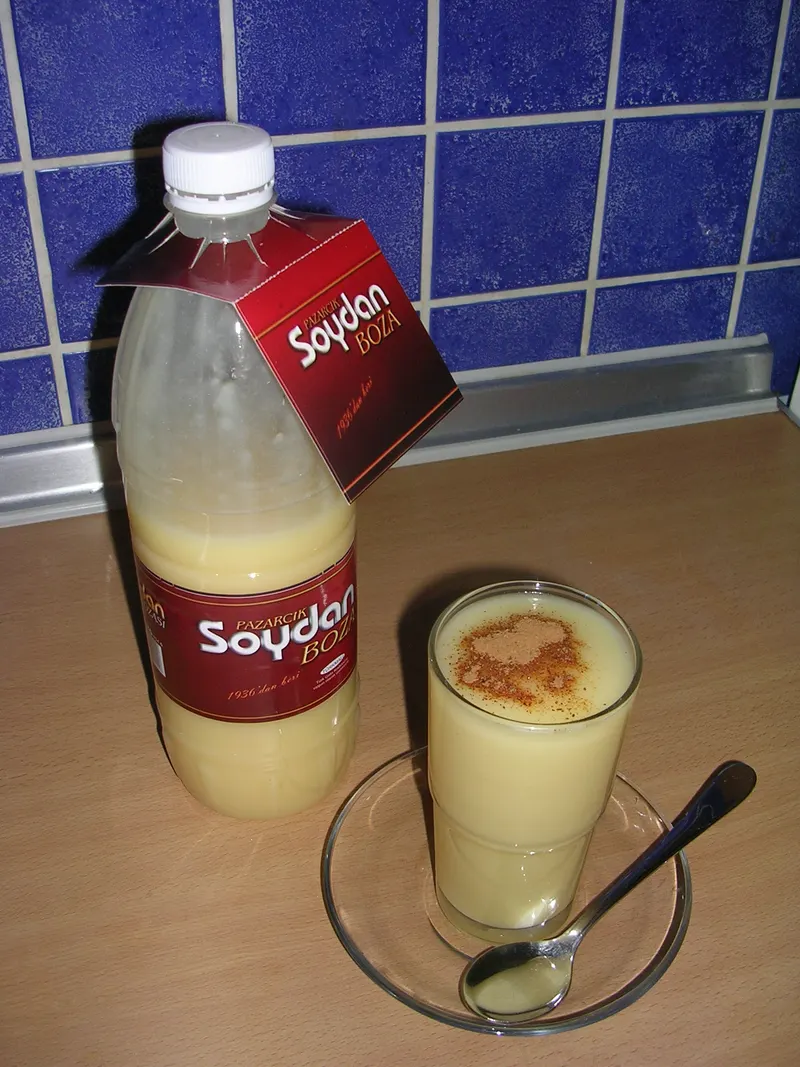
Boza is a thick, sweet-sour cereal drink. Ground millet, maize or wheat is cooked into a porridge with water, sieved, sweetened and fermented for about a day by lactic acid bacteria and yeasts. A lab-made boza reached 0.79 % alcohol after 24 h, and the drink is drunk mostly in winter.
Amounts from a sourceThe registered recipe for Velimeşe Bozası, a Turkish geographical indication; the cereal shares are average proportions of the grain mix. Other bozas use other grains.
spontaneous in the registered Velimeşe recipe (no old boza or starter culture is added)
Total time across the recorded steps: 26 h
Start
Drag the bar or press Play
What changes:The ground millet and maize soak overnight in warm water
Step 1 of 6
Mix the ground grains and soak overnight
Time
Left overnight
Set
Temperature
30 °C
Set
Salt
None given
Acidity
Not documented
Which microbes the steps name, step by step
Lactic acid bacteria
L. paramesenteroides
L. mesenteroides
L. sanfranciscensis
Flavour
Not documented
Texture
Not documented
Colour
Not documented
Microbes at work in this step
Not documented for this step.
Method
Measured measured in a studySet fixed by a specification or tested recipeReported one source reports itTypical a general value, not sourced for this fermentUnconfirmed not yet checked against a source
At a glance
Boza is a thick, sweet-sour cereal drink. Ground millet, maize or wheat is cooked into a porridge with water, sieved, sweetened and fermented for about a day by lactic acid bacteria and yeasts. A lab-made boza reached 0.79 % alcohol after 24 h, and the drink is drunk mostly in winter. Made in 6 steps over 26 h. The longest step, ferment, takes 24 h (TÜRKPATENT 2021) and runs at 25 °C (TÜRKPATENT 2021). In a lab-made Turkish boza of maize, wheat and rice flours, Leuconostoc paramesenteroides (25.6 % of LAB) and Leuconostoc mesenteroides and In the same lab-made boza, Lactobacillus sanfranciscensis (21.9 % of LAB), L. coryniformis, L. fermentum do most of the fermenting.
Boza is a cooked, sieved and sweetened cereal porridge fermented for about a day. Egyptian bouza is a stronger, beer-like drink made from wheat bread and malt.
According to the TÜRKPATENT sheet, Velimeşe Bozası was made in Velimeşe, in Çorlu. It drew the interest of passengers once it began to be sold on the trains between Edirne and Istanbul. Demand grew, and production later became widespread in the Ergene and Çorlu districts. It has been known by the name Velimeşe Bozası since the 1960s.