Side-by-side or overlay PDF diff driven by one engine that reads each file into a structured model — text, vector geometry, images, form fields, annotations — and compares the models. Moves show as moves, edits show only where they happened, and any PDF type works without picking a mode.
Open a STEP / STP part and it measures itself — volume, thinnest wall, draft and undercut checks on load, plus hole detection with a BOM. Measure, section, export STL. Rust + WASM B-rep kernel, runs in your browser.
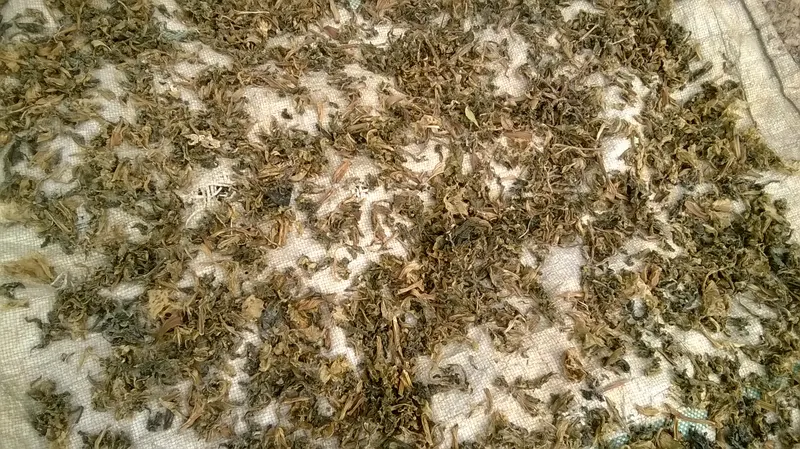
Leaves of rayo saag, mustard, radish or cauliflower are wilted, shredded and packed tightly into an earthen pot with no salt. Lactic bacteria sour them for about a week, then the leaves are sun-dried into a sour food. A 2020 paper says it can be preserved for more than 2 years at room temperature.
No fixed amounts recordedA household process with no fixed amounts; it is passed down within families. A lab version packed 400 g of crushed mustard leaves into each 500 mL jar (Ghimire et al.).
Poured over the packed leaves in FAO's account[fao134]
Starter
spontaneous
Total time across the recorded steps: 9 days – 16 days
Start
Drag the bar or press Play
What changes:The leaves wilt in the sun as water leaves them
Step 1 of 5
Wilt the leaves
Time
24 h – 2 days
Reported
Temperature
Not documented
Salt
None given
Acidity
Not documented
Which microbes the steps name, step by step
Levilactobacillus brevis
Pediococcus pentosaceus
L. plantarum
L. cellobiosus
Output: wilted leaves.
Flavour
Not documented
Texture
Not documented
Colour
Not documented
Microbes at work in this step
Not documented for this step.
Method
Measured measured in a studySet fixed by a specification or tested recipeReported one source reports itTypical a general value, not sourced for this fermentUnconfirmed not yet checked against a source
At a glance
Leaves of rayo saag, mustard, radish or cauliflower are wilted, shredded and packed tightly into an earthen pot with no salt. Lactic bacteria sour them for about a week, then the leaves are sun-dried into a sour food. A 2020 paper says it can be preserved for more than 2 years at room temperature. Made in 5 steps over 9 days – 16 days. The longest step, ferment, takes 5–10 days (Battcock M. and Azam-Ali S. 1998) and runs at 18–22 °C (Battcock M. and Azam-Ali S. 1998). Salt is 0 % (Battcock M. and Azam-Ali S. 1998). Levilactobacillus brevis and Pediococcus pentosaceus, which start the ferment and Lactiplantibacillus plantarum, which finishes it do most of the fermenting.
With no salt, gundruk relies on a fall in pH to about 3.7–4.0, and then on drying. FAO says the pH drops slowly to a final value of 4.0, and a lab ferment reached 3.71 on day 9. A pH below 4.6 holds back Clostridium botulinum in fermented vegetables, but in some low-salt ferments other bacteria use up the lactic acid and the pH climbs back above 4.6. Discard a batch that does not sour steadily to below 4.6 (Snyder et al.). A 2025 survey in Sikkim found Listeria monocytogenes in 2 samples of gundruk (15 of 499 fermented and preserved food samples were positive overall), so clean handling during drying and storage matters.
Hazards the sources name: Listeria monocytogenes, found in 2 gundruk samples in Sikkim.