Side-by-side or overlay PDF diff driven by one engine that reads each file into a structured model — text, vector geometry, images, form fields, annotations — and compares the models. Moves show as moves, edits show only where they happened, and any PDF type works without picking a mode.
Open a STEP / STP part and it measures itself — volume, thinnest wall, draft and undercut checks on load, plus hole detection with a BOM. Measure, section, export STL. Rust + WASM B-rep kernel, runs in your browser.
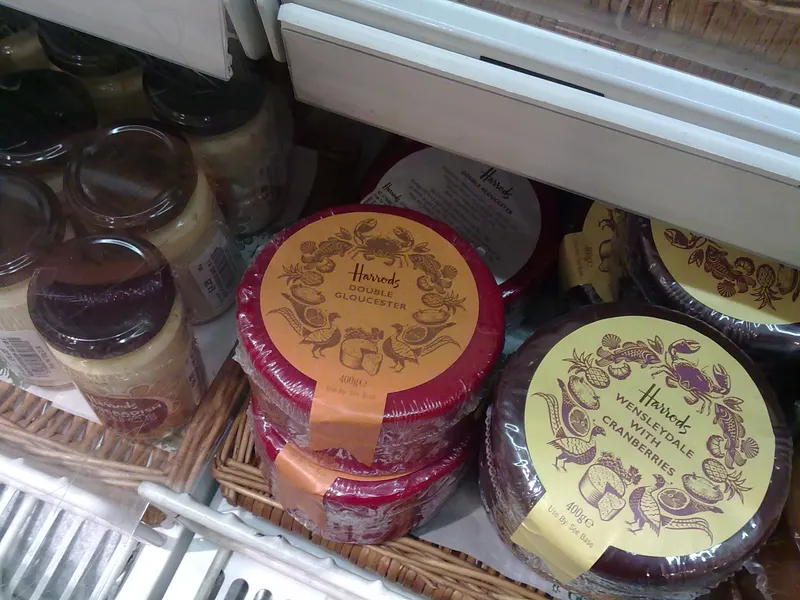
Double Gloucester is a hard cheese of full-cream cow milk, coloured orange with annatto and made in a wheel about twice as thick as Single Gloucester. It is made much like cheddar but pressed more lightly, so it stays moister and crumblier. It matures at least six months, until mild and nutty.
Photo: Adriao, Public domain, via Wikimedia Commons
Amounts from a sourceNo modern recipe or specification was found. The make below is the 1928 USDA account of Derbyshire cheese, which that account says Gloucester is identical to; Double Gloucester differs only in being twice as thick. Today's creamery method may differ.
Full-cream cow milk
Historically from one or two milkings; the 1928 account mixes evening and morning milk[cheeseshed][usda-608]
What changes:Rennet sets the mixed milk at about 27 °C, and annatto colours it orange
Step 1 of 6
Set the milk
Time
1 h
Reported
Temperature
27 °C
Reported
Salt
None given
Acidity
Not documented
Evening milk, kept from souring as far as possible, is mixed with morning milk. Double Gloucester is always coloured with annatto; the 1953 handbook says Gloucester could also be coloured red or brown when about a month old. Output: firm curd.
Flavour
Not documented
Texture
Not documented
Colour
orange from annatto
Microbes at work in this step
Not documented for this step.
Method
Measured measured in a studySet fixed by a specification or tested recipeReported one source reports itTypical a general value, not sourced for this fermentUnconfirmed not yet checked against a source
At a glance
Double Gloucester is a hard cheese of full-cream cow milk, coloured orange with annatto and made in a wheel about twice as thick as Single Gloucester. It is made much like cheddar but pressed more lightly, so it stays moister and crumblier. It matures at least six months, until mild and nutty. Made in 6 steps over 6.1 months. The longest step, mature, takes at least 6 months (The Cheese Shed) and runs at 16 °C (Doane C.F 1928).
Double Gloucester uses full-cream milk, is always coloured with annatto and is matured at least six months. Single Gloucester PDO is uncoloured, thinner and eaten at about two months; its specification sets the starter step at 30–32 °C and a scald of up to 32–35 °C. Both are pressed more lightly than cheddar.
Milk
Full-cream cow milk
Size
About 41 cm (16 in) across and 10–12 cm (4–5 in) thick, about 11 kg (24 lb); Single Gloucester is a little over half as thick
Salt
In a 2012 survey of UK pack labels (published 2014), 6 of 10 Double Gloucester products met the 2012 target of 1.8 g/100 g, and those 6 averaged 1.58 g/100 g
Composition (1953)
Gloucester moisture 32.3–36%, fat 29–33%, salt 2–2.5%
Single Gloucester PDOUncoloured, thinner and younger, from milk that should come from Gloucester cows.
Safety
In a 2012 survey of UK pack labels (published 2014), 6 of 10 Double Gloucester products met the 1.8 g per 100 g salt target; those 6 averaged 1.58 g of salt per 100 g.
Gloucester cheese is recorded from the late 1500s and Double Gloucester was most famous in the 18th century. Both Gloucester cheeses came close to extinction in the 20th century. In the 1970s Charles Martell helped save them by preserving the Old Gloucester cattle breed and making both cheeses.
Starter
The sources we found do not say how its fermentation begins.