Side-by-side or overlay PDF diff driven by one engine that reads each file into a structured model — text, vector geometry, images, form fields, annotations — and compares the models. Moves show as moves, edits show only where they happened, and any PDF type works without picking a mode.
Open a STEP / STP part and it measures itself — volume, thinnest wall, draft and undercut checks on load, plus hole detection with a BOM. Measure, section, export STL. Rust + WASM B-rep kernel, runs in your browser.
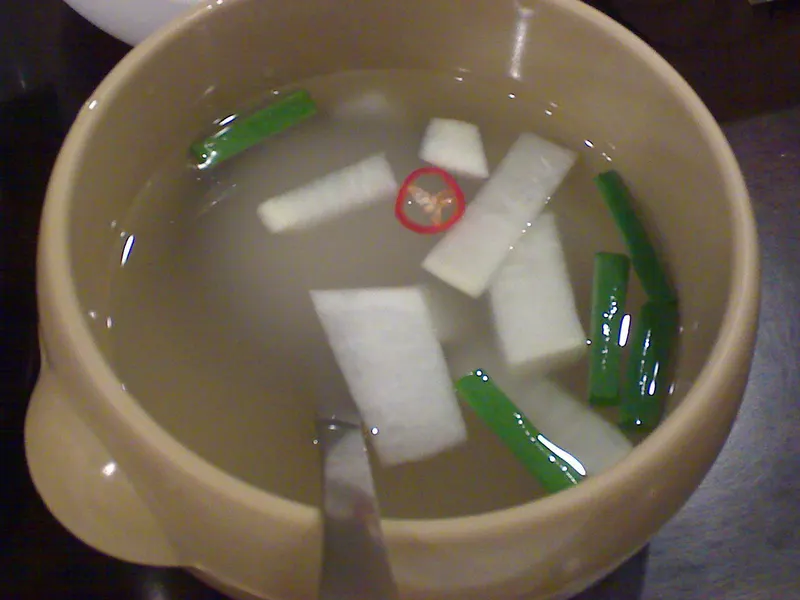
Dongchimi is a water kimchi of whole or large pieces of Korean radish in a light brine with garlic, green onion and ginger. Leuconostoc and then Lactobacillus sour the brine into a clear, tangy liquid in about two days when warm or a month when cold, and both the radish and the broth are eaten.
Amounts from a sourceLaboratory proportions from Korean dongchimi studies (radish to brine 1:1 w/v). Home recipes add napa cabbage, pickled green chilli and Korean pear, with no fixed amounts.
Total time across the recorded steps: 2 days – 46 days
Start
Drag the bar or press Play
What changes:Whole radishes are trimmed and salted
Step 1 of 4
Trim and salt the radishes
Time
Not documented
Temperature
Not documented
Salt
None given
Acidity
Not documented
Which microbes the steps name, step by step
L. plantarum
Radish is the main ingredient; whole green or red chillies, leaf mustard, garlic, ginger and leeks may go in too [wp-dongchimi]. Output: salted whole or halved radishes.
Flavour
Not documented
Texture
Not documented
Colour
Not documented
Microbes at work in this step
Not documented for this step.
Method
Measured measured in a studySet fixed by a specification or tested recipeReported one source reports itTypical a general value, not sourced for this fermentUnconfirmed not yet checked against a source
At a glance
Dongchimi is a water kimchi of whole or large pieces of Korean radish in a light brine with garlic, green onion and ginger. Leuconostoc and then Lactobacillus sour the brine into a clear, tangy liquid in about two days when warm or a month when cold, and both the radish and the broth are eaten. Made in 4 steps over 2 days – 46 days. The longest step, ferment, takes 2–46 days (Park S.-J 2008) and runs at 4–25 °C (Park S.-J 2008). Salt is 2–5.1 % (Chang S.-K 1996). Leuconostoc mesenteroides and Lactobacillus plantarum do most of the fermenting.
Dongchimi is a water kimchi. Whole radish sits in a light brine, so the clear, mild broth is as much the product as the vegetable, and it matures in days, not weeks.