Side-by-side or overlay PDF diff driven by one engine that reads each file into a structured model — text, vector geometry, images, form fields, annotations — and compares the models. Moves show as moves, edits show only where they happened, and any PDF type works without picking a mode.
Open a STEP / STP part and it measures itself — volume, thinnest wall, draft and undercut checks on load, plus hole detection with a BOM. Measure, section, export STL. Rust + WASM B-rep kernel, runs in your browser.
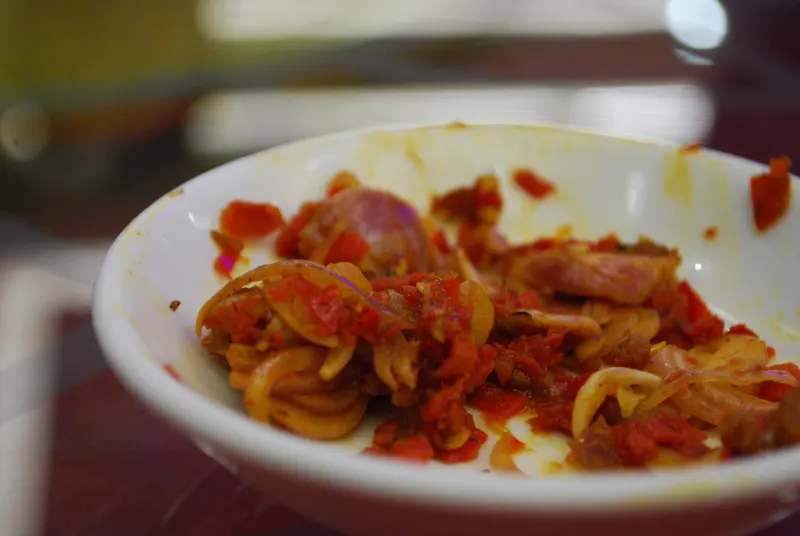
Tiny fresh Acetes shrimp are mixed with salt and sugar, sometimes with cooked rice, and sealed in a jar for a few days. The shrimp turn soft, bright pink and savoury as the pH drops from about 8 to about 5.5. Cincalok is a quick, low-salt shrimp ferment eaten with shallot, chilli and lime.
Amounts from a sourceThe original recipe (recipe A) a West Kalimantan producer made for a 2021 study. Malaysian recipes use the same shrimp, salt and sugar with no fixed amounts.
Total time across the recorded steps: 3 days – 6 days
Start
Drag the bar or press Play
What changes:The tiny shrimp are picked clean and rinsed in seawater
Step 1 of 4
Sort and rinse the shrimp
Time
Not documented
Temperature
Not documented
Salt
None given
Acidity
Not documented
Which microbes the steps name, step by step
Lactic acid bacteria
Tetragenococcus
Lactobacillus
Bits of small fish and debris are picked out and the shrimp are rinsed in seawater. Output: clean fresh shrimp.
Flavour
Not documented
Texture
Not documented
Colour
Not documented
Microbes at work in this step
Not documented for this step.
Method
Measured measured in a studySet fixed by a specification or tested recipeReported one source reports itTypical a general value, not sourced for this fermentUnconfirmed not yet checked against a source
At a glance
Tiny fresh Acetes shrimp are mixed with salt and sugar, sometimes with cooked rice, and sealed in a jar for a few days. The shrimp turn soft, bright pink and savoury as the pH drops from about 8 to about 5.5. Cincalok is a quick, low-salt shrimp ferment eaten with shallot, chilli and lime. Made in 4 steps over 3 days – 6 days. The longest step, seal in a jar and ferment, takes 3–6 days (Nofiani R 2021). Salt is 4 % (Nofiani R 2021). Tetragenococcus and Lactobacillus do most of the fermenting.
Cincalok is a ferment of whole raw shrimp that is ready in days. Belacan and kapi are made from the same kind of shrimp but are salted harder, dried and pounded into a firm paste that ages for weeks or months.
Ronto (South Kalimantan)The South Kalimantan name for the same shrimp ferment; the market samples studied were made with salt only.
Cincalok with chilli or garlicAdding red chilli or garlic powder changes the colour; garlic gave a paler pink and scored best with consumers in one study.
Safety
Cincalok is low in salt (about 4 % in one recipe) and ends near pH 5.3–5.5, in an airtight jar at room temperature. The FDA's pathogen table puts the limits for growth of proteolytic Clostridium botulinum at pH 4.6 and 10 % water-phase salt, and for type E at pH 5.0 and 5 %. So the acid is no barrier against either, and the salt does not reach the proteolytic limit. The FDA's time guidance for the proteolytic types in fish and fishery products is 2 hours in total above 21 °C. One study found no C. perfringens, but we found none that tested for C. botulinum or measured water activity. It can be eaten without cooking. You cannot see, smell or taste the toxin, and even a small taste can be deadly (CDC). The recipe records one producer's batch, not a safe home method. Malaysian cincalok averaged 126.1 mg/kg histamine and 448.8 mg/kg tyramine (Saaid et al. 2009). That histamine is above the FDA's 50 ppm guidance level, which is set for fish, not shrimp. Use fresh shrimp.
Hazards the sources name: Bacillus cereus, Clostridium perfringens, Staphylococcus aureus and Enterobacteriaceae (not found at any observation time over 28 days in one study of three recipes, which did not test for C. botulinum).
Cencaluk is believed to come from Sumatra and to have reached the Malay Peninsula through trade. It is part of Malay home cooking and festive meals in Melaka, Johor and Pahang (JKKN).