Side-by-side or overlay PDF diff driven by one engine that reads each file into a structured model — text, vector geometry, images, form fields, annotations — and compares the models. Moves show as moves, edits show only where they happened, and any PDF type works without picking a mode.
Open a STEP / STP part and it measures itself — volume, thinnest wall, draft and undercut checks on load, plus hole detection with a BOM. Measure, section, export STL. Rust + WASM B-rep kernel, runs in your browser.
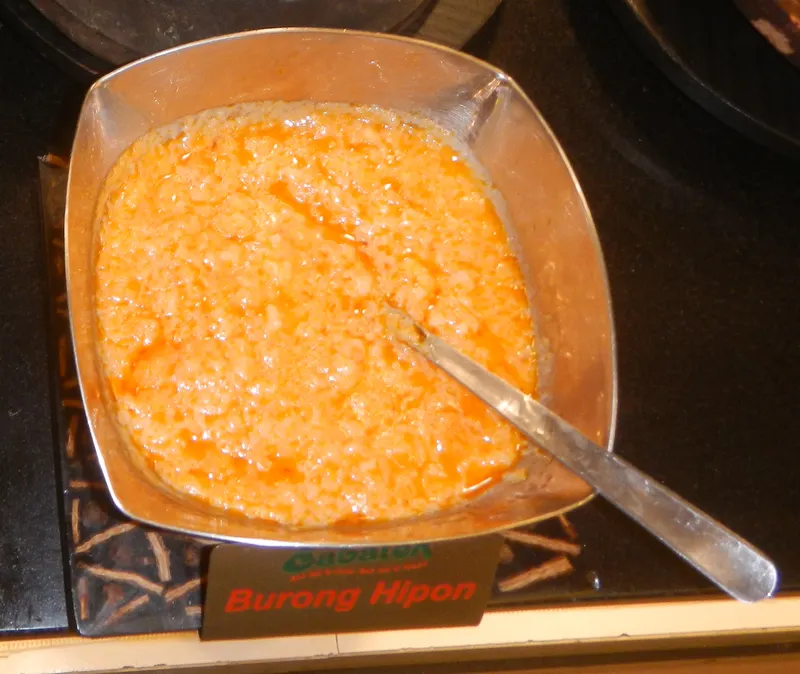
Balao-balao is whole shrimp salted at 20 % of their weight, mixed with 4.8 times their weight of cooked rice and a little more salt, and packed in wide-mouth glass jars for 7 to 10 days at 28 °C. Lactobacilli make lactic acid from the rice, which preserves and softens the shrimp, and the pH is listed as falling from 7.52 to 3.80. Wikipedia says it is stir-fried and eaten with rice or used as a dip.
Wikipedia lists it among the ingredients; the table in Narzary et al. does not[wp-balao]
Total time across the recorded steps: 7 days – 10 days
Start
Drag the bar or press Play
What changes:Salt is added to the whole shrimp at one fifth of their weight
Step 1 of 4
Salt the whole shrimp
Time
Not documented
Temperature
Not documented
Salt
20 %
Reported
Acidity
Not documented
Which microbes the steps name, step by step
Lactobacilli
Flavour
Not documented
Texture
Not documented
Colour
Not documented
Microbes at work in this step
Not documented for this step.
Method
Measured measured in a studySet fixed by a specification or tested recipeReported one source reports itTypical a general value, not sourced for this fermentUnconfirmed not yet checked against a source
At a glance
Balao-balao is whole shrimp salted at 20 % of their weight, mixed with 4.8 times their weight of cooked rice and a little more salt, and packed in wide-mouth glass jars for 7 to 10 days at 28 °C. Lactobacilli make lactic acid from the rice, which preserves and softens the shrimp, and the pH is listed as falling from 7.52 to 3.80. Wikipedia says it is stir-fried and eaten with rice or used as a dip. Made in 4 steps over 7 days – 10 days. The longest step, pack in wide-mouth jars and ferment, takes 7–10 days (Narzary Y 2021) and runs at 28 °C (Narzary Y 2021). Salt is 20 % (Narzary Y 2021). Lactiplantibacillus plantarum and Leuconostoc mesenteroides, Pediococcus cerevisiae and Lactobacillus plantarum do most of the fermenting.
Narzary et al. list pH 7.52–3.80 for balao-balao, fermented 7 to 10 days at 28 °C. The same review reports elevated histamine and tyramine in fermented seafood made from anchovy, squid, clam and shrimp. It also says Clostridium botulinum, Salmonella, Listeria and Staphylococcus aureus have been reported from many fermented fish products. This page records a practice, not a tested home recipe.