Side-by-side or overlay PDF diff driven by one engine that reads each file into a structured model — text, vector geometry, images, form fields, annotations — and compares the models. Moves show as moves, edits show only where they happened, and any PDF type works without picking a mode.
Open a STEP / STP part and it measures itself — volume, thinnest wall, draft and undercut checks on load, plus hole detection with a BOM. Measure, section, export STL. Rust + WASM B-rep kernel, runs in your browser.
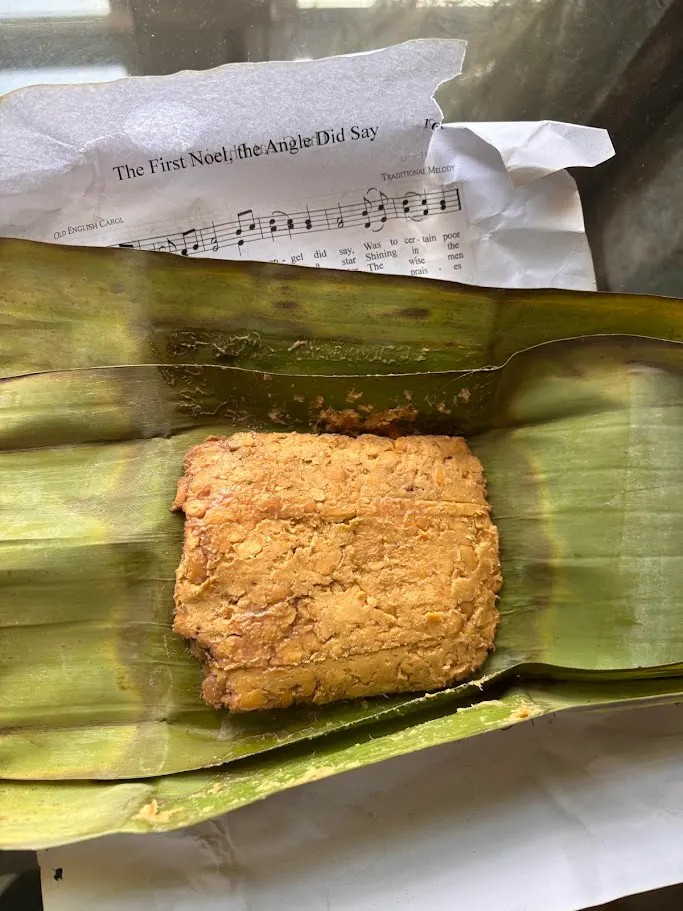
Axone is the fermented soybean of Nagaland. Boiled soybeans are wrapped in banana or Stachyphrynium leaves and kept above the fireplace for about a week, where Bacillus bacteria turn them sticky and pungent. The beans are used fresh or kept for some weeks, and are best known cooked with smoked pork.
What changes:Starting material: soybeans boiled until soft
Step 1 of 4
Boil the soybeans
Time
Not documented
Temperature
Not documented
Salt
None given
Acidity
Not documented
Which microbes the steps name, step by step
Bacillus
Bacillus subtilis
Bacillus coagulans
Output: soft cooked soybeans.
Flavour
Not documented
Texture
Not documented
Colour
Not documented
Microbes at work in this step
Not documented for this step.
Method
Measured measured in a studySet fixed by a specification or tested recipeReported one source reports itTypical a general value, not sourced for this fermentUnconfirmed not yet checked against a source
At a glance
Axone is the fermented soybean of Nagaland. Boiled soybeans are wrapped in banana or Stachyphrynium leaves and kept above the fireplace for about a week, where Bacillus bacteria turn them sticky and pungent. The beans are used fresh or kept for some weeks, and are best known cooked with smoked pork. Made in 4 steps over 7 days. The longest step, wrap in leaves and ferment above the fireplace, takes 7 days (Vikram R 2026). Bacillus subtilis, ubiquitous in the three soybean ferments studied and Bacillus coagulans, the major bacterium in axone samples in one study do most of the fermenting.
Axone is a Bacillus-fermented soybean like kinema and hawaijar. In the recipes recorded at the Hornbill Festival it is cooked with smoked meat [vikram2026].
Galho with axone (Angami)Rice and smoked meat soup in which axone is added only with smoked meat.
Safety
Spontaneously fermented soybean packed in tree leaves can carry pathogens. A 2026 investigation of an outbreak in Mizoram found atypical enteropathogenic E. coli in all 40 patients and in one of two leftover food samples. All 40 ate bekang, a related fermented soybean, from one vendor, who wrapped it in unwashed forest leaves. The authors call this a strong correlation and note a small sample and no strain typing. Bekang is not axone.
Hazards the sources name: Atypical enteropathogenic E. coli, found in one food sample of bekang, a related fermented soybean wrapped in tree leaves, in a 2024 Mizoram outbreak (not axone).
Axone is made by many Naga tribes, most notably the Sümi [wp-akhuni]. Recipes recorded at the Hornbill Festival in 2023–2025 include smoked pork with axone (Sümi) and galho (Angami) [vikram2026].
Starter
The sources we found do not say how its fermentation begins.
[das2023] Das S., Bhattacharjee M.J., Mukherjee A.K., Khan M.R. 2023, Comprehensive bacterial-metabolite profiles of hawaijar, bekang, and akhone, World Journal of Microbiology and Biotechnology 39(11):315, doi:10.1007/s11274-023-03773-3 (abstract)paper
[singh2014] Singh B.R., Singh R.K. 2014, Axone, an ethnic probiotic containing food, reduces age of sexual maturity and increases poultry production, Probiotics and Antimicrobial Proteins 6(2):88–94, doi:10.1007/s12602-014-9160-8 (abstract)paper
[deb2018] Deb C.R., Jamir B. 2018, Nutritional assessment and molecular identification of microorganisms from akhuni/axone, a soybean based fermented food of Nagaland, India, Journal of Advances in Biology 11:2170–2179, doi:10.24297/jab.v11i1.7118 (abstract)paper