Side-by-side or overlay PDF diff driven by one engine that reads each file into a structured model — text, vector geometry, images, form fields, annotations — and compares the models. Moves show as moves, edits show only where they happened, and any PDF type works without picking a mode.
Open a STEP / STP part and it measures itself — volume, thinnest wall, draft and undercut checks on load, plus hole detection with a BOM. Measure, section, export STL. Rust + WASM B-rep kernel, runs in your browser.
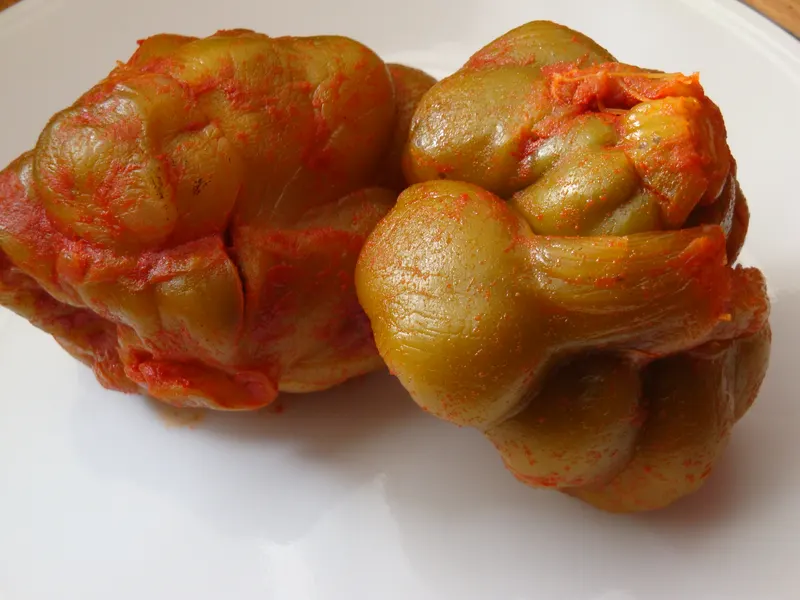
Zha cai is the swollen stem of a mustard plant, salted in brine three times, each time stronger, and pressed between stages to squeeze out the brine. Lactic bacteria and salt-loving microbes ferment it over months; it is then desalted, rubbed with chilli paste and packed.
Total time across the recorded steps: 4.9 months – 7.2 months
Start
Drag the bar or press Play
What changes:Fresh mustard tubers soak in weak brine and start to lose water
Step 1 of 5
First salting in weak brine
Time
7 days
Reported
Temperature
Not documented
Salt
4 %
Reported
Acidity
Not documented
Which microbes the steps name, step by step
Lactobacillus
Yeasts
Output: once-salted tubers.
Flavour
Not documented
Texture
Not documented
Colour
Not documented
Microbes at work in this step
Not documented for this step.
Method
Measured measured in a studySet fixed by a specification or tested recipeReported one source reports itTypical a general value, not sourced for this fermentUnconfirmed not yet checked against a source
At a glance
Zha cai is the swollen stem of a mustard plant, salted in brine three times, each time stronger, and pressed between stages to squeeze out the brine. Lactic bacteria and salt-loving microbes ferment it over months; it is then desalted, rubbed with chilli paste and packed. Made in 5 steps over 4.9 months – 7.2 months. The longest step, third salting in strong brine, takes 4–6 months (Li J 2023). Salt is 4 % (Li J 2023). Leuconostoc and Lactobacillus, the dominant bacteria in turn across the four stages of the salt-reduced method and Lactiplantibacillus plantarum and Latilactobacillus sakei at the second pickling and pressing do most of the fermenting.
Zha cai is salted in three stages of rising strength and pressed between them, which is where its name (pressed vegetable) comes from. A newer factory method uses four weaker brines and takes under four months.
Salt-reduced picklingFour stages in 30, 40, 80 and 100 g/L brine for 7, 20, 37 and 36 days, each ended when the tuber's acidity reaches 3, 6, 8 and under 10 g/kg.
Zhejiang and Fujian zha caiMade in Yuyao and Xiapu, the other two main producing areas.
Safety
In the salt-reduced process nitrite stayed below 1.30 mg/kg throughout, under the 4 mg/kg standard China applies to "green food".
A pickle merchant, Qiu Shou'an, is said to have created the method in Fuling in 1898. Fuling made it on an industrial scale by 1910–1930 and grows 70 % of China's mustard tubers.