Side-by-side or overlay PDF diff driven by one engine that reads each file into a structured model — text, vector geometry, images, form fields, annotations — and compares the models. Moves show as moves, edits show only where they happened, and any PDF type works without picking a mode.
Open a STEP / STP part and it measures itself — volume, thinnest wall, draft and undercut checks on load, plus hole detection with a BOM. Measure, section, export STL. Rust + WASM B-rep kernel, runs in your browser.
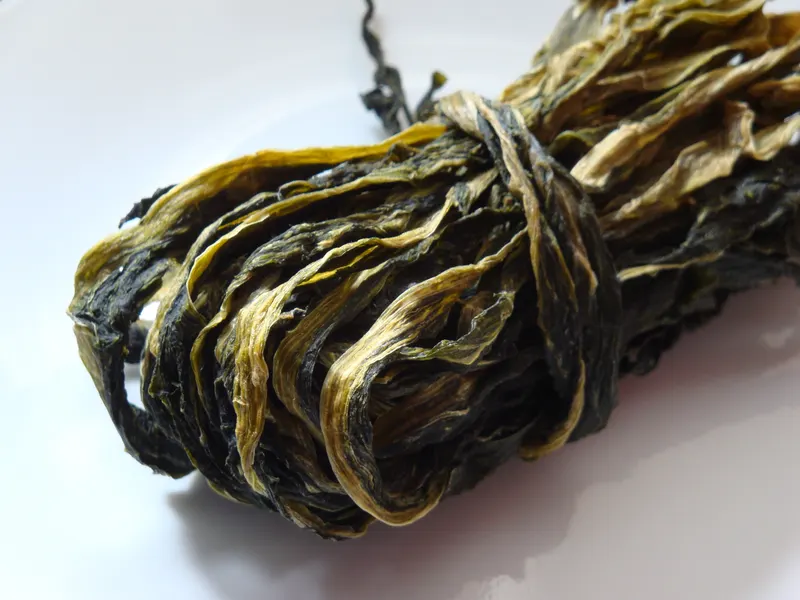
Leaf mustard is wilted, salted and packed into jars, where lactic bacteria sour it, then it is steamed and sun-dried, three times over in the Hakka way, into dark, fragrant dried leaves. A 2026 paper gives it a two-year shelf life at room temperature. It is cooked with pork in mei cai kou rou.
Amounts from a sourceThe ratio is from home-made Shaoxing meigan cai in a 2026 study (mustard to salt 25:1). Hakka makers in Meizhou vary the salt, which is one reason a group standard is being written.
Total time across the recorded steps: 12 h – 14 days
Start
Drag the bar or press Play
What changes:Fresh leaf mustard is spread out to wilt in the sun
Step 1 of 4
Wilt the fresh mustard in the sun
Time
Not documented
Temperature
Not documented
Salt
None given
Acidity
Not documented
Which microbes the steps name, step by step
Weissella
Latilactobacillus
Lactobacilli
Levilactobacillus brevis
Output: limp mustard.
Flavour
Not documented
Texture
Not documented
Colour
Not documented
Microbes at work in this step
Not documented for this step.
Method
Measured measured in a studySet fixed by a specification or tested recipeReported one source reports itTypical a general value, not sourced for this fermentUnconfirmed not yet checked against a source
At a glance
Leaf mustard is wilted, salted and packed into jars, where lactic bacteria sour it, then it is steamed and sun-dried, three times over in the Hakka way, into dark, fragrant dried leaves. A 2026 paper gives it a two-year shelf life at room temperature. It is cooked with pork in mei cai kou rou. Made in 4 steps over 12 h – 14 days. The longest step, ferment in the jars, takes 12 h – 14 days (Jiang X 2026) and runs at 20–30 °C (Jiang X 2026). Weissella early, then Latilactobacillus and other lactobacilli and Levilactobacillus brevis and Weissella hellenica among the core species do most of the fermenting.
Meigan cai is soured like other Chinese salted mustards, then steamed and dried. Unlike suan cai, which stays moist, it is steamed and dried after souring.
Hakka meigan cai (Meizhou, Huizhou)Short ferment and three rounds of steaming and sun-drying.
Shaoxing meigan caiPotherb mustard packed with salt and fermented about two weeks before drying.
Safety
The drafters of the Meizhou group standard limited the fermentation time and temperature partly to keep nitrite low; in the Shaoxing study nitrite stayed at 0.83–6.33 mg/kg, under the 20 mg/kg Chinese limit the authors cite. That study's sealed, salted stage started at pH 5.5, held about 3.45 % salt and only levelled off at about pH 4.6, with no margin below the limit WHO gives for Clostridium botulinum, and WHO says homemade fermented foods are a common source of botulism. The study did not look for the bacterium or its toxin, so do not store the wet leaves in sealed jars. Dry the leaves fully; the dried leaves are reported to keep about two years at room temperature (Jiang 2026), which is a keeping figure, not a safety test.