Side-by-side or overlay PDF diff driven by one engine that reads each file into a structured model — text, vector geometry, images, form fields, annotations — and compares the models. Moves show as moves, edits show only where they happened, and any PDF type works without picking a mode.
Open a STEP / STP part and it measures itself — volume, thinnest wall, draft and undercut checks on load, plus hole detection with a BOM. Measure, section, export STL. Rust + WASM B-rep kernel, runs in your browser.
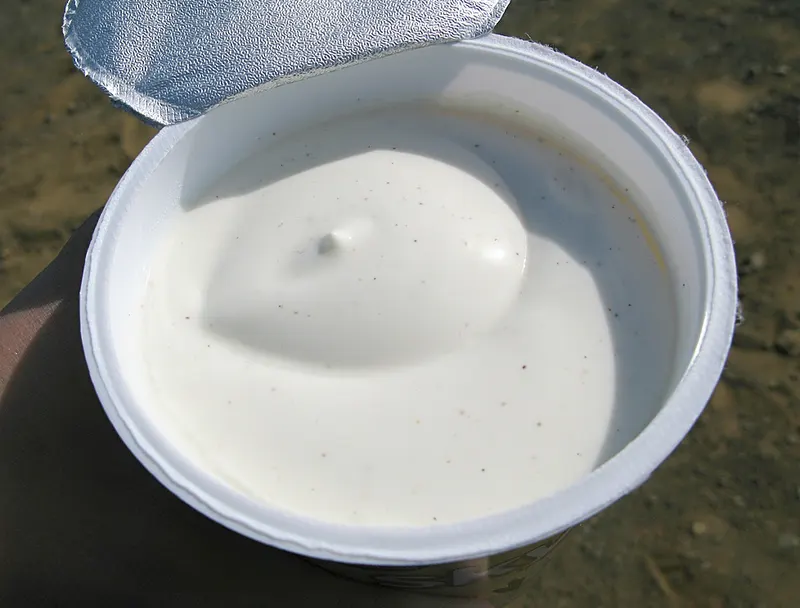
Skyr is Icelandic skim milk heated near boiling, set warm with a spoon of old skyr and rennet, then cooled slowly and strained in cloth. Yoghurt bacteria sour it, and on farms yeasts add a fermented note. The result is a very thick, sour, high-protein curd at pH 3.7–4.3.
Amounts from a sourceEach farm batch in the Matís 2011 study made about 2 litres of skyr; one KEA dairy batch made 500 kg. Neither gives a rennet dose.
Fresh milk from the farm's cows, skimmed
One farm in the study used whole milk, which gave a skyr with more dry matter (23.9 %)[matis2011]
Old skyr (skyrþéttir) as starterAbout 1 tablespoon
Thinned with a little of the warm milk before it goes in[matis2011]
Rennet
Added with the old skyr; the report gives no dose[matis2011]
Starter
backslop (old skyr, called skyrþéttir)
Total time across the recorded steps: 31 h – 32 h
Start
Drag the bar or press Play
What changes:The cream is separated off, leaving skim milk
Step 1 of 6
Skim the milk
Time
Not documented
Temperature
Not documented
Salt
None given
Acidity
Not documented
Which microbes the steps name, step by step
Yeasts
S. thermophilus
L. delbrueckii
Kluyveromyces
Saccharomyces
Output: skim milk.
Flavour
Not documented
Texture
Not documented
Colour
Not documented
Microbes at work in this step
Not documented for this step.
Method
Measured measured in a studySet fixed by a specification or tested recipeReported one source reports itTypical a general value, not sourced for this fermentUnconfirmed not yet checked against a source
At a glance
Skyr is Icelandic skim milk heated near boiling, set warm with a spoon of old skyr and rennet, then cooled slowly and strained in cloth. Yoghurt bacteria sour it, and on farms yeasts add a fermented note. The result is a very thick, sour, high-protein curd at pH 3.7–4.3. Made in 6 steps over 31 h – 32 h. The longest step, strain through cloth, takes 24 h (Valsdóttir Þ 2011). Streptococcus thermophilus and Lactobacillus delbrueckii subsp. bulgaricus do most of the fermenting.
Skyr is set like yoghurt with the same two thermophilic bacteria, but rennet goes in and the curd is strained to a thick mass. At the KEA dairy it sets at 39–40 °C, and farm skyr carries yeasts from its old-skyr starter.
Milk
Skim cow milk in dairies; farms use skim or whole milk
Dairy skyr from pure cultures (MS Selfoss)No old skyr; a fresh pure culture each time, overnight souring and whey removal by membrane filtration. It is thinner, glossier, smoother and whiter than farm skyr.
Whole-milk farm skyrMade from unskimmed milk; higher in dry matter (23.9 %), darker and less glossy than skim skyr.
Norwegian skjørNorwegian skjør is a cultured skim milk also called skyr there; it is usually made without cooking and without rennet.
Safety
Skyr is heated near boiling and soured to pH 3.7–4.3. Matís found no moulds in farm or dairy skyr. For strained dairy products, BC food-safety guidance says to strain under refrigeration and to store at 4 °C or colder.
Skyr is mentioned in medieval Icelandic sources including Egil's saga and Grettis saga, but no detailed description of the medieval product survives (Wikipedia). Matís (2011) says skyr has lived with the Icelanders for at least 1000 years, and in the settlement age it was probably sourer and thinner than today. Dairy production in the last century changed it a great deal.