Side-by-side or overlay PDF diff driven by one engine that reads each file into a structured model — text, vector geometry, images, form fields, annotations — and compares the models. Moves show as moves, edits show only where they happened, and any PDF type works without picking a mode.
Open a STEP / STP part and it measures itself — volume, thinnest wall, draft and undercut checks on load, plus hole detection with a BOM. Measure, section, export STL. Rust + WASM B-rep kernel, runs in your browser.
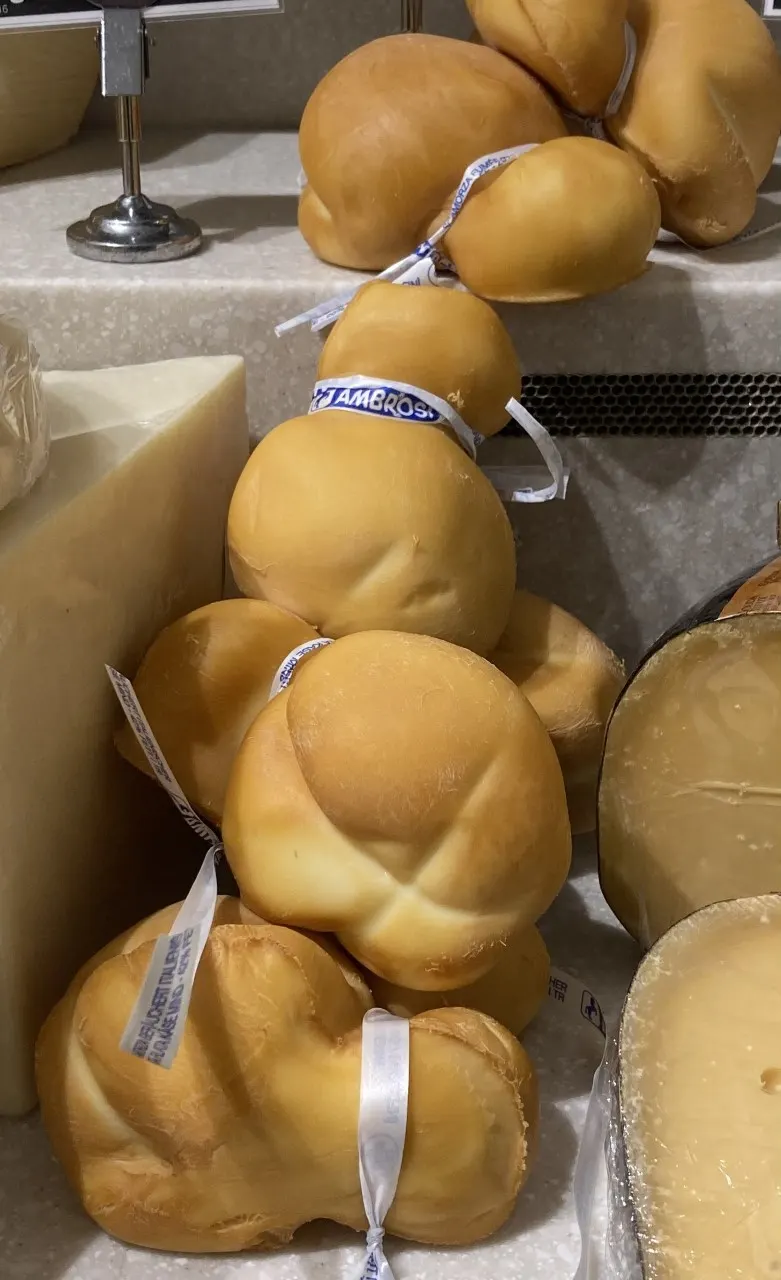
Cow milk is set with calf rennet and a soured-milk or whey starter, and the curd sours under its whey for a few hours until it will stretch. It is then stretched in hot water, shaped by hand into a sphere with a pinched neck, firmed in cold water and aged briefly, often tied in pairs; one version is smoked.
soured milk (latto-innesto), natural whey starter or Streptococcus thermophilus
Total time across the recorded steps: 10 days
Start
Drag the bar or press Play
What changes:Rennet and a soured-milk starter go into warm milk and it sets fast
Step 1 of 5
Warm the milk and add rennet and starter
Time
10 min
Reported
Temperature
38 °C
Reported
Salt
None given
Acidity
Not documented
Which microbes the steps name, step by step
S. thermophilus
L. delbrueckii
Lactic acid bacteria
Output: curd.
Flavour
Not documented
Texture
gel
Colour
white
Microbes at work in this step
Not documented for this step.
Method
Measured measured in a studySet fixed by a specification or tested recipeReported one source reports itTypical a general value, not sourced for this fermentUnconfirmed not yet checked against a source
At a glance
Cow milk is set with calf rennet and a soured-milk or whey starter, and the curd sours under its whey for a few hours until it will stretch. It is then stretched in hot water, shaped by hand into a sphere with a pinched neck, firmed in cold water and aged briefly, often tied in pairs; one version is smoked. Made in 5 steps over 10 days. The longest step, firm in cold water and age briefly, takes 10 days (ARSIAL (Lazio regional agency)) and runs at 4 °C (ARSIAL (Lazio regional agency)). Streptococcus thermophilus, dominant in Scamorza Altamurana and used as the starter in a 30-day ripening study of Scamorza and Lactobacillus delbrueckii subsp. bulgaricus, dominant with S. thermophilus in Scamorza Altamurana, a back-slopped make do most of the fermenting.
Scamorza is stretched like mozzarella but shaped into a sphere with a pinched neck, tied in pairs and firmed in cold water and aged for days, so it is firmer. Its ripening is short, under a month, and a smoked version (scamorza affumicata) is also made.
Milk
Cow milk
Ripening
Short, under 30 days; 10 days at 4 °C in the Lazio make
Scamorza ripiena (Latina)Filled with olives and anchovies.
Scamorza AltamuranaA typical Southern Italian make, studied by Baruzzi and colleagues, with a back-slopped whey starter; curd ferments 18 h, cheese ripens 6 days.
Safety
The Lazio make uses raw milk with no pasteurisation, only warming to 38 °C. The milk is chilled to 4 °C and filtered first, the paste is stretched in water at 75–85 °C, and the cheeses age at 4 °C. ARSIAL lists the product among the Lazio traditional products that may use hygiene-sanitary derogations. NHS pregnancy advice says unpasteurised dairy foods may contain listeria, which can cause miscarriage or stillbirth.
The sheet from ARSIAL says the name seems to come from scamozzare, to cut off part, which refers to the cheesemaker breaking the paste by hand to shape the cheese with its constriction. It calls the cheese without doubt southern Italian in origin, made today mainly in Lazio, Campania, Abruzzo and Molise; the filled version is characteristic of the province of Latina.