Side-by-side or overlay PDF diff driven by one engine that reads each file into a structured model — text, vector geometry, images, form fields, annotations — and compares the models. Moves show as moves, edits show only where they happened, and any PDF type works without picking a mode.
Open a STEP / STP part and it measures itself — volume, thinnest wall, draft and undercut checks on load, plus hole detection with a BOM. Measure, section, export STL. Rust + WASM B-rep kernel, runs in your browser.
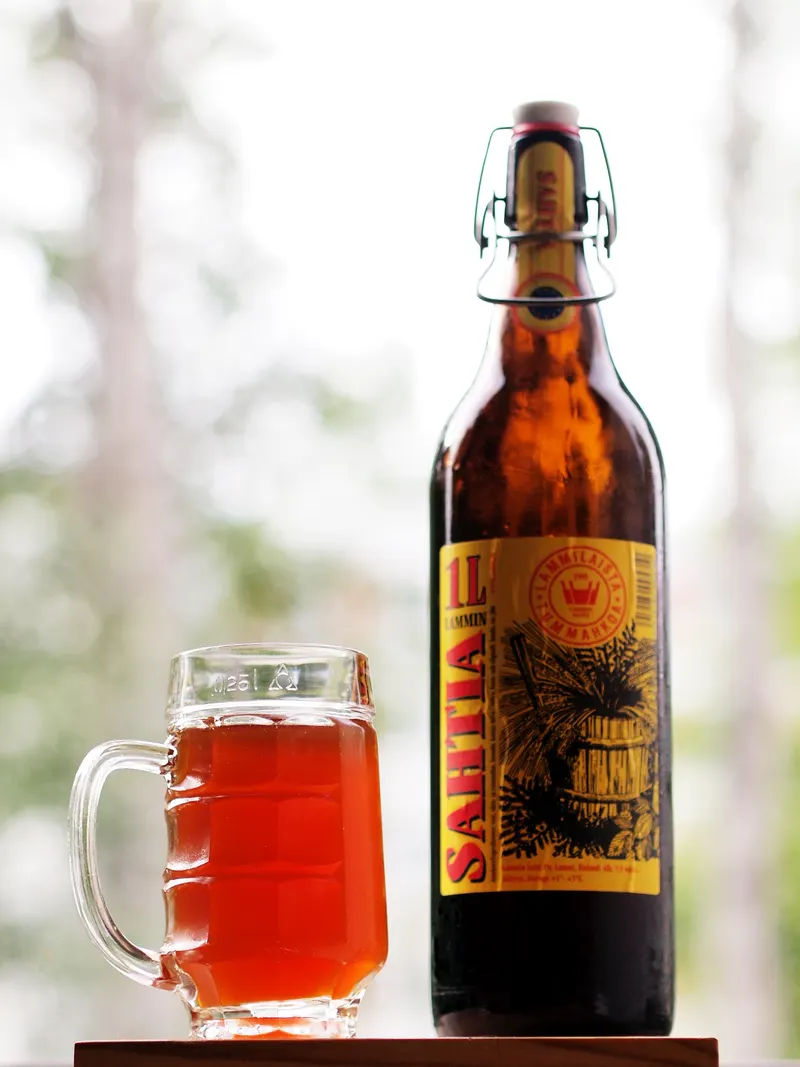
Sahti is a strong Finnish farmhouse beer of barley malt, often with rye, flavoured with juniper. The mash is long, the wort runs through juniper twigs in a trough and is not boiled, and baker's yeast ferments it fast. It is drunk young, within a week or two.
None or very little; 3–13 IBU in twelve sahti samples from southwest Finland[ekberg2015]
Starter
baker's yeast
Total time across the recorded steps: 11 days – 12 days
Start
Drag the bar or press Play
What changes:Long, slow mashing turns the malt starch into sugar
Step 1 of 5
Mash for hours with juniper
Time
4–6 h
Reported
Temperature
68–78 °C
Reported
Salt
None given
Acidity
Not documented
Which microbes the steps name, step by step
Saccharomyces cerevisiae
Yeasts
Output: thick mash.
Flavour
Not documented
Texture
Not documented
Colour
Not documented
Microbes at work in this step
malt enzymes turn starch into sugar
Method
Measured measured in a studySet fixed by a specification or tested recipeReported one source reports itTypical a general value, not sourced for this fermentUnconfirmed not yet checked against a source
At a glance
Sahti is a strong Finnish farmhouse beer of barley malt, often with rye, flavoured with juniper. The mash is long, the wort runs through juniper twigs in a trough and is not boiled, and baker's yeast ferments it fast. It is drunk young, within a week or two. Made in 5 steps over 11 days – 12 days. The longest step, cold-condition and drink young, takes at least 7 days (Laitinen M) and runs at 0–11 °C (Laitinen M). Saccharomyces cerevisiae does most of the fermenting.
Sahti uses baker's yeast instead of brewer's yeast and does not boil its wort. The wort is lautered through juniper twigs in a kuurna trough. Hops are few or none (3–13 IBU in twelve samples). The very strong wort gives more glycerol (3.1–4.7 g/L) than lager, wheat beer or porter, and almost no foam.
Gotlandsdricka (Sweden)A farmhouse ale from the Swedish island of Gotland that is in some cases similar to sahti.
Koduõlu (Estonian islands)Estonian "home beer" brewed on the Baltic islands; an even closer relative of sahti in flavour.
Lithuanian farmhouse aleLithuanian farmhouse brewers leave the wort unboiled and use juniper like sahti brewers, and some bake the mash first (see keptinis-alus).
Norwegian farmhouse aleNorwegian farmhouse brewers use kveik yeast, which ferments fast; see kveik-farmhouse-ale.
Sahti is neither pasteurised nor filtered, and its wort is boiled only briefly or not at all, so it keeps for only a few weeks. It is stored cold all the time. Lactobacillus needs at least 11 °C to work, so conditioning stays below 11 °C, with 0–5 °C preferred, and even half a day at room temperature can start souring. Heating the wort and using juniper and cold storage are the traditional ways to hold off souring. The BYO article warns that baker's yeast can re-ferment and build pressure in closed containers, so it prefers containers where pressure is easy to release, and it advises against storing sahti under pressure. Its safety note says a homebrewer who bottles must make sure the sahti has fermented to the finish, or risk exploding bottles.
Sahti has been brewed for at least 500 years, often for summer weddings and other festivities. Brewers moved from their own yeasts to commercial baker's yeast in the first half of the 20th century. It is registered in the EU as a traditional speciality guaranteed.