Side-by-side or overlay PDF diff driven by one engine that reads each file into a structured model — text, vector geometry, images, form fields, annotations — and compares the models. Moves show as moves, edits show only where they happened, and any PDF type works without picking a mode.
Open a STEP / STP part and it measures itself — volume, thinnest wall, draft and undercut checks on load, plus hole detection with a BOM. Measure, section, export STL. Rust + WASM B-rep kernel, runs in your browser.
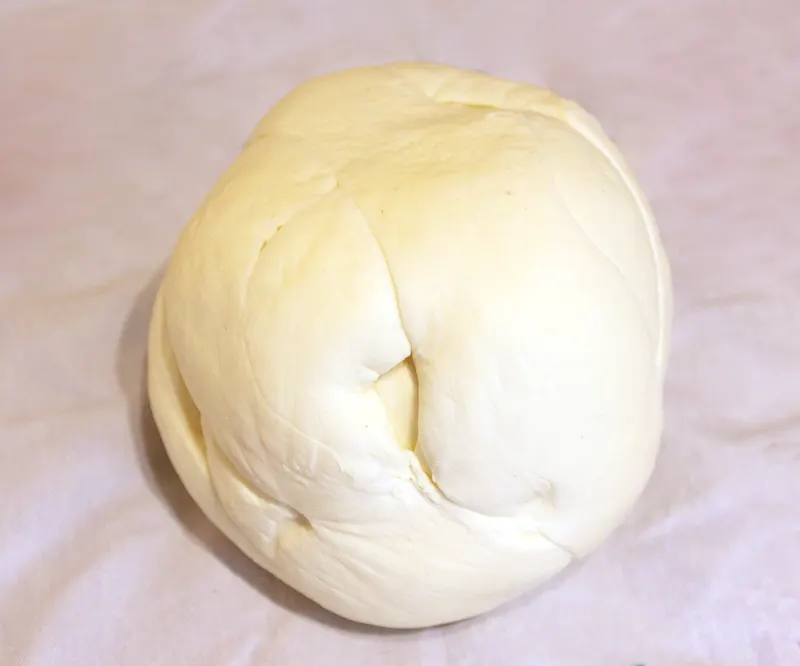
Queso Oaxaca is a Mexican stretched-curd cheese. The milk is soured, either by leaving it to stand for hours or by adding acid, then set with rennet; the curd is left to acidify further, kneaded in water at about 70–80 °C and pulled into long ribbons. The salted ribbons are wound into balls and eaten fresh.
Amounts from a sourceThe amounts are from a 5-litre artisanal-style lab make that followed Villegas's method; the sources give no other fixed amounts. A survey of makers found the process is not standardised.
Rubbed onto the stretched ribbon in a lab make[hj2022]
Starter
natural souring of raw milk by its own bacteria, with no initiator culture added; mesophilic or thermophilic cultures in pasteurised-milk makes in one study
Total time across the recorded steps: 55 min – 1.3 h
Start
Drag the bar or press Play
What changes:Left to stand for hours, the milk's own bacteria turn its lactose into lactic acid
Step 1 of 7
Sour the milk
Time
Not documented
Temperature
Not documented
Salt
None given
Acidity
Not documented
Which microbes the steps name, step by step
Lactococcus lactis
Lactobacillus plantarum
Lactobacillus
Artisanal makers let the milk stand for hours; industry may add glacial acetic acid. A lab make adjusted the milk to 37 °D (pH 5.8–5.9) with acetic acid.
Flavour
Not documented
Texture
Not documented
Colour
Not documented
Microbes at work in this step
the milk's own bacteria turn lactose into lactic acid
Method
Measured measured in a studySet fixed by a specification or tested recipeReported one source reports itTypical a general value, not sourced for this fermentUnconfirmed not yet checked against a source
At a glance
Queso Oaxaca is a Mexican stretched-curd cheese. The milk is soured, either by leaving it to stand for hours or by adding acid, then set with rennet; the curd is left to acidify further, kneaded in water at about 70–80 °C and pulled into long ribbons. The salted ribbons are wound into balls and eaten fresh. Made in 7 steps over 55 min – 1.3 h. The longest step, cut and let the curd acidify, takes 30–45 min (Huerta-Jimenez M. et al. 2022). Salt is 2 % (Huerta-Jimenez M. et al. 2022). Lactococcus lactis, isolated through the making of raw-milk Oaxaca cheese and Lactobacillus plantarum, the predominant lactobacillus in raw-milk Oaxaca cheese do most of the fermenting.
Like mozzarella it is a pasta filata, but the curd is stretched into long ribbons that are salted and wound into a ball. Artisanal makers sour the raw milk naturally before renneting.
Standard composition (NMX-F-733-COFOCALEC-2010)
At least 21.5 % protein and 20 % fat, at most 51 % moisture
Survey of makers
pH 4.9–5.8 and salt 8.4–36.2 g/kg, because the process is not standardised
For raw-milk Oaxaca cheese, one study calls kneading the curd in water at 70–80 °C a critical surveillance point. Its lab cheeses, from three milkings at one university dairy, had no positive samples for Salmonella or E. coli and met the Mexican S. aureus limit. The authors infer that water at 75 °C would kill these bacteria if they were in the milk, but they did not add them to test this. One batch had higher S. aureus, which they put down to poor milk hygiene or recontamination after kneading. Mexican legislation excludes cheeses made from raw milk, and industrial versions use pasteurised milk with added cultures. Keep it cold; in vacuum packs at 8 °C its quality fell gradually over 24 days. The CDC says people at higher risk, including pregnant women, people 65 or older and people with weak immunity, should avoid raw-milk cheese unless it is heated to 165 °F (74 °C) or until steaming hot.
Profeco (2012) says cheese reached Mexico with the Spanish conquistadors, who brought cows, sheep and goats, and that monks and friars taught indigenous peoples to make cream, butter and cheese during evangelisation. Oaxaca cheese takes its name from the state of Oaxaca, its probable place of origin (Huerta-Jiménez et al. 2022). The Mexican standard NMX-F-733-COFOCALEC-2010 defines the cheese and its name.