Side-by-side or overlay PDF diff driven by one engine that reads each file into a structured model — text, vector geometry, images, form fields, annotations — and compares the models. Moves show as moves, edits show only where they happened, and any PDF type works without picking a mode.
Open a STEP / STP part and it measures itself — volume, thinnest wall, draft and undercut checks on load, plus hole detection with a BOM. Measure, section, export STL. Rust + WASM B-rep kernel, runs in your browser.
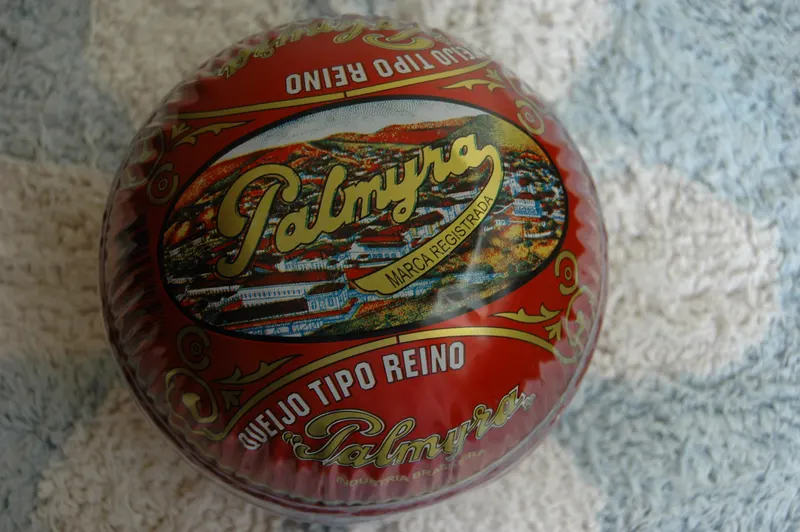
Brazil's Edam-derived ball cheese is made from pasteurised cow milk with a starter of Lactobacillus helveticus and mesophilic lactococci. The curd is cooked by adding hot water, moulded into balls, brined for one and a half to two days, dried and ripened, then its rind is painted red and the ball is traditionally sealed in a tin.
Fully documentedCheese52 daysnone; the 2013 thesis says no technical identity and quality regulation exists, though a 2006 instruction (IN 68) describes its sensory attributesFamily: Washed-curd cheese family (Gouda as template)
Amounts from a sourceAmounts are given as shares of the milk. The study batches used 10,000 litres of milk each, and the cheeses averaged 1 kg. The thesis gives no rennet dose, only "as recommended by the manufacturer". It sets the milk at 32–34 °C for 45 minutes in the study plant (32–35 °C for 35–40 minutes in its traditional flow chart).
Annatto (urucum) colouring6–12 mL per 100 L of milk in the thesis's traditional flow chart
Added to the milk with the nitrate, cultures, calcium chloride and coagulant[taveira2013]
Rind paint
Painted on after the rind is scraped; Portuguese Wikipedia says the Brazilian rind is tinted with an annatto-based colour[taveira2013][wp-pt]
Starter
Lactobacillus helveticus with mesophilic O or LD cultures
Total time across the recorded steps: 52 days
Start
Drag the bar or press Play
What changes:A starter of lactic bacteria and rennet go into pasteurised cow milk
Step 1 of 7
Add starter and rennet
Time
45 min
Reported
Temperature
32–34 °C
Reported
Salt
None given
Acidity
Not documented
Which microbes the steps name, step by step
Lactic acid bacteria
Lactobacillus helveticus
Lactococcus lactis
L. mesenteroides
Output: curd.
Flavour
Not documented
Texture
gel
Colour
Not documented
Microbes at work in this step
thermophilic and mesophilic lactic bacteria start the souring
Method
Measured measured in a studySet fixed by a specification or tested recipeReported one source reports itTypical a general value, not sourced for this fermentUnconfirmed not yet checked against a source
At a glance
Brazil's Edam-derived ball cheese is made from pasteurised cow milk with a starter of Lactobacillus helveticus and mesophilic lactococci. The curd is cooked by adding hot water, moulded into balls, brined for one and a half to two days, dried and ripened, then its rind is painted red and the ball is traditionally sealed in a tin. Made in 7 steps over 52 days. The longest step, ripen, wash and scrape, takes 40 days (Taveira L.B. 2013). Salt is 20–22 % (Taveira L.B. 2013). Lactobacillus helveticus, which makes the cheese firmer, drier and sharper and Lactococcus lactis subsp. lactis and subsp. cremoris do most of the fermenting.
It began as a copy of Dutch Edam but is drier, firmer and sharper, with a stronger colour. Its rind is painted red and the traditional ball is sealed in a tin, a packaging not used in Europe.
Milk
Pasteurised, standardised cow milk
Ripening
Traditionally 40 days; the study followed cheeses to 156 days
Rind
Thin, smooth, painted red or pink, with or without paraffin
Composition
Literature values cited in the study give pH 5.1–5.3 and 1.5–1.8 % NaCl
Size
A ball of 1.5–2.0 kg in the past, 0.9–1.3 kg today; the study's cheeses averaged 1 kg and 13 cm across
The milk is pasteurised and the cheese is brined and ripened. Colour the rind only with a dye permitted for food. Magenta, also called basic fuchsin, is a textile dye, and IARC classes magenta containing CI Basic Red 9 as possibly carcinogenic to humans.
Dutch Edam reached Brazil through Portugal, hence the name, "from the Kingdom". Industrial production began in 1888 at the Companhia de Laticínios da Mantiqueira in Palmyra, Minas Gerais, founded by Carlos Pereira de Sá Fortes with Dutch cheesemakers. It was the first ripened cheese made industrially in Brazil. A 2015 paper on its place in Pernambuco says Edam reached Brazil in 1880 with the Portuguese, that Brazilian makers kept annatto, the red rind and the tin, and that it is given as a gift at Christmas and São João. Portuguese Wikipedia says it is known in the Northeast as queijo-de-cuia.