Side-by-side or overlay PDF diff driven by one engine that reads each file into a structured model — text, vector geometry, images, form fields, annotations — and compares the models. Moves show as moves, edits show only where they happened, and any PDF type works without picking a mode.
Open a STEP / STP part and it measures itself — volume, thinnest wall, draft and undercut checks on load, plus hole detection with a BOM. Measure, section, export STL. Rust + WASM B-rep kernel, runs in your browser.
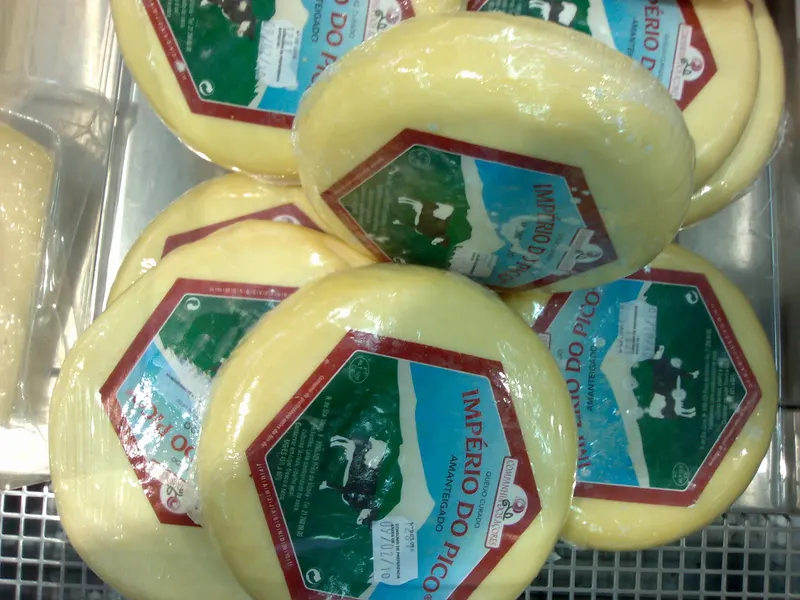
A cheese of raw cow milk from Pico island, made by a traditional, labour-intensive method. Rennet sets the milk, the curd is cut, pressed into moulds by hand and salted on each side. It ripens for a short time, about 20 days at around 10 °C, and keeps a pH near 5.0 and a high water activity.
No fixed amounts recordedNo source read gives a farm batch. In a 2025 study that followed the traditional protocol, 10 L of raw milk were set with 0.15 g of commercial rennet per litre.
Applied to each side of the moulded cheese[camara2025]
Total time across the recorded steps: 20 days
Start
Drag the bar or press Play
What changes:Starting material: raw cow milk from Pico island
Step 1 of 6
Start with raw cow milk
Time
Not documented
Temperature
Not documented
Salt
None given
Acidity
Not documented
Which microbes the steps name, step by step
Enterococcus
Lactobacillus
Leuconostoc citreum
Lactococcus lactis
Flavour
Not documented
Texture
Not documented
Colour
Not documented
Microbes at work in this step
Not documented for this step.
Method
Measured measured in a studySet fixed by a specification or tested recipeReported one source reports itTypical a general value, not sourced for this fermentUnconfirmed not yet checked against a source
At a glance
A cheese of raw cow milk from Pico island, made by a traditional, labour-intensive method. Rennet sets the milk, the curd is cut, pressed into moulds by hand and salted on each side. It ripens for a short time, about 20 days at around 10 °C, and keeps a pH near 5.0 and a high water activity. Made in 6 steps over 20 days. The longest step, ripen, takes 20 days (Câmara S.P.A 2025) and runs at 10 °C (Câmara S.P.A 2025). Enterococcus, the genus most often identified by 16S rRNA among 114 lactic isolates at 1 and 21 days and Lactobacillus, the genus the API system identified most often do most of the fermenting.
A raw cow-milk cheese shaped and salted by hand and ripened only about 20 days, so its pH and water activity stay high compared with long-aged cheeses.
Composition
pH near 5.0 and water activity 0.943–0.966 at the end of its short ripening
This is a raw-milk cheese with a pH near 5.0 and water activity of 0.943–0.966. The authors of a 2025 study cite the US FDA's rule that a food is intrinsically safe below pH 4.2 and at a water activity of 0.920 or less, which they say protects about like pasteurisation but is not feasible in Pico cheese. In that study, coagulase-positive staphylococci in model Pico cheeses were not controlled by more salt or by ripening up to 60 days. ANSES advises pregnant women, young children, people over 65 and people with weak immunity not to eat raw-milk cheeses other than pressed cooked ones such as Gruyère, because of Listeria, Salmonella and Shiga-toxin E. coli.
Hazards the sources name: Coagulase-positive staphylococci, the main hygiene issue; not brought under control by more salt or by ripening up to 60 days in model cheeses.