Side-by-side or overlay PDF diff driven by one engine that reads each file into a structured model — text, vector geometry, images, form fields, annotations — and compares the models. Moves show as moves, edits show only where they happened, and any PDF type works without picking a mode.
Open a STEP / STP part and it measures itself — volume, thinnest wall, draft and undercut checks on load, plus hole detection with a BOM. Measure, section, export STL. Rust + WASM B-rep kernel, runs in your browser.
Sauces and condiments from Central Dry Zone of Myanmar: Bagan, Nyaung-U, Sale and Myingyan
Pon ye gyi (Bagan black bean paste)ပုန်းရည်ကြီး
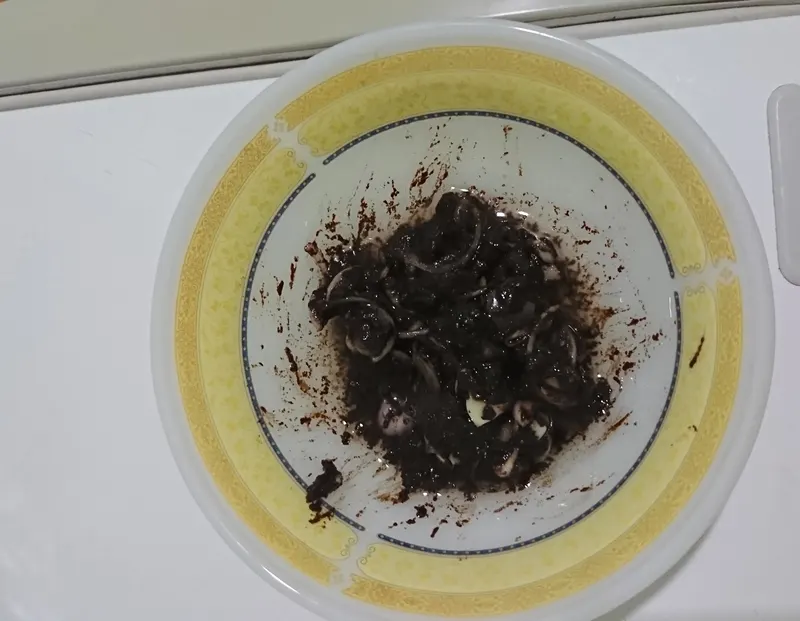
Pon ye gyi is a black paste from Bagan made from horse gram. Researchers say the best comes from the Bagan region. The beans are boiled for hours and kneaded, and the slurry stands before being boiled down to a thick black paste, which is also sun-dried into powder. Researchers call the commercial paste naturally fermented, but the sources we found do not name the microbes that act, and the only measured process is a laboratory version made with an added starch enzyme.
Fully documentedSauces and condiments20 hMyanmar geographical indication
Added to the bean paste at one factory in Nyaung-U, where the observer, Suzuki Lapheko, said the paste contains hardly any salt[marukome2022]
Starter
backslop at one Nyaung-U factory (some paste from a previous batch)
Total time across the recorded steps: 20 h
Start
Drag the bar or press Play
What changes:Horse gram boils for hours and the cooking liquor is kept
Step 1 of 4
Boil the horse gram
Time
5 h
Reported
Temperature
Not documented
Salt
None given
Acidity
Not documented
Output: cooking liquor and soft beans, kneaded into a slurry.
Flavour
Not documented
Texture
Not documented
Colour
Not documented
Microbes at work in this step
Not documented for this step.
Method
Measured measured in a studySet fixed by a specification or tested recipeReported one source reports itTypical a general value, not sourced for this fermentUnconfirmed not yet checked against a source
At a glance
Pon ye gyi is a black paste from Bagan made from horse gram. Researchers say the best comes from the Bagan region. The beans are boiled for hours and kneaded, and the slurry stands before being boiled down to a thick black paste, which is also sun-dried into powder. Researchers call the commercial paste naturally fermented, but the sources we found do not name the microbes that act, and the only measured process is a laboratory version made with an added starch enzyme. Made in 4 steps over 20 h. The longest step, let the slurry stand (fermentation uncertain), takes 12 h (Moe Moe Aye 1579) and runs at 28–32 °C (Moe Moe Aye 1579).