Side-by-side or overlay PDF diff driven by one engine that reads each file into a structured model — text, vector geometry, images, form fields, annotations — and compares the models. Moves show as moves, edits show only where they happened, and any PDF type works without picking a mode.
Open a STEP / STP part and it measures itself — volume, thinnest wall, draft and undercut checks on load, plus hole detection with a BOM. Measure, section, export STL. Rust + WASM B-rep kernel, runs in your browser.
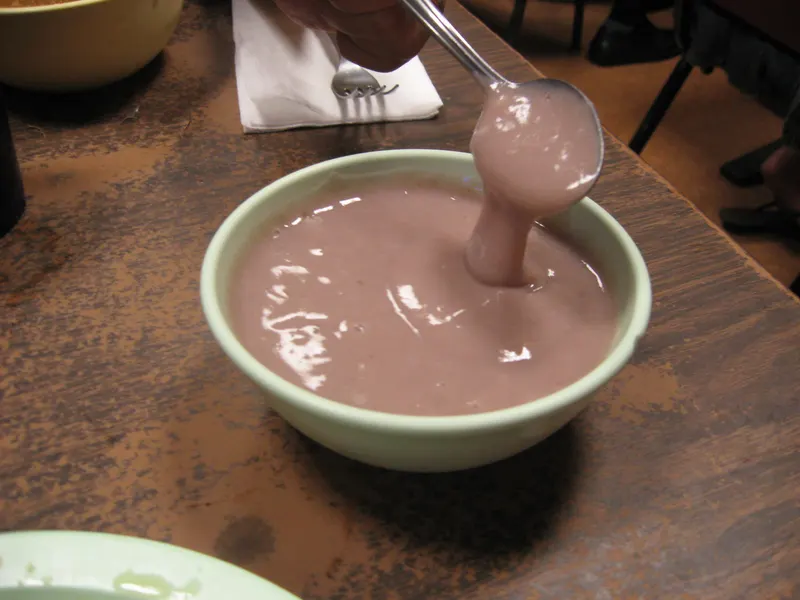
Poi is cooked taro corm pounded with a little water into a smooth paste. Lactic acid bacteria and yeasts already on the taro sour it over the next few days, with no starter added. Fresh poi is bland and starchy, sometimes slightly sweet; after two or three days it is sour.
Fully documentedRoots and tubers6 days – 8 days
Recipe
Photo: Bshams, Public domain, via Wikimedia Commons
No fixed amounts recordedHousehold and commercial practice with no fixed amounts. The amount of water added decides how thick the poi is.
Total time across the recorded steps: 6 days – 8 days
Start
Drag the bar or press Play
What changes:Taro corms are cooked before they are pounded
Step 1 of 4
Cook the taro corms
Time
Not documented
Temperature
Not documented
Salt
None given
Acidity
Not documented
Which microbes the steps name, step by step
Lactic acid bacteria
Yeasts
Lactococcus lactis
Lactobacilli
Leuconostoc
Output: cooked corms.
Flavour
Not documented
Texture
Not documented
Colour
Not documented
Microbes at work in this step
Not documented for this step.
Method
Measured measured in a studySet fixed by a specification or tested recipeReported one source reports itTypical a general value, not sourced for this fermentUnconfirmed not yet checked against a source
At a glance
Poi is cooked taro corm pounded with a little water into a smooth paste. Lactic acid bacteria and yeasts already on the taro sour it over the next few days, with no starter added. Fresh poi is bland and starchy, sometimes slightly sweet; after two or three days it is sour. Made in 4 steps over 6 days – 8 days. The longest step, eat before it turns too sour, takes 4–5 days (Brown A.C 2004). Lactococcus lactis, reported as 95 % of the bacteria in poi, with lactobacilli at 5 % and Leuconostoc, Lactococcus, Weissella and Lactobacillus, which became more dominant when commercial poi was fermented at 25 °C for 24 h and 48 h do most of the fermenting.
Poi is soured after cooking and pounding, so the taro is never raw while it ferments. Pacific pit ferments sour raw breadfruit for months; poi is eaten within a few days.
Fresh and sour poiFresh poi is bland and starchy, sometimes slightly sweet. Poi eaten two to three days later is sour.
Breadfruit poi (poi ʻulu)Made from breadfruit instead of taro.
Safety
Acid forms fast, with pH 4.5 within a day. Hawaiʻi lets producers of hand-pounded poi sell directly to consumers without a certified food-processing establishment or a Department of Health permit, if they prepare it next to hand-washing facilities and follow Department of Health rules (Act 107, 2011).
Allen and Allen showed in 1933 that souring comes from acid-making bacteria. During World War II, Honolulu doctors used poi in place of cereals for soldiers with allergies.