Side-by-side or overlay PDF diff driven by one engine that reads each file into a structured model — text, vector geometry, images, form fields, annotations — and compares the models. Moves show as moves, edits show only where they happened, and any PDF type works without picking a mode.
Open a STEP / STP part and it measures itself — volume, thinnest wall, draft and undercut checks on load, plus hole detection with a BOM. Measure, section, export STL. Rust + WASM B-rep kernel, runs in your browser.
Cheese from Villaluenga del Rosario and the Sierra de Grazalema, Cádiz, Spain
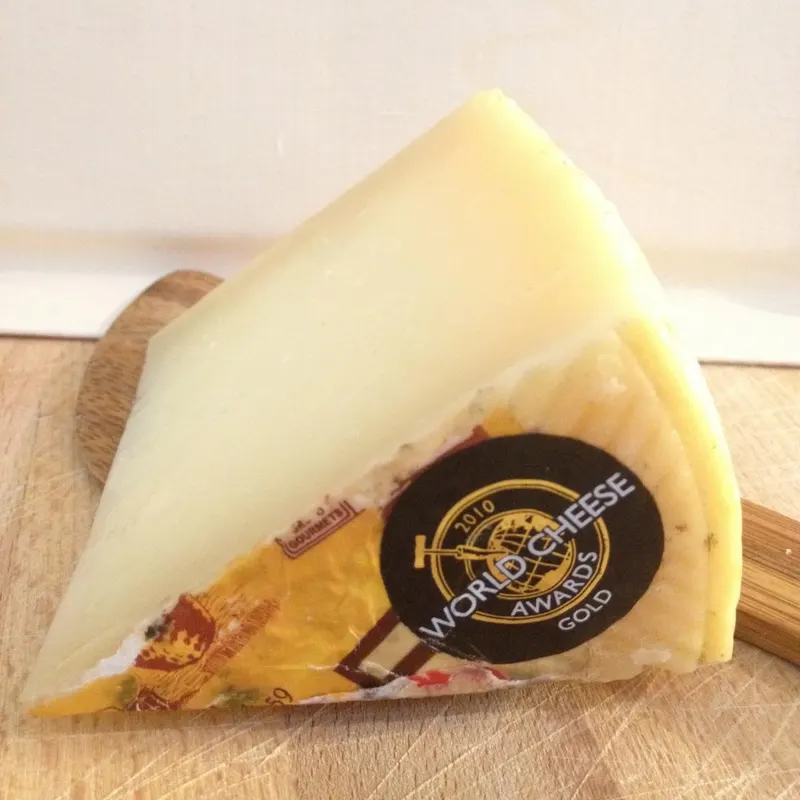
Payoyoqueso Payoyo
Payoyo is a pressed raw-milk cheese from the Sierra de Grazalema made from the milk of local Payoya goats, alone or mixed with Merina de Grazalema sheep milk. It is usually set with animal rennet and no starter culture. In a study make of this traditional goat cheese, the milk was renneted at 32 °C, pressed, brined for 30 minutes and ripened 60 days at 10–12 °C.
Amounts from a sourceAmounts are per litre of milk from a study make of raw Payoya goat cheese at an artisanal dairy, following the traditional method; the commercial Payoyo brands publish no recipe, and the sheep and mixed-milk makes are not described in the studies.
What changes:Rennet goes into raw goat milk at 32 °C and it sets in an hour
Step 1 of 6
Rennet the raw milk
Time
1 h
Reported
Temperature
32 °C
Reported
Salt
None given
Acidity
Not documented
Output: curd.
Flavour
Not documented
Texture
Not documented
Colour
Not documented
Microbes at work in this step
Not documented for this step.
Method
Measured measured in a studySet fixed by a specification or tested recipeReported one source reports itTypical a general value, not sourced for this fermentUnconfirmed not yet checked against a source
At a glance
Payoyo is a pressed raw-milk cheese from the Sierra de Grazalema made from the milk of local Payoya goats, alone or mixed with Merina de Grazalema sheep milk. It is usually set with animal rennet and no starter culture. In a study make of this traditional goat cheese, the milk was renneted at 32 °C, pressed, brined for 30 minutes and ripened 60 days at 10–12 °C. Made in 6 steps over 2 months. The longest step, ripen, takes 2 months (Guzmán J.L. et al. 2020) and runs at 10–12 °C (Guzmán J.L. et al. 2020).
Payoyo is made from the milk of the local Payoya goat, which Wikipedia says is sometimes mixed with Merina de Grazalema sheep milk. The study make followed the traditional method of raw milk and no added starter culture.
Milk
Raw Payoya goat milk; mixed goat and Merina de Grazalema sheep milk in some cheeses
Ripening
60 days in the study make; ripening varies by product
Mixed-milk PayoyoPayoya goat and Merina de Grazalema sheep milk.
Safety
Payoyo is made from unpasteurised goat milk with no starter, and the studies report no pathogen tests. ANSES, the French food safety agency, names Salmonella, enterohaemorrhagic E. coli and Listeria monocytogenes among the bacteria that can be found in raw-milk cheeses in general. It says Listeria and enterohaemorrhagic E. coli can kill, and advises pregnant women, people with weak immunity, people over 65 and young children to avoid these cheeses unless well cooked. In the study make the cheeses ripened 60 days at 10–12 °C after a 30-minute brine at 15–18 °Baumé.
Production under the Payoyo name began in 1997 in Villaluenga del Rosario, whose people are called payoyos; the same type was made in El Bosque from 1986.